Battery-News

Battery Production

Gotion in Talks to Acquire Stake in PowerCo Battery Plant in Sagunto

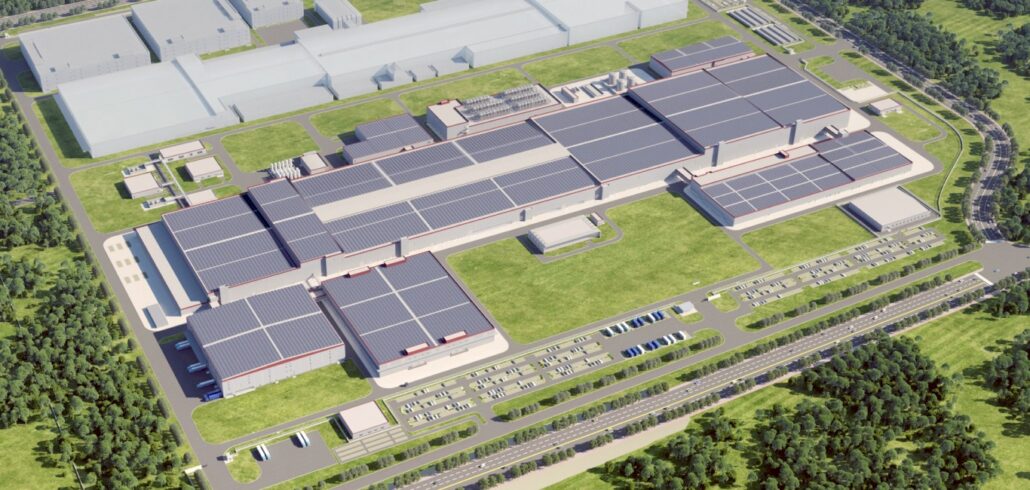
Chinese battery manufacturer Gotion is engaged in advanced negotiations with Volkswagen over a potential stake in the PowerCo battery cell plant in Sagunto, Spain, according to the Spanish trade publication La Tribuna de Automoción. The report says the companies are considering a structure under which Gotion would acquire a majority stake in a joint venture for the facility, while PowerCo would retain an ownership interest. PowerCo declined to comment on the report to Reuters, stating only that it regularly evaluates strategic opportunities and partnerships. A company spokesperson also said there are no plans to relinquish control of the site. Gotion did not immediately comment. Industry Report Points to Potential Majority Stake According to La Tribuna de Automoción, the negotiations have been underway for several months. The publication cited industry sources who said Gotion CEO Li Zhen has visited the site and held discussions with PowerCo representatives. The report states that both the technical and commercial aspects of a potential investment have been evaluated. It also says the negotiations are limited to the Sagunto facility and do not involve PowerCo’s battery business as a whole. Battery Plant Is Part of Volkswagen’s European Strategy The Sagunto plant is one of PowerCo’s key projects. Volkswagen announced the start of construction of the battery cell factory in 2023. According to the company, the facility is initially designed for an annual production capacity of 40 gigawatt-hours, with the potential to expand to 60 gigawatt-hours. The battery cells produced at the site are intended in part for Volkswagen’s vehicle plants in Spain. Based on the current timeline, production is expected to begin by the end of 2026. The installation and commissioning of manufacturing equipment, as well as the construction of clean rooms and dry rooms, are currently underway. Sources:https://www.reuters.com/world/china/volkswagen-takeover-talks-with-chinese-partner-spanish-battery-plant-trade-2026-07-27/https://www.latribunadeautomocion.es/2026/07/gotion-negociaciones-powerco-sagunto/https://www.volkswagen-group.com/en/press-releases/gigafactory-valencia-powerco-gives-starting-signal-for-construction-of-second-cell-factory-17033https://www.eldiario.es/comunitat-valenciana/economia/powerco-reajusta-inicio-produccion-gigafactoria-sagunto-finales-ano_1_13380485.html

Gotion in Talks to Acquire Stake in PowerCo Battery Plant in Sagunto Read More »

CATL and Solarpro Plan 2 GWh Sodium-Ion Energy Storage Project in Eastern Europe

CATL and the Eastern European company Solarpro have signed a strategic agreement for the supply of sodium-ion battery energy storage systems with a total capacity of 2 GWh. According to the companies, the systems will be deployed in projects across Central and Eastern Europe. The goal is to develop the region’s first large-scale sodium-ion energy storage project and evaluate the technology under local grid and climate conditions. The agreement builds on an existing partnership. In May 2026, CATL and Solarpro commissioned a 602 MWh battery energy storage project in Bulgaria. According to the companies, the project increased the country’s total energy storage capacity by 10%. Focus on Operation in Cold Climates According to CATL, the sodium-ion energy storage systems are particularly suited for regions with low temperatures. The company also cites long cycle life as another advantage of the technology. Together with Solarpro, CATL plans to develop storage solutions tailored to the requirements of power grids and climate conditions across Central and Eastern Europe. According to the companies, Solarpro will be responsible for project development, system integration, and the long-term operation and maintenance of the installations. CATL says the partnership is also intended to provide insights into regional market requirements and identify additional applications for sodium-ion battery technology. With the agreement, CATL continues the expansion of its sodium-ion technology in Europe. It marks the company’s second order for this energy storage technology in Europe within a short period. Sources:https://www.catl.com/en/news/6916.htmlhttps://cnevpost.com/2026/07/21/catl-sodium-battery-storage-deal-solarpro/

CATL and Solarpro Plan 2 GWh Sodium-Ion Energy Storage Project in Eastern Europe Read More »

China to End Tax Exemption for Lithium-Ion Batteries

China will introduce a consumption tax on lithium-ion batteries starting in September 2026, ending a tax exemption that has been in place since 2015. According to China’s Ministry of Finance, lithium-ion batteries will initially be subject to a 2% consumption tax. The rate will increase to 4% in September 2027. At the same time, sodium-ion batteries, solid-state batteries, and fuel cells will remain exempt from the consumption tax through the end of 2028. Tax Incentives Shift Toward Newer Battery Technologies In addition to lithium-ion batteries, the new consumption tax will also apply to lithium primary batteries, mercury-free primary batteries, nickel-metal hydride batteries, and vanadium redox flow batteries. While these products will gradually become subject to the tax, sodium-ion batteries and solid-state batteries will remain exempt between September 2026 and the end of 2028. The policy ends an 11-year exemption for lithium-ion batteries. The planned 4% tax rate matches the rate that has applied to other battery categories since 2015. According to the Chinese authorities, battery products must comply with applicable national standards. Companies will also be required to submit compliance test reports when applying for tax exemptions for the first time. Industrial Policy Adjustment According to the state-run news agency Xinhua, China says the policy changes are intended to support industrial upgrading and environmental protection. Reuters also noted that Chinese policymakers have been seeking to curb excess production capacity, including in the battery industry. The tax changes follow other adjustments to tax incentives for alternative-energy vehicles and indicate a gradual reduction in government tax support for parts of the battery sector. Sources:https://www.reuters.com/legal/transactional/china-levy-consumption-tax-on-lithium-ion-batteries-solar-cells-2026-07-17/https://cnevpost.com/2026/07/17/china-to-impose-consumption-tax-lithium-batteries/

China to End Tax Exemption for Lithium-Ion Batteries Read More »

Alfen and CATL Plan 5 GWh Sodium-Ion Battery Storage Deployment in Europe

Starting in 2027, Chinese battery manufacturer CATL and Dutch energy infrastructure company Alfen plan to deploy sodium-ion battery energy storage systems with a total capacity of 5 GWh in the Netherlands and other Western European countries. According to the companies, these will be the first installations of the “Tener Sodium” energy storage system in the European market. In late June, CATL introduced the storage system, describing it as a field-validated sodium-ion solution for stationary energy storage. Initial deliveries in China are scheduled to begin in September. CATL expects total shipments to reach 1 GWh by the end of 2026, with global commercial deliveries planned to begin in June 2027. Validation in the European Power Grid CATL claims that the system is designed for a 25-year service life and delivers nearly 2% higher round-trip efficiency than current technology. Each system has a storage capacity of more than 30 MWh and can be configured for storage durations ranging from one to eight hours, depending on project requirements. CATL also states that the system is compatible with lithium iron phosphate (LFP) batteries. This enables Alfen to utilize various battery chemistries and mitigate its vulnerability to fluctuations in lithium prices. CATL intends to leverage the partnership to gain experience with sodium-ion batteries in European power grids and adapt the technology to European grid requirements. Sources:https://alfen.com/en-de/news/alfen-and-catl-reach-5-gwh-sodium-ion-battery-storage-partnership-in-europehttps://cnevpost.com/2026/07/16/catl-sodium-battery-storage-europe-alfen-deal/

Alfen and CATL Plan 5 GWh Sodium-Ion Battery Storage Deployment in Europe Read More »

Hyundai and SK On Begin Battery Production in Georgia

The U.S. joint venture between Hyundai Motor Group and SK On has started series production of battery cells. According to The Atlanta Journal-Constitution, Hyundai SK Battery Manufacturing America began mass production in June. The battery cells are being delivered to the Hyundai Motor Group’s “Metaplant America”, where electric vehicles for the U.S. market are manufactured. The battery joint venture was established in 2023. Hyundai and SK On invested a combined $5 billion in the site. The state of Georgia supported the project with $641 million in tax incentives and other financial assistance. Annual Capacity of 35 Gigawatt-Hours Planned The plant site covers approximately 3 million square meters. Around 3,500 people work at the facility. Once production is fully ramped up, annual capacity is expected to reach 35 gigawatt-hours. However, manufacturing is currently still in the early stages. The battery cells are expected to be assembled into battery packs by Hyundai Mobis. These packs are intended for electric vehicles manufactured in the United States by the Hyundai, Kia, and Genesis brands. Georgia Expands Its Battery Industry The new plant adds to Korean battery production in Georgia. SK Battery America already operates facilities for vehicle batteries and components in the state. Hyundai and LG Energy Solution are building another battery plant near the Metaplant. Construction was delayed when U.S. immigration authorities detained numerous Korean workers at the site. Source:https://www.koreaherald.com/article/10809681

Hyundai and SK On Begin Battery Production in Georgia Read More »

German Industry Associations Call for Better Conditions for Battery Cell Manufacturing

Four German industry associations are calling for stronger political support to establish a competitive battery industry. KLiB, VCI, VDMA, and ZVEI point to shortcomings in scaling and the transition from research to industrial mass production. The statement was released in conjunction with the topping-out ceremony for the Fraunhofer Research Institution for Battery Cell Production on July 13, 2026. According to the associations, Germany has the necessary research expertise, specialized companies, and substantial industrial demand. Nevertheless, companies often struggle to enter the market. Associations Criticize Insufficient Conditions for Scaling The associations identify structural disadvantages at the national level and inadequate conditions for ramping up production as the main problems. Research results alone do not automatically lead to industrial value creation. They are therefore calling for more targeted industrial policy instruments. These measures should be more closely aligned with the needs of emerging industries. Without suitable conditions, expertise, patents, and production capacity could shift to other regions of the world. The support announced in the government’s program for economic growth and employment must now be defined in concrete terms. Battery Dependence Affects Multiple Industries According to the associations, global battery demand has increased by an average of 43 percent per year over the past five years. Batteries are used in electric mobility, energy supply, data centers, rail technology, robotics, space applications, and other sectors. The associations therefore warn of growing dependence on suppliers outside Europe. They see particular risks for critical infrastructure and defense technology. They believe that strengthening European battery production would bolster supply chains and reduce technological dependence. Source:https://klib-org.de/pressemitteilung-klib-vci-vdma-zvei/

German Industry Associations Call for Better Conditions for Battery Cell Manufacturing Read More »

AESC Begins Mass Production of 46120 Cells for BMW’s “New Class”

The Japanese automotive supplier AESC has begun mass producing its large-format 46120 cylindrical cells. These battery cells are intended to power several models from the BMW Group based on its “New Class” platform. AESC cites the all-electric BMW iX5 as the first model to use these cells. The cells have a diameter of 46 millimeters and a height of 120 millimeters. According to AESC, this increases the usable energy per cell by nearly 30 percent compared to earlier formats. The reduced number of components in the battery pack is also expected to simplify system integration. This gives vehicle manufacturers more flexibility in integrating the battery into the vehicle. Cell Chemistry for Large Electric SUVs AESC is positioning the 46120 cell format primarily for premium electric vehicles and larger SUV models. The cells use a high-nickel cathode and a silicon-doped anode. The energy density is specified at up to 310 Wh/kg. Mass production is set to take place using state-of-the-art manufacturing facilities. Production lines are reportedly equipped with more than 1,000 CCD inspection points. Additionally, each cell undergoes X-ray testing to detect foreign objects. According to the company, a magnetically mounted, high-speed transfer and positioning system enables dimensional accuracy of up to 0.01 millimeters. Source:https://www.aesc-group.com/newsInfo?id=AESC+Starts+Mass+Production+of+46120+Large+Cylindrical+Batteries+to+Support+BMW+Group%E2%80%99s+Neue+Klasse+Platform

AESC Begins Mass Production of 46120 Cells for BMW’s “New Class” Read More »

CATL Unveils Fast-Charging Battery for Light Commercial Vehicles

The Chinese battery manufacturer CATL has unveiled a new battery designed for light electric commercial vehicles. The “Tectrans-II” is designed for fast charging and is intended primarily for logistics applications. According to CATL, the battery can reach an 80 percent state of charge in just 6 minutes and 48 seconds. A full charge takes eight minutes and 56 seconds. Focus on Logistics and Short Downtime The company cites slow charging, limited battery life, reduced performance in winter, and insufficient power output at charging stations as key challenges for electric light-duty logistics vehicles. The new battery is designed to address these issues. CATL backs the battery with a warranty of up to ten years or one million kilometers. This is intended to bring the battery’s lifespan closer to that of the vehicle. According to CATL, the internal resistance of the cells is only half the industry average. This is expected to generate less heat during fast charging. The company also mentions a modified graphite particle interface. This modification is intended to reduce active lithium loss and slow aging. At low temperatures, CATL cites an additional charging time of two minutes and thirty seconds at minus twenty degrees Celsius. Charging Infrastructure Remains Crucial Alongside battery development, CATL is establishing an integrated network of ultra-fast charging and battery swap stations. These so-called “Choco Stations” are designed to support both passenger cars and commercial vehicles. The stations will be equipped with customized fast-charging stations featuring extended cables for microvans and light trucks, among other things. This is intended to eliminate the need for drivers to maneuver their vehicles to charge. According to CATL, the company plans to install 4,000 of these stations in nearly 190 Chinese cities this year. Source:https://cnevpost.com/2026/07/06/catl-unveils-tectrans-ii-battery/

CATL Unveils Fast-Charging Battery for Light Commercial Vehicles Read More »

Forge Nano and Samsung SDI Plan Battery Plant in North Carolina

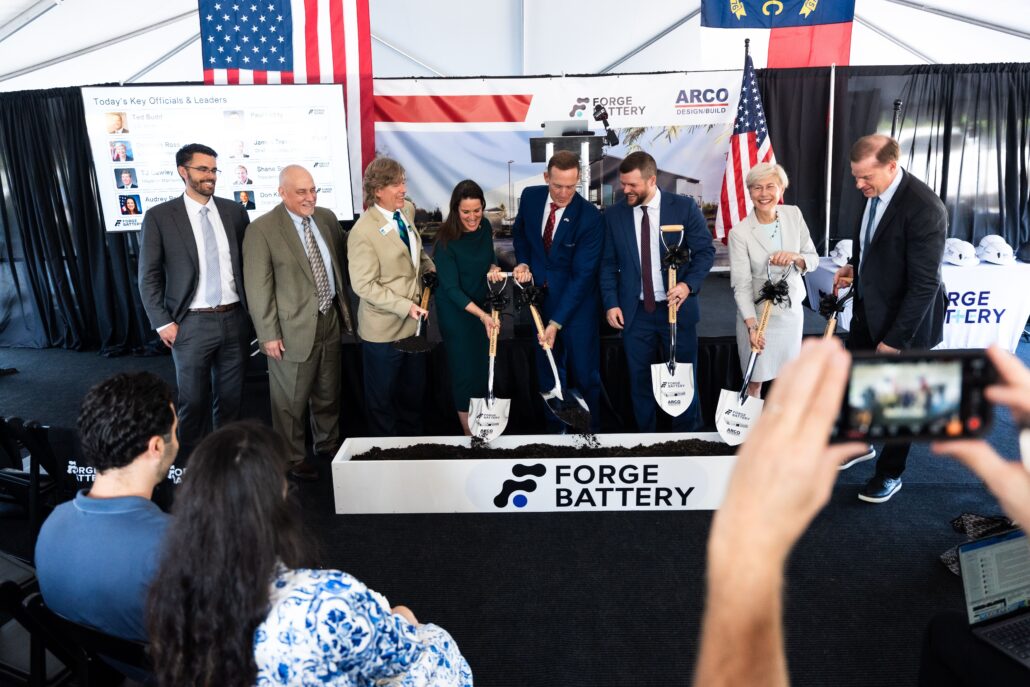
With support from Samsung SDI, Forge Nano is planning to build a battery factory in Morrisville, North Carolina. The facility is expected to have an annual capacity of three gigawatt-hours and begin production in 2028. Samsung SDI will assist with construction and the launch of operations. The factory will produce both Samsung SDI and Forge Nano cell products. As part of the agreement, there is also a conditional supply contract. According to the terms of this contract, Samsung SDI will purchase battery cells from the planned facility beginning in 2028, provided the stipulated conditions are met. Additionally, Forge Nano will act as an authorized distributor of Samsung SDI cells in the U.S. market. Investment with DOE Funding Forge Nano estimates the factory’s cost at between $300 and $330 million. Of this amount, $100 million will be covered by a grant from the U.S. Department of Energy (DOE). The facility is intended primarily to serve non-consumer automotive, industrial, and defense applications.  Samsung SDI is also working to incorporate Forge Nano’s Atomic Armor technology into future battery products. Forge Nano describes Atomic Armor as a nanoscale coating system based on atomic layer deposition technology. Source:https://www.globenewswire.com/news-release/2026/06/25/3317520/0/en/forge-nano-forms-landmark-strategic-partnership-with-samsung-sdi-to-enable-u-s-production-of-advanced-battery-cells.html?hss_channel=lcp-12907090

Forge Nano and Samsung SDI Plan Battery Plant in North Carolina Read More »

IBPC 2026 Extends Call for Abstracts Until July 10

The 9th International Battery Production Conference (IBPC) has extended the deadline for submitting abstracts. Abstracts can now be submitted via the official submission page until July 10, 2026. The conference will take place on November 4 and 5, 2026, at the Steigenberger Parkhotel in Braunschweig. It will focus on technical and scientific issues related to battery production. Call for Technical Papers on Battery Production The call for abstracts is aimed at experts from research and industry who wish to present their current work on battery production. According to the organizers, topics will include next-generation battery systems, sustainable production processes, process optimization in lithium-ion battery manufacturing, recycling, and modeling and AI-supported production approaches. IBPC Returns to Braunschweig in 2026 The IBPC is organized by Innovationsgesellschaft Technische Universität Braunschweig mbH in collaboration with partners from the BLB+ network, the Technical University of Braunschweig, and Fraunhofer IST. The event is also held in cooperation with VDMA Battery Production. It is designed as an international platform for the exchange of ideas on battery production. The conference brings together stakeholders from academia, industry, and applied research. Further information is available on the International Battery Production Conference’s official website.

IBPC 2026 Extends Call for Abstracts Until July 10 Read More »

Scroll to Top