
Battery-News

Battery Production

CATL Secures Major Order for Sodium-Ion Batteries

The Chinese battery manufacturer CATL has signed a significant agreement to supply sodium-ion batteries. Its partner is the Chinese energy storage provider HyperStrong. According to a company statement, the contract covers a volume of 60 gigawatt-hours over a three-year period. Currently, this is the largest known order for sodium-ion batteries. Major Order Signals Market Growth With this agreement, CATL is positioning itself in the growing stationary energy storage market. The company claims to have overcome technical challenges throughout the production chain, enabling large-scale deliveries. CATL reports that it has invested approximately 10 billion yuan (just under 1.5 billion USD) in sodium-ion technology development since 2016. The goal is to establish sodium-ion technology as an alternative to lithium-ion batteries, particularly for applications requiring longer storage durations. The current generation of cells uses a platform design identical in dimensions to lithium-ion cells. This is intended to reduce adaptation costs. CATL expects sodium-ion batteries to achieve a 30- to 40-percent market share in the long term. Source:https://cnevpost.com/2026/04/27/catl-secures-worlds-largest-sodium-ion-battery-order/

CATL Secures Major Order for Sodium-Ion Batteries Read More »

Samsung SDI to Supply Batteries to Mercedes-Benz for the First Time

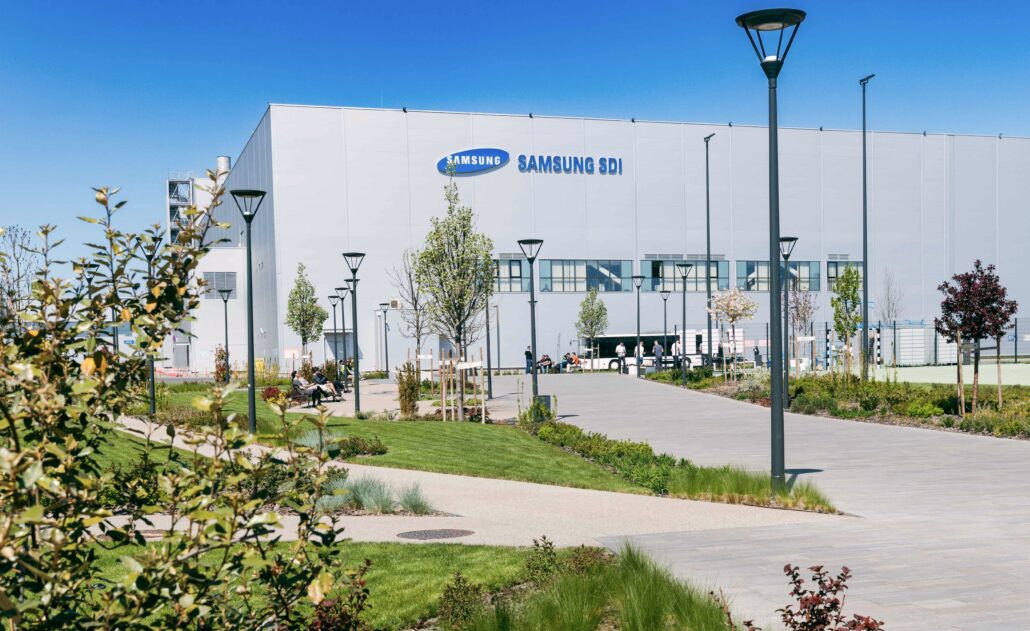
The South Korean battery manufacturer Samsung SDI has signed a multi-year supply agreement with Mercedes-Benz. Under the agreement, Samsung SDI will supply batteries for the next generation of Mercedes-Benz electric vehicles. According to Samsung SDI, this is the first such agreement between the two companies. No details regarding quantities or financial terms were disclosed. Focus on High-Nickel Batteries The agreement covers high-performance nickel-cobalt-manganese batteries with a high nickel content. Mercedes-Benz plans to use these batteries in future compact and mid-size electric SUVs, as well as coupé models.  Beyond the supply agreement, both companies intend to expand their cooperation. They plan to jointly develop new battery technologies. Specific projects or technical approaches were not disclosed. Samsung SDI views the contract as a step towards strengthening its market position in the global competition for electric vehicle batteries. Source:https://www.samsungsdi.com/sdi-now/sdi-news/4842.html?pageIndex=1&pagesize=15&idx=4842

Samsung SDI to Supply Batteries to Mercedes-Benz for the First Time Read More »

OPC UA in Battery Manufacturing: The Path to Common Data Models

European battery production is growing—and with it, the complexity of manufacturing. Different machines, proprietary interfaces, and isolated data silos still make it difficult in many places to gain a comprehensive view of processes. In this context, industry associations and technology organizations are driving the development of common information models. The OPC UA communication standard plays a central role in this effort. The German Association of the Automotive Industry (VDA), the VDMA, and the OPC Foundation are working together to establish standardized data models for battery manufacturing. A common language for machines The initiative aims to ensure compatibility between machines and systems from different manufacturers through standardized information models. The foundation for this is provided by OPC UA Companion Specifications—industry-specific extensions of the established standard. They are designed to create a shared semantic foundation: data from various process steps is described uniformly, making it easier to exchange and evaluate. This is particularly relevant in battery manufacturing. The process chain ranges from material preparation to formation—with high demands on precision, quality assurance, and traceability. Starting with cell manufacturing Current work is initially focused on cell manufacturing. Specifications are currently being developed here for key process steps such as coating, calendering, winding, and electrolyte filling. The project also has political backing: The Federal Ministry of Research, Technology, and Space is funding related work through the ENLARGE project (grant number 03XP0539). From a technical perspective, the new models build on existing standards, particularly “OPC UA for Machinery.” The goal is not to create another isolated solution, but to integrate into existing industrial architectures. What the standard is intended to achieve According to the organizations involved, the benefits are clear: Standardized data structures are also a key prerequisite for digital applications—such as predictive maintenance or seamless quality analysis. Challenges ahead Despite this progress, broad adoption remains a long-term goal. In practice, new standards encounter an existing installed base that has often grown over many years. The introduction of uniform information models therefore entails not only technical adjustments but also investments and organizational changes. Furthermore, the question remains as to how consistently different market participants will actually implement the standards. Another point: The Companion Specifications deliberately define only a common core; to foster broad acceptance, many elements are optional and allow for flexibility. However, this can also lead to actual interoperability falling short of expectations in practice. Outlook: What comes next? The initiative highlights the growing need for common data models in battery production. At the same time, it becomes clear that standardization does not drive itself. The current specifications are nearing release candidate status. This gives industry representatives the opportunity to provide feedback before the models are finalized. However, this marks only the beginning of the decisive phase: practical implementation. Only in real-world use will it become clear whether a common data model will actually become a common language for battery production. Based on information from the Joint Working Group of VDA, VDMA, and the OPC Foundation. Sources & Data:https://www.vdma.eu/de/viewer/-/v2article/render/140299457https://www.sciencedirect.com/science/article/pii/S2213846325001865https://www.mikrodev.com/opc-ua-and-mqtt-in-industrial-communication-integration-in-brownfield-factories/https://www.industry40.tv/blog-post/opc-ua-base-information-model-and-companion-specifications-explained

OPC UA in Battery Manufacturing: The Path to Common Data Models Read More »

Quality Assurance in Battery Manufacturing: Mitutoyo Hosts the Battery Forum 2026

Quality assurance is becoming a bottleneck in industrial battery manufacturing—particularly with regard to scaling, scrap rates, and process stability. As a result, the focus is shifting to how quality can be ensured efficiently and data-driven throughout the entire process chain. With the “Battery Forum 2026” on May 20 and 21 in Leonberg, Mitutoyo Deutschland GmbH aims to address these challenges and provide a platform for professional exchange between industry, research, and associations. Focus on quality across the process chain The two-day forum addresses key challenges in battery manufacturing—from cell production to final testing. The focus is on practical approaches to ensuring quality and efficiency. The program includes technical presentations, panel discussions, and live demonstrations. The goal is to translate current technological developments into practical insights and to promote the exchange of concrete solutions. Technologies in focus: Measurement technology, data, and AI The program covers a broad spectrum of topics, including: Overall, the event addresses key issues in industrial scaling and process stability. Contributions from industry and research Speakers include experts from industry and research, including representatives from Fraunhofer IPT, RWTH Aachen (PEM), Gantner Instruments, and the TraWeBa project. The presentations will explore different perspectives regarding the competitiveness of European battery cell production as well as concrete approaches to quality assurance. Exchange and practical perspectives In addition to the speaker program, the forum offers opportunities for direct exchange between participants and experts. The program is complemented by live application demonstrations showcasing measurement solutions in the context of battery manufacturing. The event is designed for approximately 100 participants per day and is intended for companies from the automotive industry, plant engineering and tooling, as well as research institutions and associations. Mitutoyo strengthens its presence in Leonberg With this forum, Mitutoyo is further expanding its commitment to the battery manufacturing sector and strengthening its Leonberg location as a center of excellence for measurement technology in the European battery market. Further information and registration details are available online.

Quality Assurance in Battery Manufacturing: Mitutoyo Hosts the Battery Forum 2026 Read More »

BMW i7: High-Voltage Battery Developed in Collaboration with Rimac Technology

The BMW Group partnered with Rimac Technology to develop the new, all-electric BMW i7. At the heart of the vehicle is a newly developed high-voltage battery based on the sixth generation of BMW eDrive technology. Their goal is to increase range and charging speed. BMW’s Gen6 battery technology uses cylindrical 4695 lithium-ion cells. According to the company, this cell design achieves a volumetric energy density that is approximately 20 percent higher than that of the prismatic cells of the previous generation. The high-voltage battery combines this new cell technology with the familiar module structure of the Gen5 architecture. This combination is intended to increase the range of the BMW i7. At the same time, the goal is to increase charging power to shorten charging times. Production at Rimac In addition to collaborating on the development of the battery pack, Rimac Technology will also handle its production. All battery manufacturing takes place in Croatia. The assembled packs are then transported to the BMW plant in Dingolfing for final assembly. This plant serves as the central production site for the BMW 7 Series. The new BMW i7 is scheduled to be unveiled for the first time on April 22, 2026, at “Auto China 2026.”  Source:https://www.press.bmwgroup.com/deutschland/article/detail/T0456278DE/bmw-group-und-rimac-technology-kooperieren-bei-innovativem-hochvoltspeicher-fuer-den-bmw-i7

BMW i7: High-Voltage Battery Developed in Collaboration with Rimac Technology Read More »

Freudenberg Exits Battery Business

The German Freudenberg Group has fundamentally realigned its activities in the battery and fuel cell segment. As of January 1, 2026, the Freudenberg e-Power Systems business unit was dissolved. The company will no longer operate in the areas of battery cells, modules, and systems, as well as fuel cell systems. The dissolution of the battery business will affect approximately 600 employees, primarily in the U.S.  Freudenberg is responding to a significantly weaker-than-expected market environment, particularly in the U.S., which the Group attributes to low demand in key applications, a lack of infrastructure, and high costs. Added to this are political and regulatory uncertainties, as well as intense global competition. According to the company, these factors have made achieving economic scale in the systems business considerably more difficult. Focus shifts to components and hydrogen. While the battery business is being discontinued, Freudenberg is maintaining select activities in the hydrogen sector. The hydrogen components business has been integrated into the Freudenberg Sealing Technologies division. This shift in focus is from complete energy systems to individual components. At the same time, the company is highlighting its continued investments in research and development, as well as in new technologies, including digital applications and artificial intelligence. These measures are intended to lay the foundation for future business models. Source:https://www.freudenberg.com/en/company/press-media/news-detail/freudenberg-presents-financials-for-2025

Freudenberg Exits Battery Business Read More »

CALB Introduces Semi-Solid-State Battery for Light Commercial Vehicles

The Chinese battery manufacturer CALB has unveiled a solid-liquid hybrid battery for light commercial vehicles at a trade show in Hefei on March 28. According to the company, the battery is already in mass production. It is intended for use in light commercial vehicles manufactured by Chery Automobile. This marks the first time that semi-solid-state technology has been adopted more broadly in the light commercial vehicle segment. This technological approach combines solid and liquid electrolyte components, representing an intermediate step toward fully solid-state batteries. Higher Energy Density Increases Payload CALB reports an energy density of 400 watt-hours per kilogram for the cells. This enables a reduction in battery weight, which directly improves the payload capacity of light commercial vehicles. According to the manufacturer, the battery has passed 44 safety tests, including evaluations for thermal runaway, fire, and mechanical stress. These tests reportedly exceed current Chinese safety standards. During charging, the system supports 2C fast charging. The state of charge can reportedly increase from 30 to 80 percent in 15 minutes. CALB also highlights the battery’s performance at low temperatures. They claim that the range at minus 25 degrees Celsius is more than 20 percent greater than that of conventional batteries. Additionally, continuous discharge at 1C is specified. Source:https://cnevpost.com/2026/03/30/semi-solid-battery-adoption-light-trucks-calb-launch/

CALB Introduces Semi-Solid-State Battery for Light Commercial Vehicles Read More »

Ultium Cells Announces LFP Production for Energy Storage in Spring Hill

Ultium Cells, a joint venture between General Motors and LG Energy Solution, is converting its Spring Hill plant to manufacture lithium iron phosphate (LFP) batteries for energy storage systems. The company is investing approximately $70 million in the conversion of the production facilities. Production is scheduled to begin in the second quarter of 2026. The company has not provided specific details on the share of future LFP production relative to the plant’s total output. They merely state that the facilities are currently being retrofitted and the workforce is being trained accordingly. Focus on Stationary Energy Storage The LFP cells produced in Spring Hill will be supplied to LG Energy Solution’s U.S. energy storage division. There, the cells will be processed into complete storage systems for use in North America in applications such as power grids and data centers. LG Energy Solution cites rising demand for energy storage systems as the reason for this focus. LFP cells are considered more cost-effective than nickel-based batteries for this application. In stationary applications, weight and installation space play a lesser role, bringing other criteria to the forefront.  The company plans to increase its global production capacity for energy storage batteries to over 60 GWh this year. Over 80 percent of this capacity is expected to be located in North America. Source:https://www.ultiumcell.com/newsroom/latest-news/2026/03/17/Ultium-Cells-Spring-Hill-Diversifies-Production-with-LFP-Batteries-for-Energy-Storage-Systems

Ultium Cells Announces LFP Production for Energy Storage in Spring Hill Read More »

Scroll to Top