
Happy Holidays
“Battery-News” is on winter break until January 8th. We wish all our readers happy holidays and a good start to the new year.

“Battery-News” is on winter break until January 8th. We wish all our readers happy holidays and a good start to the new year.

“Battery-News” presents an up-to-date overview of planned and already implemented projects in the field of lithium-ion battery production in North America.
Battery Cell Projects in North America (as of December 2023) Read More »
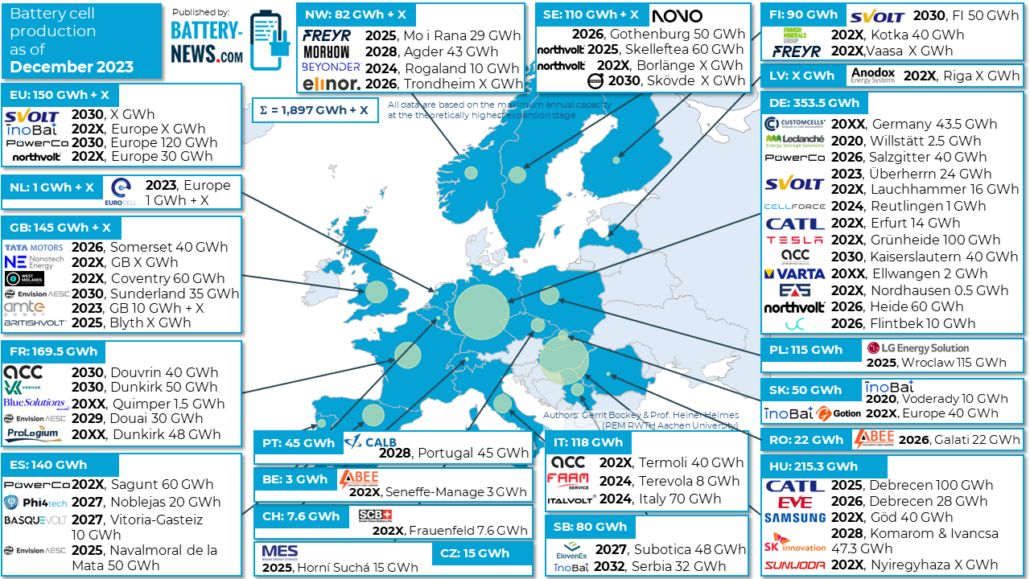
“Battery-News” presents an up-to-date overview of planned and already implemented projects in the field of lithium-ion battery production in Europe. As usual, the relevant data comes from official announcements by the respective players and from battery production sources.
Battery Cell Projects in Europe (as of December 2023) Read More »
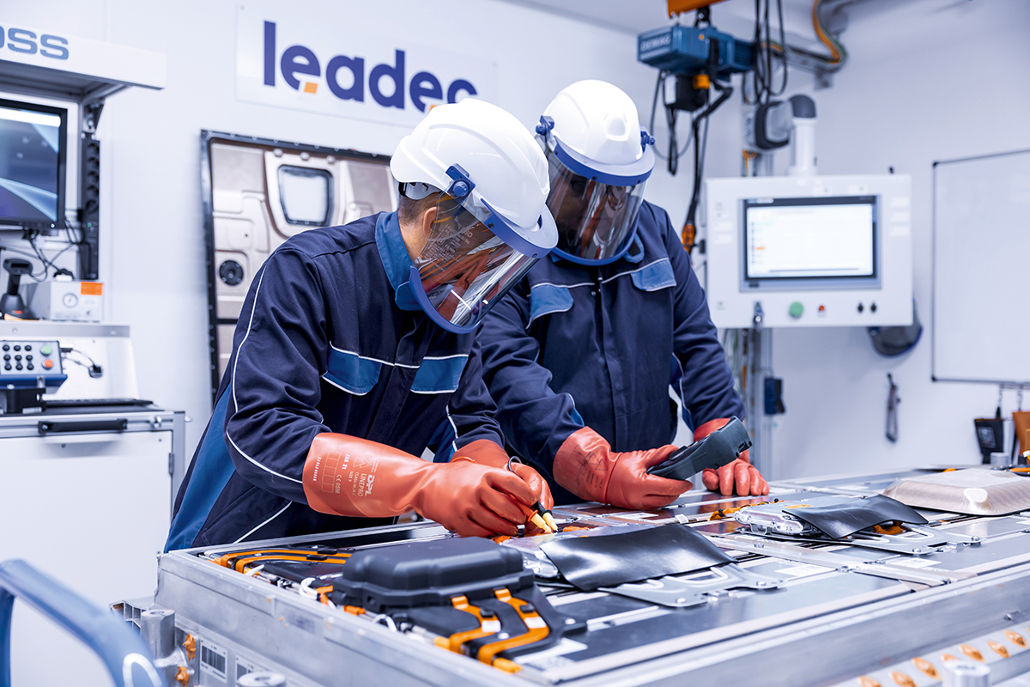
The repair and reuse of electric vehicle batteries can make an important contribution to the much-needed circular economy. A new white paper from Leadec shows how this can be achieved.
New White Paper on Battery Repair Focuses on Economic Strategies Read More »
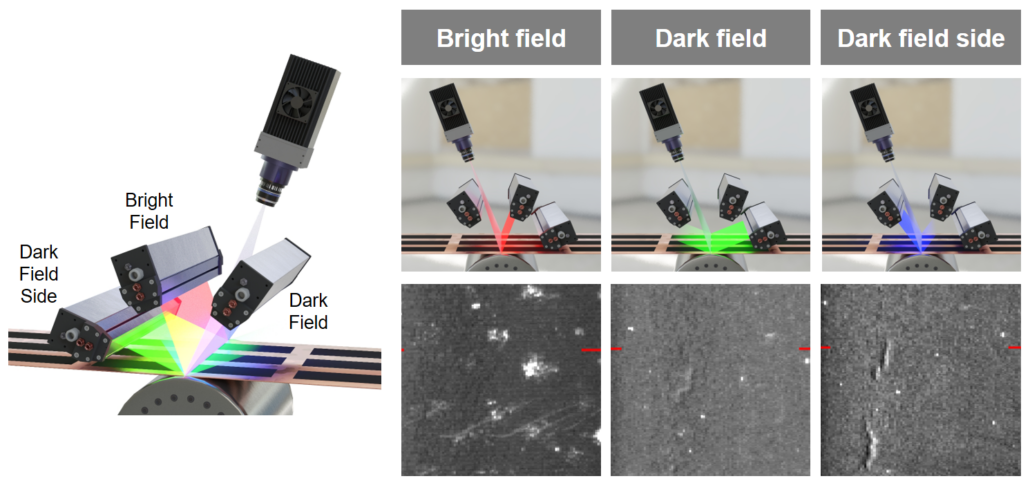
With the growing number of suppliers, price pressure on battery manufacturers is increasing. High-performance optical inspection systems offer significant savings potential, as shows our Battery-News interview with Jochen Sander.
AI in Cell Production: “Massive Computing Power Allows for Better Error Detection” Read More »

Exploring saving potentials when using plastic piping in battery cell production More resource-efficient technologies will have a significant impact on the mobility and energy markets and increase the need for reliable batteries. Their production will bring a huge demand for cooling and hot water applications. In this interview, Cyrus Ardjomandi, Business Development Manager with a focus on battery applications at GF Piping Systems, explains the energy and CO2 saving potentials that result from the use of plastics in media lines as well as innovative connection and automation technologies. Battery News: Mr. Ardjomandi, what challenges does GF see in cell manufacturing projects? Cyrus Ardjomandi: Battery technologies play a central role in the energy turnaround that we urgently need to implement. Electromobility and electricity storage solutions in the building sector are just two of many examples. With the global climate targets for limiting global warming set at a fixed time, there is now a new dynamic. A major challenge here is that most of the projects are globally managed, with different standards depending on the location. At the same time, factors such as time pressure, lack of skilled workers or space restrictions should not influence the time frame and the quality of planning and execution. To keep efficiency high in such projects and avoid long delays, GF Piping Systems also supports customers in technical planning and off-site prefabrication along the entire process. Alternatives need to be weighed up instead of just relying on the familiar. Durable plastic tubes can increase the efficiency of battery cell production. I will explain this with an example: In the area of clean and dry room technology, controlled environmental conditions are critical. The insulation and material properties of the piping system can have a significant impact on the energy required to maintain a stable environment. Plastic has some significant advantages here, such as speed of installation, less impact on statics due to its light weight, and nocontamination from metal particles. Battery News: Why are plastics more sustainable in media distribution? C. Ardjomandi: CO2 savings start with the production of the pipe systems. Thermoplastic piping systems produce fewer CO2 emissions than steel. The weight reduction of up to 60% also saves a lot of CO2 during transport. Material flow, pressure and flow rates can be optimized thanks to the smooth inner surface of the plastic pipes. If we consider pre-insulated pipes as a solution, the foam insulation of our COOLFIT product reduces unnecessary heat loss. losses, which in turn reduces energy costs for operators by up to 44%. With the PE material, there is no concern about failures due to corrosion. These systems are exceptionally durable, typically achieving a service life of over 25 years. They comply with green building standards and certifications, making them a compelling option for sustainable building projects. Existing environmental product declarations (EPDs) help facility planners and engineers identify the overall environmental impact of piping systems. In addition, we also offer plastic double containment systems that, for example, provide an additional level of protection for wastewater disposal and at the same time minimize environmental pollution. Our portfolio also includes appropriate automation components for the distribution and control of media. Battery News: When you compare metal piping with plastic piping, what are your results? C. Ardjomandi: Sustainability plays a decisive role in cell production. It is one of the key issues on the way to greater energy efficiency. The choice of material is of great relevance, and it must be determined to what extent the selected solution guarantees the necessary longevity and sustainability. GF Piping Systems has its own sustainability department for these considerations. GF does not want to deny any material its right to exist. Plastic and metal are different materials with different requirements. Standardized procedures such as life cycle assessment (LCA) according to the principles of ISO 14040 and ISO 14044 or an environmental product declaration (EPD) according to EN 15804+A1 help in the analysis. We also work with external partners, such as the Fraunhofer FFB, with whom we recently conducted a study on the evaluation of plastics in cell factory applications. Here, the focus was on the requirements, potentials and possibilities for improvement. The results show that plastics are an attractive alternative to other materials in many areas. You find the Whitepaper here: https://www.ffb.fraunhofer.de/en/press/press-release-whitepaper-plastic-pipes.html Extrapolated to the huge required energy quantities for battery production, efficient, non-corroding plastic systems can contribute to high savings in energy and OPEX – operating costs. Further advantages are evident during processing, as the material does not form metal chips during processing, and there is no sparking during welding. As a result, the medium is not contaminated with metal particles or ions. Likewise, in this fast-moving business with plastics, more flexible production adjustments are possible, for example when converting to new equipment. Products made from this material therefore have great potential to reduce costs, ensure the quality of operating processes and reduce the risk of downtime due to leakage and contamination. Battery News: Where does GF see the greatest potential for savings when setting up cell production? C. Ardjomandi: We see the greatest potential for savings in cooling water lines with pre-insulated pipes such as our COOL-FIT. In the field of cell production, we are talking about very high amounts of energy used. Therefore, even small adjustments have an enormous impact, and a change here could significantly increase the energy efficiency of cooling systems and reduce building-related CO2 emissions. Energy efficiency is qualitatively better with preinsulated pipes. They also have less weight, which helps to maintain structural integrity or, in the case of the planning, even represents savings potential if lighter materials are chosen at an early stage. The components are well protected by the strong insulation and the diffusion-tight sealing lip, can be connected quickly, and the installation is completed in just one trade, saving time without subsequent measures. It is extremely important for us to determine with the customer at the beginning how we can tailor the piping components to the individual requirements of each
Why plastic pipes are more sustainable in media distribution Read More »

“Battery-News” presents an overview of upcoming conferences and trade shows focused on battery topics in North America. This continues the series of upcoming events on the battery. An overview of all our maps can be found in the Battery Atlas. General information or conferences and trade fairs not listed here can be communicated to the “Battery-News” editorial team via the contact form.
Battery conferences and trade fairs in North America Read More »
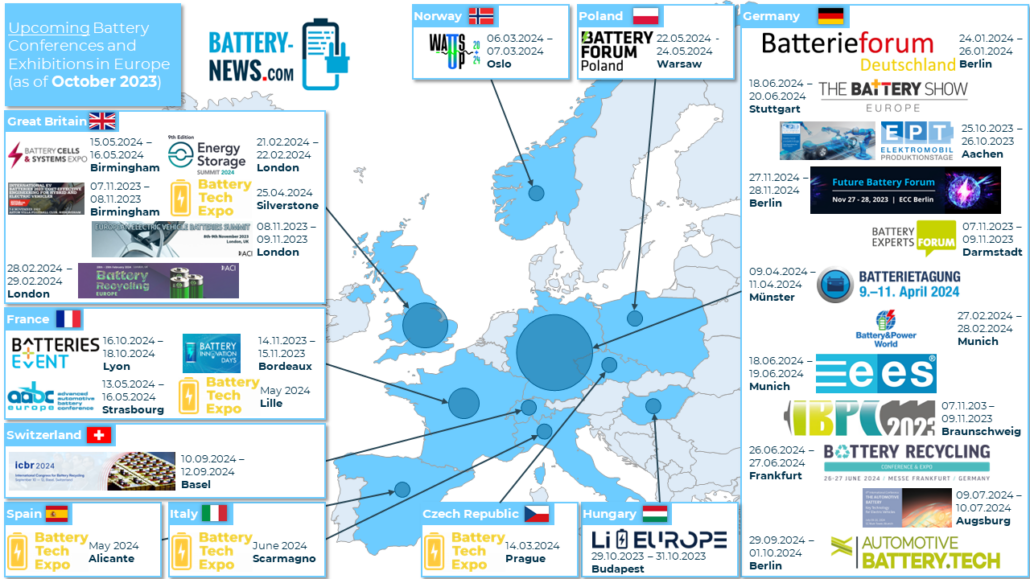
This November alone, industry players and trade visitors across Europe can expect another half a dozen or so top-class events on relevant and innovative battery cell and battery storage topics. Battery-News.de has summarized all important information on event venues and times as well as the main topics. London, Bordeaux, Berlin … almost every week, decision-makers, strategists, and entrepreneurs will meet at trade fairs, forums, and conferences on battery technologies next month. The sheer density of events already makes it abundantly clear that the topic of cells and storage, in all its facets, now enjoys top priority in industry and politics. The new infographics from Battery-News.de provides a quick and detailed overview of the most important industry events of the year and show at first glance that practically no European industrialized country will forego a meeting of the experts. Focal point for decision-makers in Q4: Future Battery Forum The 4th Future Battery Forum, which will be held as a hybrid event on November 27 and 28 at Berlin’s Estrel Convention Center (ECC) as well as online, is a particularly relevant date for decision-makers in the industry. Themed “Accelerating Europe’s battery industry”, the conference focuses on strategies that pave the way for industry and society to effectively use different battery storage technologies. Together with competence partners like SVOLT, BASF, Customcells, RockTech Lithium and VARTA, the Future Battery Forum expects more than 700 decision-makers from the entire battery industry on site, as well as 90 exhibitors and sponsors, plus more than 70 renowned speakers and experts as part of the panel discussions, lectures, and workshops. “A wide variety of energy storage solutions are gaining importance within European industries every day. Ultimately, in many respects, the energy and mobility turnaround are only made possible with these technologies in the first place,” emphasizes Kai-Uwe Wollenhaupt, European head of battery cell expert SVOLT. Kai-Uwe Wollenhaupt will take part as an expert in one of the many panel discussions at the forum in November. “The economic and political challenges are great. This makes events like the Future Battery Forum even more important, allowing the most diverse sectors of this industry to come together, exchange ideas, gain impetus and draw additional momentum from this to actively help shape the transformation,” Wollenhaupt adds. Further details about the conference can be found on the conference website: www.futurebattery.eu Battery News has partnered with the event and is offering its readers the opportunity to receive a 20% discount on conference tickets by using the code FBF23COOP. Register:www.futurebattery.eu/register
Electrifying top events throughout Europe: Battery technology is gaining in importance Read More »
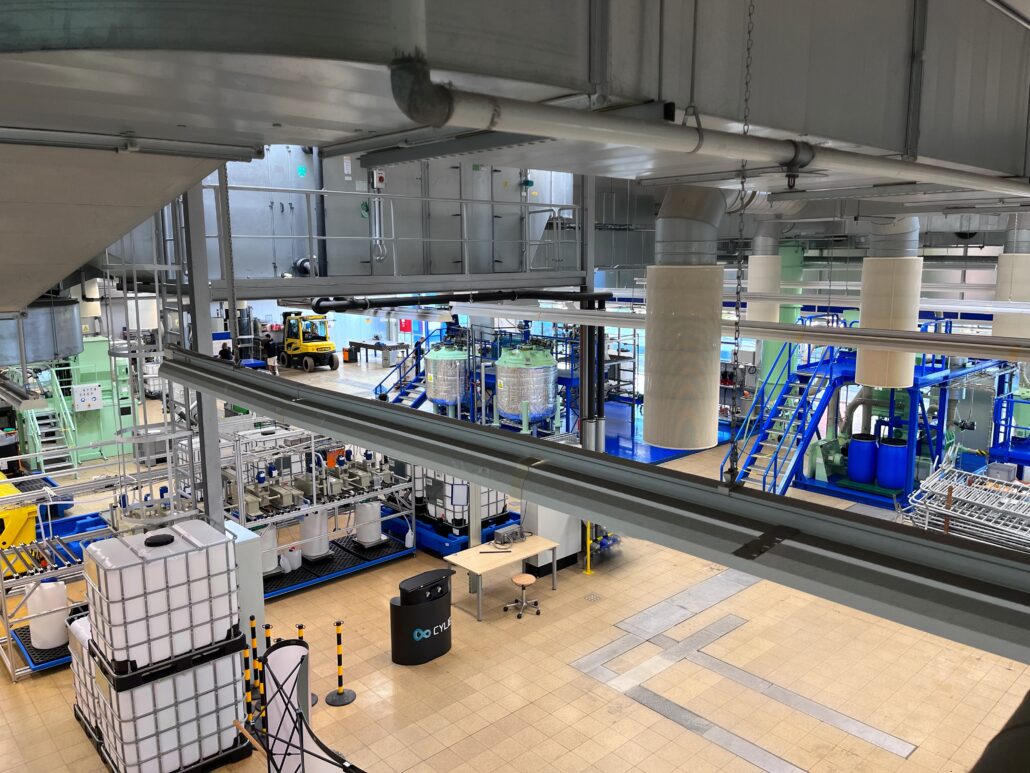
The Germany-based “cylib” battery recycling company just launched its pilot plant. While it can already recycle 500 kilograms of used batteries per day, the start-up team is already working on a larger plant.
“We Can Process Everything – From Coated Films to Complete Batteries” Read More »
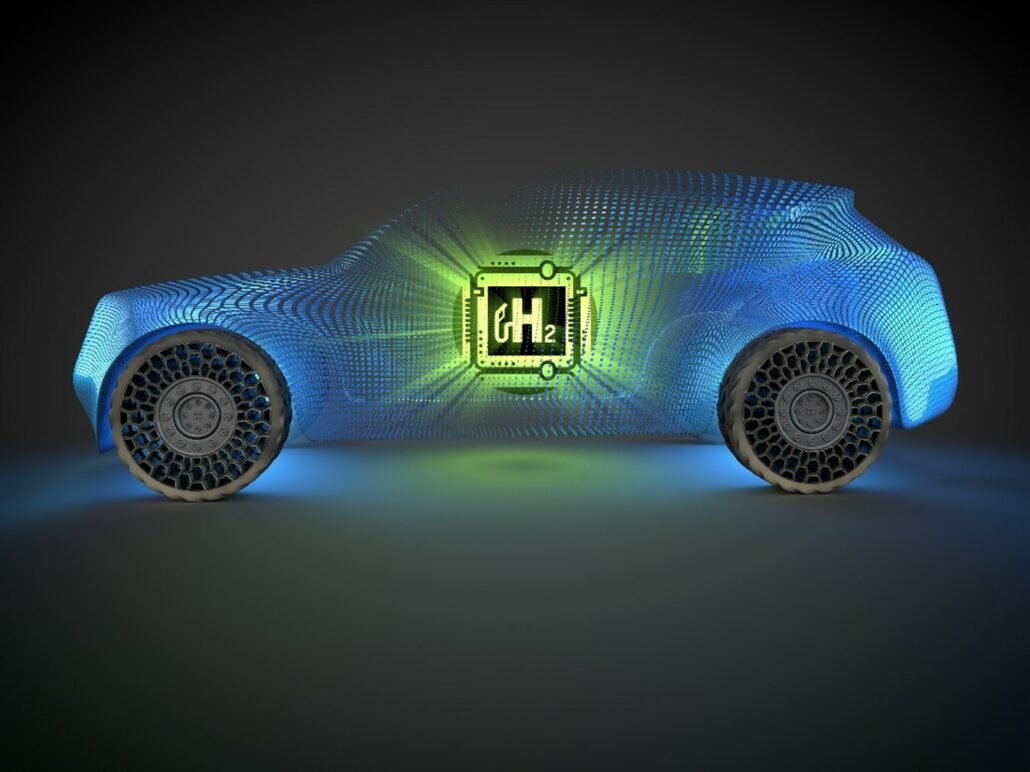
In order to ensure the highest levels of safety, reliability and environmental protection, leak testing is of great importance to the automotive sector in the production of fuel cell electric vehicles (FCEVs). Pfeiffer Vacuum has been helping automakers develop hydrogen-powered vehicles since the early days of this technology and is a key partner in providing leak detection solutions. Safety, reliability and the environment Leak testing is particularly important for the FCEV market to ensure that strict safety and operational standards are met. For example, it is mandatory that the fuel tank, which stores hydrogen, and the fuel cell stack, which converts hydrogen and oxygen into electricity through cold combustion, are tested for leaks. But it is not just the tank and stack that are tested several times during the production of an FCEV. This applies both to the components in the hydrogen circuit that carry the operating and cooling media and to the battery components that are also present in all FCEVs. Finding the right leak detection method Hydrogen fuel cell stacks, as the heart of an FCEV, present particular challenges for leak testing. The length of all the seals in a 120 kW fuel cell stack can be up to 1 km and must be fully tested. This process is further complicated by the fact that the dimensions of functionally relevant leaks are no longer visible to the human eye. A simple visual inspection is no longer sufficient. Repair is only possible once existing leaks have been located. Due to the risks associated with the use of hydrogen as a flammable or explosive medium, leak detection is considered a safety-relevant aspect of the fuel cell manufacturing process. A variety of leak detection methods and test equipment are currently used in the industry. Standards in the field of leak testing, such as DIN EN 1779 or DIN EN ISO 20485, provide assistance in the selection of methods by identifying different leak testing methods and providing procedural instructions. Methods range from leak testing with air (pressure change and flow methods) to tracer gas methods using hydrogen, helium or mixtures of the two gases to be selectively detected. “The great merit of DIN EN 1779, first published in 1999, is the systematic classification of the most important leak test methods used in industry and the decision support based on three clear criteria” explains Dr. Rudolf Konwitschny, leak detection expert at Pfeiffer Vacuum. These criteria are: 1. In which direction does the gas normally flow when it escapes from a leak? Out of the object or into the object? 2. Do I test only components of a test object or the test object as a whole? 3. Do I test integrally or localizing? Integral testing provides information on whether or not leaks are present. Localizing methods can determine where the leak is located. After applying these questions, the standard leaves seven quantitative integral leak test methods based on air or tracer gases that are potentially suitable for testing a pressurized component. Figure 1: Selection criteria of the leak test methods according to DIN EN 1779 According to this pre-selection, both air and tracer gas methods can be considered for integral leak testing. This decision is influenced by a number of factors. The use of air for leak testing has the advantage of requiring little equipment, air is cheap and readily available compared to tracer gases, and inexpensive test equipment can be used. Disadvantages are limited minimum detectable leakage rate (standard leak rates down to a minimum of 1E-4 mbarl/s) and influencing factors such as temperature and volume. The strengths of air leak testing lie primarily in applications under isothermal conditions and in small volumes. “A number of leak tests can be performed, for example, using the differential pressure method (which measures how much air is lost from the unit under test compared to a reference volume) or flow methods,” says Konwitschny. ISO 22734, which describes leak testing of electrolyzers among other things, states that the cell stacks must be subjected to a common pressure test in which the oxygen and hydrogen sides of the individual stacks are connected to a common pressure source and tested simultaneously. Test conditions are also specified in the standard: The pressure should not be less than the maximum operating pressure and the test duration should be at least two minutes. Exact temperature conditions are also specified, but there is no explanation of the influence of these parameters on the test result. According to Konwitschny, this is an important aspect for manufacturers to consider. Basically, air-based leak testing methods have physical limitations. Temperature is one of the most important environmental parameters. Depending on the size and volume of the part being tested, it can have a significant effect on the measured value of a pressure transducer. Konwitschny explains: “For parts such as the bipolar plate of a fuel cell, we are talking about temperature constancy in the range of 0.1 °C or even less. This is one of the reasons why, in comparative measurements in our application laboratory, we have found a wider spread of measured values with Micro-Flow methods than with test gas methods. In our experience, the instrumentation and process capability of test gas methods are superior. The test gas helium or mixtures containing helium give even better results than hydrogen due to the lower and more constant background signal. The impossibility of perfect control of the test environment, together with the requirement for detection limits below 1E-4 mbarl/s, makes the use of test gases mandatory in many applications. Tracer gases such as helium are more expensive than air, but have the advantage of allowing lower detection limits and often shorter cycle times. The decision between air and tracer gas should therefore be made in the context of the prevailing conditions and the leak test requirements. Another important factor in choosing a leak testing method is the investment and running costs. “If you are starting your production with low volumes, the initial cost of the test