
Battery-News

Top Story

Solid-State Batteries “Made in Europe”: How ProLogium Is Breaking Ground in Dunkirk

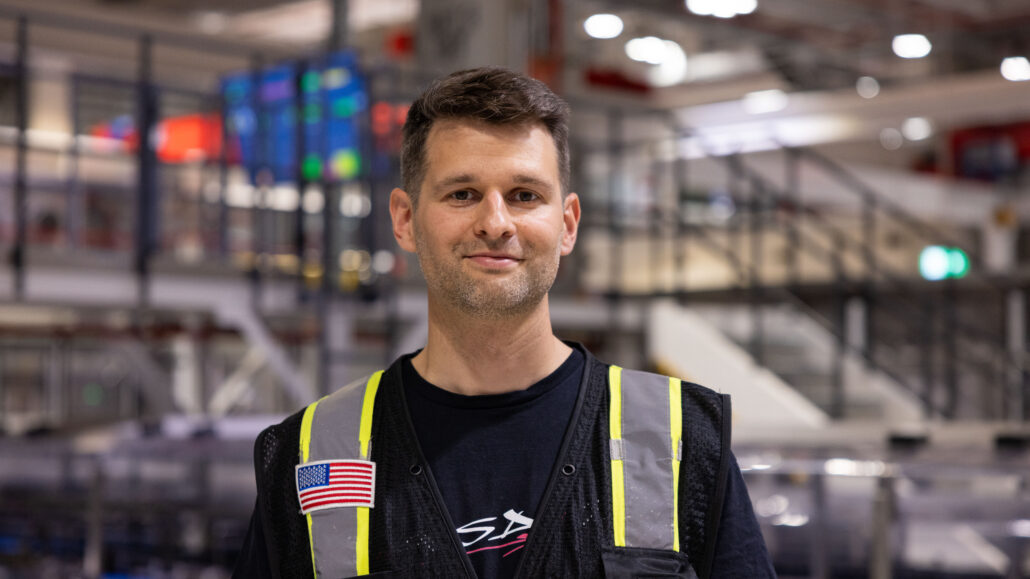
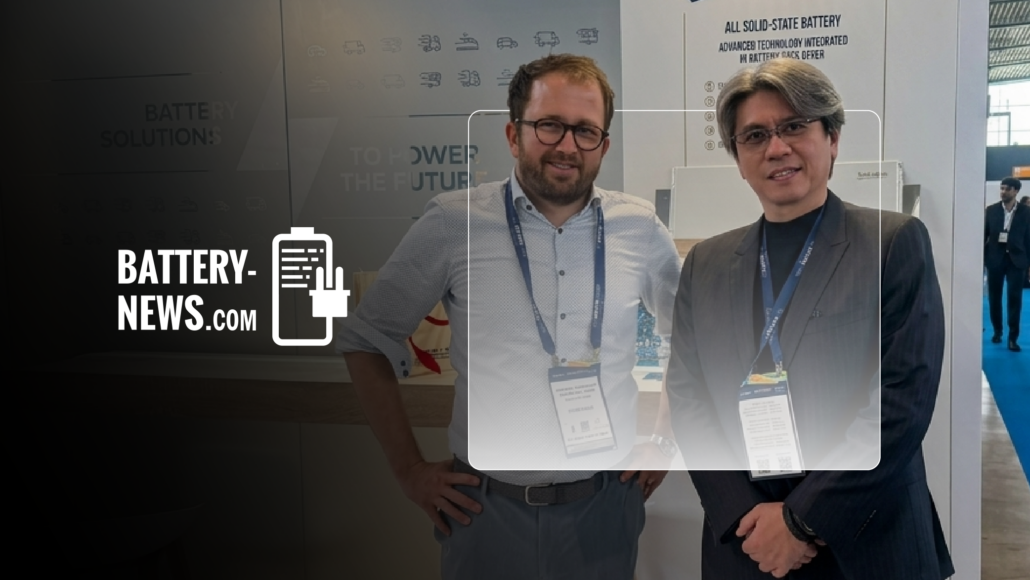
Solid-state batteries have long been touted as the next big leap for electric vehicles — higher energy density, improved safety, faster charging. But while many manufacturers are still stuck in the lab, one Taiwanese company is already pouring concrete in northern France. In February 2026, ProLogium held the official groundbreaking ceremony for its first European gigafactory at the Port of Dunkirk — marking one of the first large-scale solid-state cell production lines anywhere on the continent. Founded in 2006, ProLogium is one of the world’s most advanced makers of lithium ceramic batteries. Unlike many of its competitors, the company isn’t just running pilot lines: its gigafactory in Taoyuan, Taiwan, has been in mass production since 2024 and has shipped more than 800,000 cells to date, according to the company. With an investment of roughly €5.2 billion and a planned capacity of up to 48 GWh, the Dunkirk site is set to become the anchor of solid-state battery manufacturing in Europe, backed by partnerships with Mercedes-Benz, Mahle, and Rimac. On the sidelines of The Battery Show, we sat down with Vincent Yang, founder and CEO of ProLogium, and Christina Chen, Head of Business Management, to talk about the company’s European strategy — the path from technology leadership to industrial-scale manufacturing, why France won out as a location, and what the rest of Europe’s battery industry can learn from one of the first companies to take solid-state cells into series production. Why Europe, Why Now For ProLogium, Europe’s appeal comes down to one word: stability. Compared with the United States and China, where policy and market conditions can shift abruptly, Yang describes Europe as a reliable anchor — a consideration that carries extra weight given ongoing geopolitical tensions surrounding Taiwan and China. The groundbreaking in early February 2026 marked the company’s shift from planning to construction on its first plant outside Taiwan. A Port, Nuclear Power, and an Ecosystem That Fits In choosing a location within Europe, Yang points to several factors: By 2030, the site is expected to create roughly 3,000 direct and 12,000 indirect jobs. ProLogium has maintained a Paris office since 2024. The Technology: A Ceramic Separator Instead of a Conventional Electrolyte At the core of ProLogium’s technology is a solid-state battery built around a ceramic separator that, according to the company, remains stable even at high temperatures and varying current loads. A key safety claim: even if a cell’s temperature spikes sharply, it doesn’t go into thermal runaway. The cell itself stops working, but the vehicle and its occupants remain safe. ProLogium is especially proud of its proprietary coating process, which applies the separator directly onto the electrode instead of relying on the conventional approach of placing a separate separator film. The process has no specific brand name; what matters is that it eliminates the separator-film placement step entirely, enabling an efficient roll-to-roll process with automatic roll changeover. Electrode and separator are then stacked and laminated together as a pre-assembled unit. A key differentiator for ProLogium: the company isn’t just showing lab results — it already runs mass production, with a manufacturing line operating in Taiwan since 2024 and correspondingly mature processes. That, the company argues, sets it apart from more heavily hyped competitors that haven’t yet reached series production. European Partners, Not Chinese Dependency To build out its European supply chain, ProLogium is actively courting local partners, particularly in machinery and equipment manufacturing. A priority for the company is sourcing equipment and handling assembly locally in Europe, reducing reliance on Chinese suppliers. ProLogium aims to have its own equipment installed at the French site by 2028, leaving room for European machine builders to still get involved. Beyond the traditional automotive sector, ProLogium sees particular potential in applications such as marine use, drones, and robotics. What’s Next ProLogium positions itself as one of the few solid-state battery makers to move beyond announcements and into physical mass production. With the Dunkirk groundbreaking, a €5.2 billion investment, and partnerships with Mercedes-Benz, Mahle, and Rimac, the company is staking a claim to becoming a cornerstone of European battery sovereignty. Whether — and how quickly — that ambition translates into production output and market share will become clear in the coming years. Initial capacity in Dunkirk is expected by 2028.

Solid-State Batteries “Made in Europe”: How ProLogium Is Breaking Ground in Dunkirk Read More »

Achim Kampker - Zukunftsfrust Zukunftsmut

“We Need a New Era of Entrepreneurship”

Achim Kampker on frustration, the long game in battery manufacturing – and why Europe needs to act now Achim Kampker is a professor at RWTH Aachen University and chair of the PEM (Production Engineering of E-Mobility Components) research group. As co-inventor of the StreetScooter, he knows firsthand what it takes to move a technology from the lab to the real world. His new book “Zukunftsfrust – Zukunftsmut” – roughly translated as “Frustrated About the Future, Courageous About the Future” – has just been published. Part political manifesto, part strategic roadmap, it names the paralysis for what it is while still making the case for a fresh start. Battery News sat down with him to talk about what’s holding Europe back – and what it would take to change course. Professor Kampker, your book’s title sounds like a contradiction – frustration and courage at the same time. Where do things stand right now? My first book – Zukunftslust – was genuinely optimistic across the board. It made the case that technology can solve our biggest challenges. And when I talked to people about it, I heard a lot of agreement – but also a lot of frustration. The sense of being stuck, of feeling unable to get anything off the ground, of watching the world around you fail to move in the direction you’d hoped. Sometimes frustration with yourself, too – because these things always cut both ways. I didn’t want to ignore that. I didn’t want to just push on and say: let’s set all that aside and keep going with a smile. That’s not what I’m seeing out there. And the courage? That comes from step two: what do you do with it? That’s where personal responsibility comes in – taking action. The future – what happens tomorrow and the day after – is at least partly in our hands. Not entirely, but partly. That’s the core of what I’m trying to do: meet people where they are right now, and then look forward – at what we can actually shape together. For the book, you spoke with a diverse group of people – Hildegard Müller, Rafael Laguna, Andreas Pinkwart, Boris Palmer. What do they have in common? Altogether I spoke with 14 people from very different backgrounds. Two things stood out. First, many of them are genuinely dissatisfied with the status quo. But second – and this was crucial to me – none of them are people who just tear things down. They take an honest look at where we are, and then each of them has a forward-looking perspective that they actually live by. I didn’t want to talk to people who only demand that others step up. I wanted people who have already put something on the line themselves. And what sets them apart from each other? Their fields, their perspectives, their approaches. Boris Palmer as a politician who faces a lot of headwinds but is driven to push things forward. Hildegard Müller from the vantage point of industry associations and the automotive sector. Then entrepreneurs who have moved between academia and business, all the way to startup founders. I deliberately left the contradictions in – not everyone shares the same view. But what unites them all is this: they want to move forward. And they do. Your book describes a paradox: technologically, almost anything seems possible – yet collectively we do too little, or the wrong things. What does that look like in the battery industry specifically? Technologically, we’re still very strong – even if people often dismiss that. But look at battery technology: we started out enthusiastic, and then we missed the window anyway. That’s symptomatic. We often try to jump on trains that have already left the station. In the battery space, we spent years debating whether it even made sense, whether we shouldn’t just stick with the internal combustion engine. We tend to focus on every conceivable risk. That’s the European precautionary principle at work: we want every risk resolved before we move on to the next step. And then the regulatory burden on top of that. Exactly. The rules governing factory construction – environmental regulations that are, in principle, right and important – make factory construction several times more expensive in Germany. And they’re interpreted differently from state to state. Building a plant in Lower Saxony tells you nothing about whether you could build the same plant in Bavaria, even under similar site conditions. We end up standing in our own way. And then the competition from Asia. Which is very real. Especially in battery manufacturing – but also in mechanical and plant engineering, which has always been a core German strength – a serious competitor has emerged from China. One that has planned the entire value chain with strategic precision, advanced the underlying technologies, and above all, executed. We’re no longer the leader bringing a new technology to market and scaling it. We’re the challenger. That’s a role reversal we still need to fully internalize. Northvolt was Europe’s great hope for battery cell manufacturing – and it failed. What does that tell us? That it’s entirely normal for companies to fail when an industry is being built. That’s how markets work. In the process, know-how and IP get developed, and eventually someone comes along and says: I can use that. That can be a perfectly healthy process. The problem is that it’s not a German or European company stepping in to build on what’s already there – it’s an outside player. We keep allowing valuable know-how to leave Europe. It happens over and over with startups: they reach a certain scale and get acquired, because no one here is willing to put serious money on the table. Even though the money exists. Yes. There are plenty of healthy segments in industry and business where the capacity to invest is there. Committing significant capital – that’s point one. And stop looking to the government to do it. The logic of

“We Need a New Era of Entrepreneurship” Read More »

Battery Production Days 2026: Applications Open for the Start-up Challenge

The Battery Production Days 2026 will put start-ups from the battery production sector in the spotlight. Young companies can apply for the BPD Start-up Challenge from July 1 through August 31. The second edition of Battery Production Days will take place on October 20 and 21, 2026, in Aachen. Application Period Begins in Early July The challenge is aimed at startups developing technologies and solutions for future battery manufacturing. Applications are submitted via an online form, and a pitch deck must also be provided. Applications will be reviewed by a jury composed of industry and applied research representatives. Finalists to Present in Aachen Selected finalists will present their solutions at Battery Production Days 2026 through live pitches on stage, as well as potentially in the exhibition area. This will give the startups access to an expert audience from the battery industry, manufacturing, and applied research. Battery Production Days will take place at the Manfred-Weck-Haus in Aachen. The event is expected to draw 250 participants and feature six sessions offering more than 15 hours of networking. It is aimed at executives, production managers, engineers, researchers, startups, and companies from the battery value chain, among others. Tickets for the conference are available via the registration page. More information on how to apply is available on the BPD Start-up Challenge website.

Battery Production Days 2026: Applications Open for the Start-up Challenge Read More »

New Podcast: Battery Matters Features Sebastian Wolf’s New Venture in Debut Episode

What’s actually moving the battery industry — and who’s driving it? Battery Matters, the new quarterly podcast from Battery News and the Volta Foundation, cuts through the noise with sharp quarter recaps, key trend analysis, and candid conversations with industry heavyweights. Battery News and the Volta Foundation have joined forces for a new quarterly podcast called Battery Matters — a play on battery materials, the importance of batteries, and the battery experts behind the mic. Hosts Christoph Lienemann (Battery News) and Lauren Allanson, Director of Member Development at the Volta Foundation, conceived the format after crossing paths repeatedly on the industry event circuit. The Volta Foundation is the world’s largest professional network for the battery industry, a global not-for-profit association of more than 75,000 battery professionals and 200+ member companies. Sebastian Wolf on why Europe needs to own its energy stack The debut episode features Sebastian Wolf, former CEO of PowerCo, Volkswagen’s battery cell manufacturing subsidiary, where he oversaw gigafactory development in Salzgitter, Valencia, and Canada. Wolf left PowerCo roughly six months ago and has since founded WLF Energy GmbH, which made its public debut at The Battery Show Europe in Stuttgart on June 9, 2026. WLF Energy is positioning itself as a vertically integrated clean-energy platform, combining solar generation, battery storage, battery management systems (BMS), energy management systems (EMS), AI-driven optimization, and energy trading into a single ecosystem. The company’s stated goal is to bring the cost of clean electricity in Europe below €0.10 per kilowatt-hour. Key building blocks include the acquisition of Cellovate GmbH, the BMS spin-out of PEM Aachen GmbH, and VersaPowr AS, a specialist in power conversion and energy management systems, as well as a newly signed strategic partnership with Farasis Energy to co-develop next-generation battery technologies and energy storage products. In the podcast, Wolf discusses WLF Energy’s strategy of importing battery cells from China for near-term deployments while localizing BMS and EMS development in Europe — a model he argues is the fastest path to affordable, sovereign energy infrastructure on the continent. One prediction, one event, one highlight — every quarter Each episode follows a three-part structure: a recap of the most important developments from the previous quarter, a top-three summary of the defining moments, and an in-depth conversation with a high-profile guest — always recorded live at an industry event. The episodes close with a forward look: one prediction, one key event, and one highlight to watch over the coming quarter. Battery Matters is available now on YouTube, Spotify and Apple Podcasts. New episodes are planned quarterly, with the potential for more frequent releases depending on audience response.

New Podcast: Battery Matters Features Sebastian Wolf’s New Venture in Debut Episode Read More »

New PEM Battery Report: A Data-Driven Look at the European EV Battery Market

PEM Motion and RWTH Aachen have jointly published the new “Automotive Battery Market Report” — a data-driven analysis of the European battery market. The report is based on official market data for electric vehicles (BEV + PHEV) and provides detailed technical insights, covering vehicle models, integrated battery systems, and battery cell technology. The analyses focus on technological development and market relevance. Underpinning the report is a database of more than 2,600 data points on vehicles, battery systems, and battery cells, supplemented by findings from over 40 industry and research projects. Together, these sources provide a detailed picture of how the market has evolved — from EV sales dynamics and a growing diversity of models to technological trends in cell chemistries, energy densities, and pack architectures. What the data reveals Among other findings, the data shows how the European EV market has shifted from a handful of dominant models to a fragmented landscape with more than 130 registered EV models — and which technologies and cell manufacturers now hold the largest market shares. The report is aimed at anyone who wants not just to monitor the European battery and EV market, but to understand it in a structured way — from OEMs and suppliers to strategy leads and decision-makers. The report is now available in the Battery News Shop.

New PEM Battery Report: A Data-Driven Look at the European EV Battery Market Read More »

Bahattin Celik, Dry Room Expert at Weiss Technik Germany

How New Battery Types Are Reshaping the Design and Operation of Dry Rooms

Manufacturing modern battery cells places stringent demands on the environment in which they are produced. Controlling moisture, particulate matter, and potential emissions is especially critical. While dry rooms have long been established in conventional lithium-ion production, new battery types and specialized applications are introducing additional challenges. We spoke with Bahattin Celik, dry room expert at Weiss Technik, about how dry room requirements are currently evolving — and why these specialized production environments are becoming a priority once again. Dry rooms have been a central component of battery cell production for years. What role do they play today in practice — and why is moisture control so critical for many battery types? Dry rooms are no longer a ‘nice to have’ — they are an absolute prerequisite for many battery manufacturing processes. Depending on the cell chemistry, moisture directly interferes with the electrochemical properties and can significantly impact both performance and lifetime. Particularly in early process steps, such as electrode manufacturing or cell assembly, even trace amounts of water are enough to cause problems that only manifest weeks or months later in the field. That is why maintaining a stable, reproducible dry room atmosphere is critical. Does this apply equally to all battery types — or do requirements differ significantly depending on the application? The differences can be substantial. Conventional NMC or LFP battery cells — for example, those used in automotive applications — are already sensitive to moisture, but many specialty batteries are considerably more critical. For certain types, even minimal deviations from the target dew point can irreversibly damage materials. Add to this the fact that in specialty applications we frequently work not with high production volumes, but with very precisely defined processes. There is little margin for error, and the requirements for stability and process control are correspondingly higher. Where do you see the most significant differences between dry rooms for conventional automotive cells and those for specialty batteries — for example, in defense or aerospace applications? Automotive battery dry rooms are strongly oriented toward throughput and standardization — which makes perfect sense. Specialty batteries are exactly the opposite: smaller material quantities, unique cell chemistries, and often elevated safety requirements. Production processes must be more flexible, since reconfigurations inside the dry room are more frequent, and there are often additional requirements stemming from explosion protection or hazardous materials regulations. All of this has a major influence on dry room design — from airflow management to sensor systems, filtration, and controls. You also work with battery types such as thermal batteries and thionyl chloride cells. What makes these applications particularly demanding from a dry room engineering perspective? Thermal batteries involve highly reactive, extremely moisture-sensitive materials — sometimes in powder or pellet form. Other systems use aggressive or unstable media that must also be handled safely. From a dry room perspective, this means very stable dew points, controlled particulate levels, and at the same time a high degree of process safety. The fact that only very small quantities of materials are processed makes control and monitoring even more challenging. Why do conventional gas detection systems and sensors struggle with very small quantities of substances? Many gas detection systems and sensors are designed for standard industrial applications. In extremely dry air and with very low emission levels, these systems quickly reach their physical detection limits. Measurement signals become unstable or fall near the detection threshold. In an emergency, this can be problematic, because trends or gradual changes are recognized too late — posing a risk to both personnel and product. In the specialty battery environment, simply monitoring threshold values is usually not sufficient. What solutions are available? Do sensor systems and safety concepts need to be specifically adapted for such environments? Absolutely. In these applications, sensor systems, gas detection concepts, and filtration must be developed in an integrated system. This can mean incorporating additional filtration stages or repositioning measurement points — for example, closer to the hazard source, or through the use of redundant sensors. The suitability of sensors for extremely dry ambient conditions must also be factored into the technical selection process. The control strategy plays a central role as well: it is not simply a matter of ‘alarm yes or no,’ but rather how the overall system responds to even the smallest deviations. For instance, when detecting hazardous substances, a pre-alarm level can be used to initiate technical countermeasures in the system at an early stage, preventing harm to personnel or product. In most cases, this is not purely a hardware issue, but rather a combination of well-thought-out design, intelligent programming, and the experience required for accurate hazard assessment. You mention specialized adaptations in sensor systems and filters. Another concept that plays a role here is that of mini environments. What is behind this term? Mini environments are essentially locally enclosed battery production units within a dry room that provide even stricter or more specialized conditions. Rather than bringing the entire dry room to an extremely low dew point, the focus is placed selectively on the truly critical process steps and production equipment along the battery manufacturing line. This increases process reliability while also being economically sensible — particularly for smaller production runs or changing production layouts. Comparing these concepts — the conventional dry room, the mini environment, and taking it one step further: micro environments, i.e., the complete encapsulation of the process itself — what are the respective strengths of each, and which approach is right for which use case? The conventional dry room is robust and easily accessible — ideal for many standard processes. Mini environments offer an excellent balance of control, flexibility, and cost. Micro environments — fully enclosed sections within the production equipment — enable maximum control, but also come with significant demands in terms of maintenance, service, and emergency procedures. The right solution depends heavily on the process, the cell chemistry, and the operational requirements. There is no blanket ‘better or worse’ answer. Micro environments sound attractive at first — less space, more

How New Battery Types Are Reshaping the Design and Operation of Dry Rooms Read More »

AABC Europe 2026: Where Battery Innovation Is Headed

From May 18–21, 2026, Cambridge EnerTech will host the Advanced Automotive Battery Conference (AABC) Europe in Mainz, Germany — one of the most important global platforms for automotive battery innovation. The conference takes place at a moment when Europe remains firmly committed to electrification, even as policy frameworks and market momentum continue to vary significantly across the continent. From cell chemistry to recycling to AI The AABC Europe 2026 program reflects the full breadth of today’s industry priorities. Established areas such as cell chemistry and battery materials sit alongside newer fields like artificial intelligence (AI) and heavy-duty applications. The entire event features 12 tracks, 11 tutorials, and more than 200 speakers. The Battery Engineering track focuses on advances in cell and pack design, safety, and battery management. Kenji Hosaka from Nissan will present the battery innovations behind the new LEAF (third generation), while Wieslaw Brys of Amazon Robotics will demonstrate what BMS data can reveal about safety and efficiency in real-world operations. The AI for Energy Storage track explores how AI is accelerating battery research — from automated electrode characterization to foundation models for vehicle fleets. One key takeaway from the session is that without physics-based models and real-world test data, AI approaches risk missing real-world conditions. Hybrid models that combine simulation and machine learning are emerging as a promising path forward. The Battery Recycling track puts market trends and regulatory developments front and center — including export restrictions on black mass, a ten-year outlook on the recycling landscape, and the business implications of new EU frameworks on recycling efficiency. That electrification is no longer just a passenger vehicle story is underscored by the EV Technology for Heavy-Duty Applications track, which examines battery chemistries for trucks, buses, and off-highway equipment — with contributions from Daimler Truck AG on LMFP-NMC chemistry and from Accelera by Cummins on hybrid battery solutions. New materials and testing concepts on the exhibition floor Alongside the conference program, the exhibition showcases where component and manufacturing development is heading. Purem by Eberspächer is presenting a battery housing made from high-strength steel — a viable alternative to aluminum, which has dominated the market to date. Thinner wall sections allow for lighter housings without sacrificing structural integrity, while the concept also claims improvements in CO₂ footprint and recyclability. The design is already in mass production in Asia; a stainless steel variant for the European market is being developed in collaboration with an industry consortium. Freudenberg Sealing Technologies is showcasing advanced cell caps for prismatic cells alongside novel nonwoven sleeves designed to protect and electrically isolate the cell stack — an alternative to conventional polypropylene and PET films. Dr. Peter Kritzer will present the solutions in a dedicated talk on May 21. Publicly funded research also has a presence: the EU project FASTEST (Fast-track hybrid testing platform for the development of battery systems) will present progress on linking physical test benches with digital twins — with the goal of meaningfully reducing development timelines. The work is being carried out together with Finnish research partner VTT. Battery development as a systems challenge What AABC Europe 2026 makes clear above all else: battery innovation is no longer just a question of cell chemistry. Recycling, AI, heavy-duty applications, new materials — these areas are deeply interconnected. Developing the next generation of traction batteries requires keeping the entire system in view. For Germany and Europe, the timing of the conference couldn’t be better. Cross-industry exchange between OEMs, suppliers, startups, and research institutions is more critical than ever — particularly given ongoing regulatory uncertainty and intensifying global competition. The Battery News team will be on-site. Come find us at booth 912 — we look forward to seeing you there!

AABC Europe 2026: Where Battery Innovation Is Headed Read More »

Battery Active Material in Europe

Battery-News provides an overview of planned and already implemented projects in the field of active materials for lithium-ion batteries in Europe. The map was first published as part of the “Battery Atlas 2026.” A high-resolution file is available as a free download. If a company is missing or if there are general comments, the Battery-News editorial team will be happy to receive a message.

Battery Active Material in Europe Read More »

Recycling in a Cost Trap: How New Cell Chemistries Are Putting Pressure on the Business Model

Falling battery costs are a key driver of the continued growth of electric mobility. Yet this very trend could undermine the current recycling model. While batteries are becoming cheaper, they are simultaneously losing material value—with direct consequences for the economic viability of recycling. Technological change in the battery market has accelerated over the past years: Within lithium-ion technologies, more cost-effective variants such as lithium iron phosphate (LFP) are gaining increasing importance, while nickel-manganese-cobalt (NMC) cells remain primarily in the high-performance premium segment. At the same time, new technologies such as sodium-ion batteries are coming into focus. Shift in cell chemistries is changing the market This development is confirmed by various market analyses. The International Energy Agency points out that as the share of low-cobalt cell chemistries increases, the economic conditions for recycling are also changing—and that regulatory mechanisms could play a greater role in the future. According to BloombergNEF, prices for LFP batteries are significantly lower than those of NMC systems and have played a key role in driving down average battery costs in recent years. A recent analysis by the GRS Batterien Foundation comes to a similar conclusion: According to the study, LFP could achieve a market share of around 60% by 2030 in the base scenario—and even up to 80% with faster technological progress. Looking ahead, sodium-ion batteries are also likely to gain increasing market share. Forecast of demand trends for battery storage capacity in the EU by valuable and non-valuable cell chemistries (in tonnes) By 2035, the share of valuable batteries will decline significantly. Why recycling has been economically viable so far The existing recycling model for lithium-ion batteries has so far relied heavily on the recovery of valuable metals. Nickel and cobalt, in particular, play a key role in covering the costs of collection, transport, and processing. Especially for NMC batteries, the material value is a central economic factor. Recycling therefore makes sense not only from an environmental perspective but can also be economically viable under certain conditions. Less valuable materials, same effort However, as cell chemistries evolve, this logic is shifting. LFP batteries largely do without nickel and cobalt, while sodium-ion batteries rely on even more cost-effective and globally available materials. However, this shift does not affect all segments equally: According to forecasts, NMC batteries will primarily remain in the high-performance premium segment. This means that while the raw material-driven recycling model will remain viable in the premium segment for some time, it is coming under pressure particularly where the largest volumes are generated—in the mass market for electric mobility and in stationary storage systems. The key point: The technical and logistical effort involved in recycling remains high—regardless of cell chemistry. At the same time, however, the economic return from the recovered materials is declining. An analysis by the GRS Batterien Foundation also indicates that, with the increasing prevalence of cost-effective cell chemistries, existing revenue models could come under pressure. Recycling risks becoming an unprofitable business As a result, the existing balance between costs and revenues is shifting. While recycling is currently supported in part by material revenues, it could become more dependent on external factors in the future—such as regulatory requirements or new financing mechanisms. The industry has long pointed out that business models in battery recycling must adapt to changing material structures. The industry is thus facing a fundamental shift: away from a primarily raw material-driven approach toward more systemically organized circular models. New business models and regulatory solutions are needed In this context, regulatory frameworks and new business models are gaining importance. The EU Battery Regulation already focuses on extended producer responsibility and mandatory recycling targets. In the future, recycling could evolve more toward a regulated system in which financing is no longer primarily based on material values but on mandatory contributions along the value chain. At the same time, new approaches are emerging: Uncertain forecasts, clear trend However, it is difficult to predict how quickly and to what extent this development will take place. Forecasts regarding market development and the prevalence of individual cell chemistries vary considerably in some cases—as the GRS analysis itself points out. Nevertheless, a clear trend is emerging—and industry experts estimate that the momentum is in some cases even greater than market models suggest, particularly for sodium-ion batteries. The transition to more cost-effective battery technologies is transforming not only production but also the logic of the circular economy. Conclusion: A systemic shift rather than optimization For the recycling industry, this means more than just adapting existing processes. Rather, it marks a fundamental system shift. In the future, recycling will be determined less by the value of individual raw materials and more by regulatory requirements, industrial strategies, and the organization of functioning material cycles. Consequently, the central question is no longer just how batteries can be recycled—but under what economic conditions this will happen in the future. Sources: Stiftung GRS Batterien / Macrom — „Entwicklung der Batteriezellchemien in der EU bis 2035″, March 2026https://www.stiftung-grs.de/fileadmin/Downloads/Sonstige_Downloads/Marktstudie_Zellchemien_im_Wandel_GRS-PM.pdf IEA — Global EV Outlook 2024, Kapitel: Outlook for battery and energy demandhttps://www.iea.org/reports/global-ev-outlook-2024/outlook-for-battery-and-energy-demand IEA — Recycling of Critical Minerals, Executive Summaryhttps://www.iea.org/reports/recycling-of-critical-minerals/executive-summary BloombergNEF — Lithium-Ion Battery Pack Prices Fall to $108/kWh, December 2025https://about.bnef.com/insights/clean-transport/lithium-ion-battery-pack-prices-fall-to-108-per-kilowatt-hour-despite-rising-metal-prices-bloombergnef Fastmarkets — „European LFP recycling vital for future but facing economic barriers”https://www.fastmarkets.com/insights/european-lfp-recycling-vital-for-future-but-facing-economic-barriers-lme-week/ C&EN / American Chemical Society — „Lithium-ion battery recycling goes large”https://cen.acs.org/environment/recycling/Lithium-ion-battery-recycling-goes/101/i38

Recycling in a Cost Trap: How New Cell Chemistries Are Putting Pressure on the Business Model Read More »

Digital Battery Passports: Spherity Solution Now in Use at BVG

As public transportation becomes increasingly electrified, the management of traction batteries is taking center stage for transit companies. Berlin’s public transit authority BVG is therefore using digital battery passports from Dortmund-based technology provider Spherity for part of its electric bus fleet. The goal is to make operational data available in a structured format across the entire battery lifecycle—from use in service to second-life applications and recycling. BVG already operates more than 300 electric buses with batteries of up to 700 kWh capacity. By the early 2030s, the fleet is expected to grow to around 1,500 vehicles. This will also place significantly higher demands on maintenance, condition monitoring, and documentation of high-voltage batteries in operation. To help manage these requirements, BVG is already testing the digital battery passport in 55 buses. Data access via QR code At its core, the digital battery passport is a structured dataset hosted in a decentralized, cloud-based infrastructure. Spherity relies on open standards and a decentralized identity architecture (SSI – Self-Sovereign Identity), which ensures that data access is traceable and tamper-proof. Authorized parties can access information via a unique identifier—in the case of the BVG, a QR code on the battery housing. This includes, among other things, data For transit companies, such a data framework can help better plan maintenance measures and assess the condition of individual battery systems more transparently. At the same time, relevant information for later phases of use or recycling processes can be documented early on. Relevance for regulatory requirements Digital battery passports are also gaining importance in light of new European regulations. The EU Battery Regulation (BATT 2.0) and the Ecodesign Regulation (ESPR) stipulate that comprehensive information on the lifecycle must be available for certain battery categories in the future. This includes data on sustainability, material composition, and performance. For the BVG, this is not an abstract regulatory framework: its first 228 e-buses saved nearly nine million liters of diesel and approximately 30,000 metric tons of CO₂ between 2019 and 2024—figures that could be automatically documented and reported via the battery passport in the future. Standardized data models can help companies meet these requirements and efficiently provide evidence for audits or sustainability reports. At the same time, new demands arise regarding IT integration, data quality, and access management. Foundation for data-driven fleet management In addition to regulatory aspects, transit companies also see potential in digital battery passports for operational fleet management. Manufacturers can provide additional technical documentation, such as maintenance manuals or schematics, in digital form. This allows service processes to be accelerated and information to be managed centrally. Structured data exchange can also benefit authorities or testing organizations, for example during technical inspections or environmental assessments. However, this requires that interfaces be designed to be interoperable and that data protection and security requirements be met. “The battery passport is not an end in itself—it becomes an operational tool. It provides transparency regarding a battery’s condition, origin, and compliance-related information, supports predictive maintenance planning, reduces manual effort, and facilitates compliance with regulatory requirements throughout the lifecycle,” says Ricky Thiermann, Head of Product Management at Spherity. Focus on second life and recycling In bus operations, traction batteries typically reach a stage after ten to 15 years at which their capacity is no longer sufficient for use in the vehicle. In many cases, however, they can still be used as stationary energy storage systems—a so-called second-life scenario that significantly extends their overall service life. Initial pilot projects are underway, for example, at a well-known discount store. Recycling, during which up to 95 percent of the materials can be recovered, only takes place at the end of the extended lifecycle. A digital battery passport can provide relevant information on material composition or the so-called “state of health” during these later stages of use. For recycling companies, this can simplify process planning and help recover valuable materials more efficiently. A cornerstone for transparent battery supply chains With the increasing adoption of digital battery passports, a more comprehensive database is emerging along the entire value chain. This could enable transit operators, manufacturers, service providers, and recyclers to collaborate more closely. At the same time, the example from Berlin shows that the practical implementation of such solutions involves organizational and technical challenges—such as standardizing data formats or integrating them into existing IT systems. Nevertheless, as electric mobility gains momentum, the need for transparent information about batteries is growing noticeably. The experience gained so far with Spherity’s battery passports at BVG shows how digital battery passports can evolve from a regulatory requirement into a practical operational tool—and thus serve as a blueprint for other public transport operators in Europe. Based on information from Spherity GmbH, the article was updated on April 20, 2026. Sources:https://www.bvg.de/de/unternehmen/nachhaltige-mobilitaet/flotte/e-mobilitaethttps://www.berlin.de/sen/uvk/mobilitaet-und-verkehr/verkehrsplanung/oeffentlicher-personennahverkehr/elektro-busse

Digital Battery Passports: Spherity Solution Now in Use at BVG Read More »

Scroll to Top