Battery-News

Battery Production

OCSiAl to Supply Nanotubes for PowerCo’s Cell Platform in Salzgitter

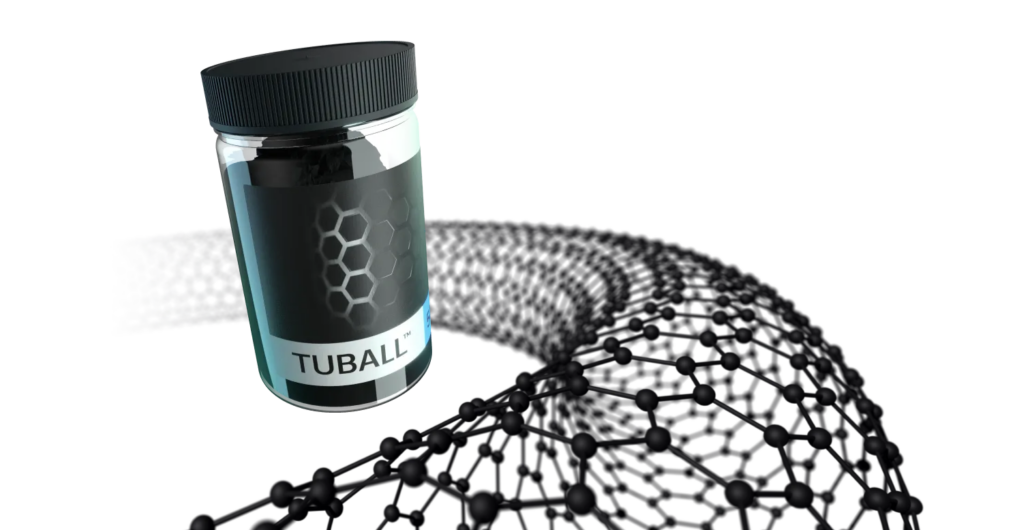
The Luxembourg-based nanotube specialist OCSiAl has signed a supply agreement with Volkswagen Group’s battery division, PowerCo. As part of this partnership, OCSiAl will provide PowerCo with single-walled carbon nanotubes for its Unified Cell battery platform. The materials are intended for PowerCo’s plant in Salzgitter. According to the company, the nanotubes will be used in graphite anodes. OCSiAl describes the nanotubes as conductive additives. They are designed to increase the electrical conductivity of graphite anodes and improve heat dissipation. The company cites benefits such as improved charging and discharging performance, increased safety, and a longer service life for the battery cells.  Supply from European production The shipments are planned to come from the OCSiAl plant in Serbia. This would mean that part of the procurement of critical battery materials would take place within Europe. According to OCSiAl, the site has met all quality and reliability requirements and has been audited by PowerCo. Other battery manufacturers from Europe and Asia are said to have also conducted audits. OCSiAl markets its single-walled carbon nanotubes under the TUBALL brand. The company claims to supply most European manufacturers of batteries for electric vehicles. These materials are used in both the cathode and anode systems of lithium-ion batteries. OCSiAl notes that approximately one million electric vehicles already contain its nanotubes. In November 2025, the company announced plans to build a graphene nanotube plant in Luxembourg. The investment is expected to total 300 million U.S. dollars. Source:https://ocsial.com/de/news/ocsial-to-supply-single-wall-carbon-nanotubes-to-powercos-salzgitter-facility/

OCSiAl to Supply Nanotubes for PowerCo’s Cell Platform in Salzgitter Read More »
Lyten Reportedly Offers 60 Million Euros for Northvolt Site Near Heide

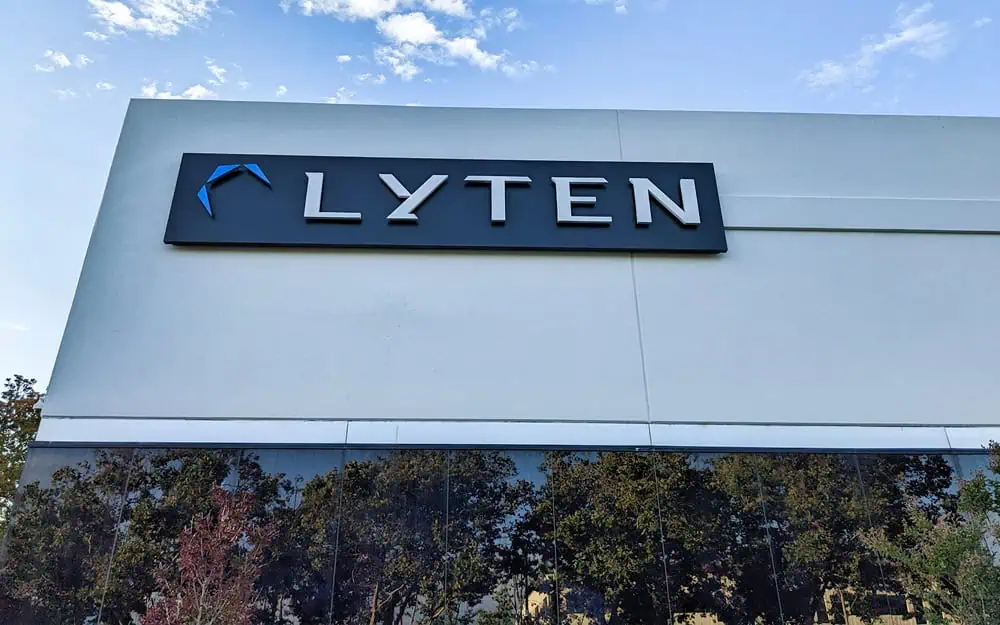
U.S. company Lyten reportedly plans to pay 60 million euros for the site of insolvent battery manufacturer Northvolt near Heide in the Dithmarschen district. This was reported by Der Spiegel and the dpa news agency. There has not yet been any official confirmation. According to the reports, an agreement is said to have been reached with the KfW development bank, the German federal government and the Schleswig-Holstein state government. The Economics Ministry in Kiel is currently cautious in its response. A spokesperson said the state government remains in talks with Lyten. Next week, the state cabinet and two state parliamentary committees are expected to address the matter. Until then, the state government does not intend to provide further information. The possible purchase price is politically relevant because the federal government and the state had to assume liability for a convertible bond after the insolvency of Northvolt’s parent company. The bond had a volume of 600 million euros and was backed equally by the federal government and Schleswig-Holstein. Site plans remain smaller than Northvolt’s Northvolt had originally announced plans to build a battery factory near Heide. At the time, about 3,000 jobs were discussed. After the parent company became insolvent, Schleswig-Holstein faced estimated losses of around 200 million euros. Lyten expressed interest in the site in the summer of 2025. According to previous information, the company plans to build a battery cell factory, a battery storage facility and a data center there. The expected number of jobs is 1,000, well below Northvolt’s earlier plans. As part of the planned takeover, the federal government and the state have already been able to secure 153 million euros. A sale of the property could bring in an additional mid-double-digit million-euro amount for the federal government and the state. Source:https://www.ndr.de/nachrichten/schleswig-holstein/batteriefabrik-lyten-will-offenbar-60-millionen-euro-zahlen,lyten-140.html

Lyten Reportedly Offers 60 Million Euros for Northvolt Site Near Heide Read More »

CATL Launches “Tener Sodium” Sodium Storage System

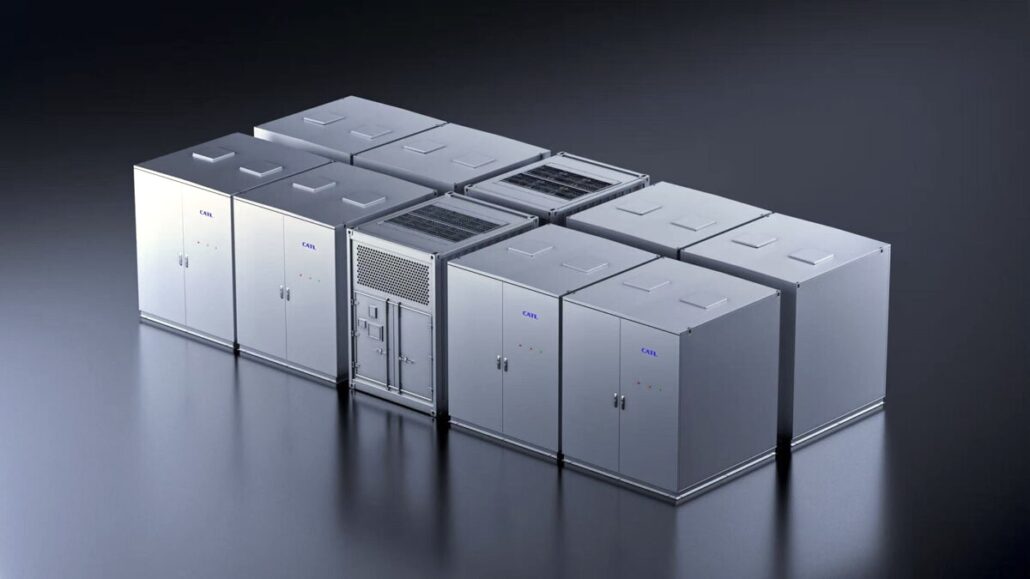
At its 2026 Energy Storage Event, CATL unveiled their new “Tener Sodium” system. The battery manufacturer describes it as the world’s first sodium battery solution for stationary energy storage that has been validated under real-world conditions. According to CATL, preparations for mass production are complete. The first deliveries in China are scheduled to begin in September. The company expects to deliver 1 GWh by the end of 2026. Global commercial deliveries are planned to begin in June of the following year. “Tener Sodium” is designed for storage applications ranging from one to eight hours. CATL cites a rated capacity of more than 30 MWh. The system is fully modular. Each module weighs 42 metric tons. According to the company, the system can be adapted to different project requirements. It is also said to be dimensionally compatible with lithium-ion battery systems, enabling a seamless transition between the two technologies. Sodium Battery Focused on Efficiency, Lifespan, and Availability CATL specifies a lifespan of 15,000 cycles at 25 °C with a state of health of up to 70 percent. This would correspond to a service life of 25 to 30 years. At 45 °C, the system is said to be capable of more than 10,000 cycles. At -20 °C, the system reportedly retains over 92 percent of its capacity. To ensure operational safety, CATL cites a self-healing function that operates at the millisecond level. Faults are reportedly detected and isolated within 200 milliseconds. Unaffected areas resume operation within 150 milliseconds. CATL also claims that the system can suppress fires and explosions under extreme conditions. Source:https://cnevpost.com/2026/06/22/catl-unveils-tener-sodium/

CATL Launches “Tener Sodium” Sodium Storage System Read More »

Automated Battery Logistics for the Battery Factories of Tomorrow

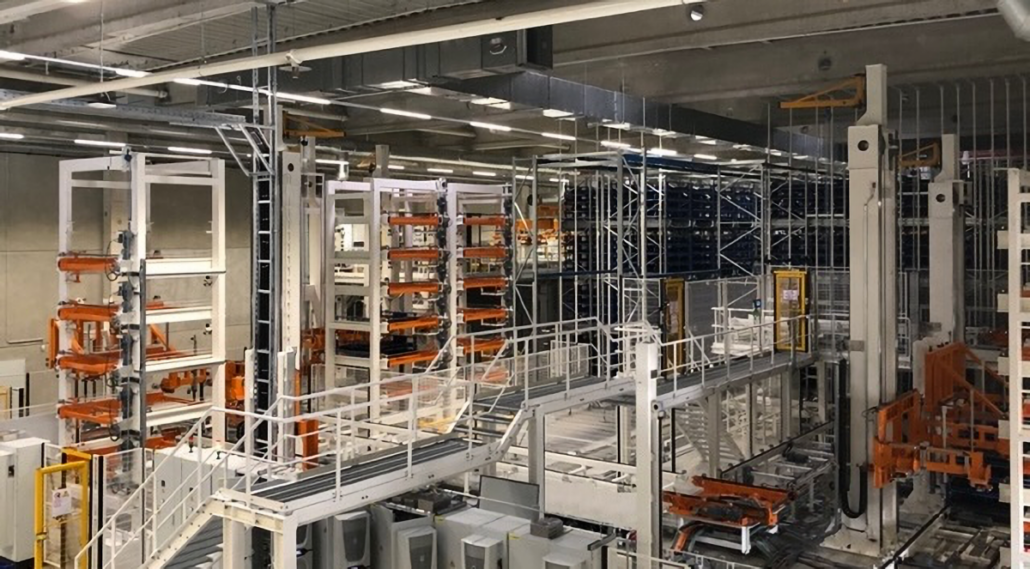
As Europe’s battery manufacturing capacity expands, the demands on logistics are becoming increasingly complex. Battery modules and finished high-voltage battery packs need to be transported safely, stored temporarily, and loaded on schedule. Bottlenecks are particularly likely at the interfaces between production, warehousing, and transport. Rail as Part of the Battery Logistics Chain Rail transport is becoming increasingly important for many battery manufacturers. While it allows large material volumes to be moved efficiently, the requirements for loading and unloading railcars are rising at the same time. ALZTEC addresses these challenges with automated systems. Its solution handles both the unloading of incoming battery modules and the loading of finished battery systems. According to the company, the entire process runs automatically and without manual intervention directly at the rail siding. An Integrated View of Material Flow Fast handling times depend on more than the loading step alone. Upstream storage and conveyor systems also have to be tightly coordinated. To achieve this, ALZTEC combines conveyor systems, heavy-duty high-bay warehouses, and automated railcar loading into a single integrated system. The goal is to coordinate material movements across the entire process chain and reduce wait times at the interfaces. According to the company, the expected benefits include higher throughput, shorter wait times, and reduced in-plant forklift traffic. The automated material flow is also intended to reduce risks associated with the manual handling of heavy battery systems. Video: Automated Rail Loading in Action ALZTEC has released a video from an operating installation showing how the solution performs in practice. The footage shows battery stacks weighing several tons being moved automatically between the railcar and the warehouse. The video is available here: https://alztec.com/videos/batterielogistik/

Automated Battery Logistics for the Battery Factories of Tomorrow Read More »

EU Commission Launches New Funding Instrument for Battery Cell Manufacturing

The European Commission has formally established the “Battery Booster Facility.” Through this new program, up to €1.5 billion from EU emissions trading revenues will be invested in the European battery industry. The goal is to support battery cell manufacturers as they increase production in Europe. This is the first time the Commission will provide direct support in this sector in the form of interest-free loans. Grants are not planned. According to the Commission, the loan model is intended to contribute to sound capital planning, complement private investment, and help companies achieve economic viability more quickly. Focus on Electric Vehicles and Production in the EEA Eligible projects produce battery technology suitable for electric vehicles. According to the guidelines, these products may also be used for other applications. Production must be located within the European Economic Area. Additionally, a minimum capacity of 10 gigawatt-hours has been set. Loans may not exceed 500 million euros per project. Applications will be evaluated based on technical and financial maturity, as well as economic added value for Europe. The Commission plans to launch a call for proposals in the third quarter of 2026. It is expected to last six weeks. The first project commitments and payments are expected before the end of 2026. The new facility is linked to previous measures by the Innovation Fund. These include a 2024 call for proposals worth one billion euros for electric vehicle battery cell manufacturing, as well as an additional 200 million euros for investments in European battery production. Source:https://climate.ec.europa.eu/news-other-reads/news/new-battery-booster-set-inject-eu15-billion-european-battery-industry-2026-06-09_en

EU Commission Launches New Funding Instrument for Battery Cell Manufacturing Read More »

Podcast on the state of Europe’s battery industry with Prof. Heiner Heimes

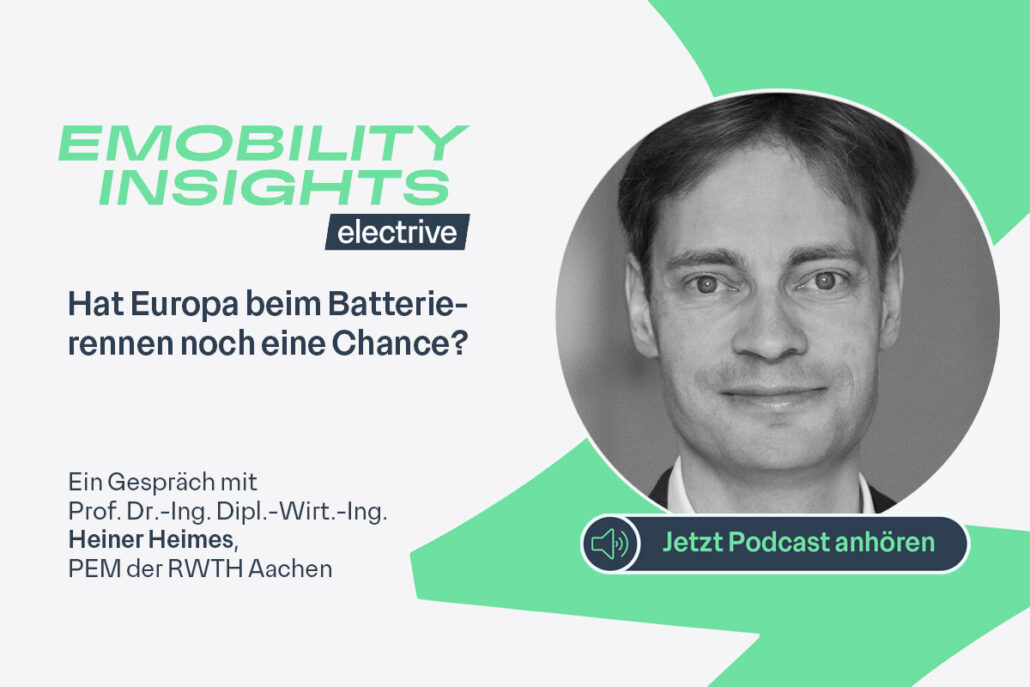
In the latest episode of “eMobility Insights”, electrive editor-in-chief Peter Schwierz talks to Prof. Heiner Heimes from PEM at RWTH Aachen University about the current state of European battery cell production. The podcast is in German. The discussion explains why many original expansion plans have since been significantly scaled back. According to electrive, announced cell production capacities in Europe have fallen from around 2,000 to below 1,000 gigawatt-hours per year. Heimes sees the main challenge less in building new factories than in ramping up production reliably. Key factors include quality, low scrap rates and sufficient capital. The podcast also addresses the consequences of the Northvolt case for confidence in European battery projects. At the same time, Heimes points to areas where Europe still has potential, including recycling, testing infrastructure, and module and pack production. PowerCo, Volkswagen’s battery subsidiary, is also mentioned as an important test case. The episode provides a sober assessment of what role Europe can still play in the battery value chain. The podcast is available here on electrive:Listen to the conversation with Heiner Heimes

Podcast on the state of Europe’s battery industry with Prof. Heiner Heimes Read More »

Eni and Seri Industrial Plan Supply Chain for Stationary Batteries

Eni Industrial Evolution, a subsidiary of the Italian energy company Eni, and FIB, a unit of the Italian Seri Industrial Group, have signed an agreement to create an integrated supply chain for lithium iron phosphate batteries.  The project includes the production of battery cells and modules, as well as the assembly of stationary energy storage systems. Applications for industrial and commercial electric mobility are also planned. Later, recycling, material recovery, and the production of active cathode material could be added. Gigafactory planned by 2029 Under the agreement, FIB will expand its industrial operations at its Teverola site in the Caserta province. According to the companies, a facility for producing lithium iron phosphate cells is already operational there. Additionally, the joint venture Eni Storage System plans to complete an assembly line for utility-scale battery storage systems at its Teverola-Brindisi site by mid-2027. A second gigafactory is also planned by 2029. This facility is expected to produce cells and modules with an annual capacity of over 8 GWh. The companies aim to capture more than ten percent of the European stationary battery market. Under the agreement, Eni Industrial Evolution will acquire a 30 percent stake in a newly established company from FIB. FIB will retain a 70 percent stake. The new entity will focus on commercial development, procurement, and engineering. The fixed purchase price is 55 million euros, with provisions for potential price adjustments. Source:https://seri-industrial.it/wp-content/uploads/2026/05/PR_EIE_SERI.pdf

Eni and Seri Industrial Plan Supply Chain for Stationary Batteries Read More »

LG Energy Solution Vertech to Supply Battery Storage Systems to DTE Energy in Michigan

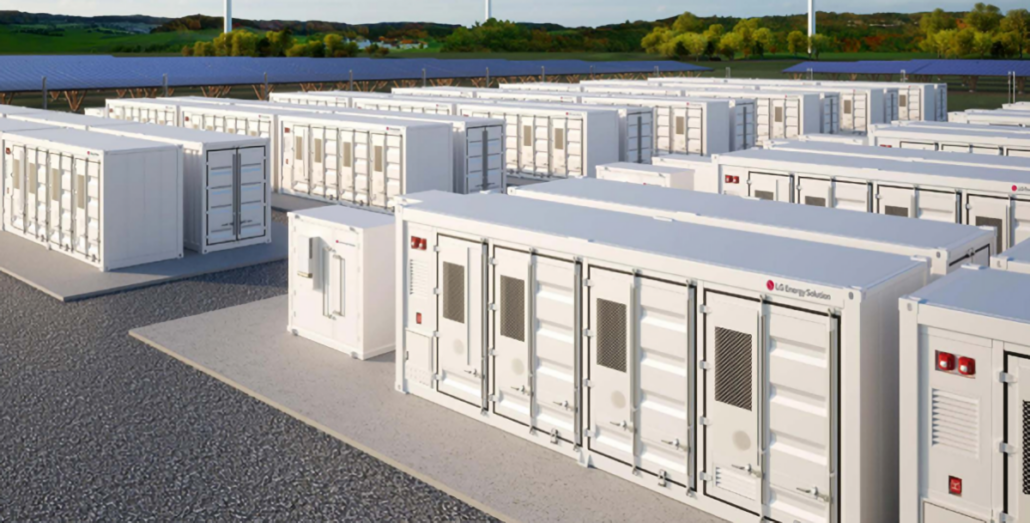
LG Energy Solution Vertech announced a supply agreement with DTE Energy for battery storage systems in Michigan. The agreement covers eight projects with a total capacity of one and a half gigawatts and a storage capacity of six gigawatt-hours. The systems are scheduled to be delivered within two years. Battery cells made in North America LG Energy Solution plans to assemble the systems using battery cells produced in Michigan, as well as in other facilities in the United States and Canada. DTE Energy cites the agreement in connection with the growing demand for electricity driven by new data centers. For example, DTE mentions the approved contract for an Oracle data center in Saline Township. These battery storage systems, financed by Oracle, are expected to meet the company’s share of Michigan’s Clean Energy Standard for battery storage by 2030. Source:https://news.lgensol.com/company-news/press-releases/4978/

LG Energy Solution Vertech to Supply Battery Storage Systems to DTE Energy in Michigan Read More »

SK On Ends U.S. Battery Partnership with Ford

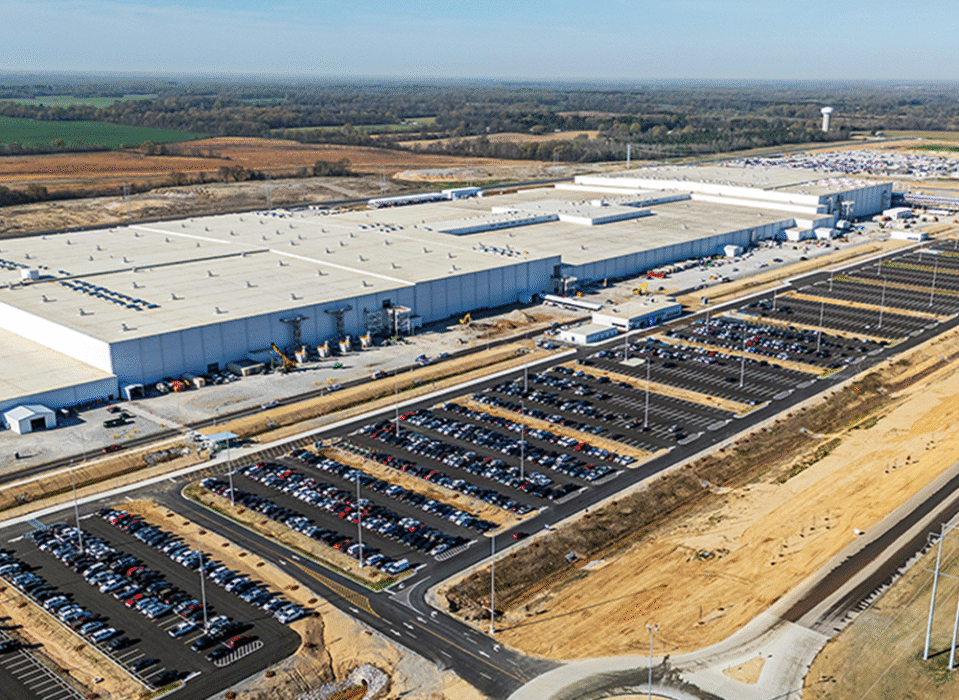
The South Korean battery manufacturer SK On is withdrawing from its joint battery partnership with Ford in the U.S., and will independently operate its Tennessee plant going forward. The former BlueOval-SK facility in Tennessee has been renamed “SK On Tennessee.” In return, Ford will assume sole control of two battery plants in Kentucky. The restructuring was completed five months after the dissolution of the joint venture. The partnership was founded in 2022 when the outlook for electric vehicle demand was much more optimistic. Financial Relief for SK On For SK On, the primary focus of the separation is financial relief. The company expects the dissolution of the joint venture to reduce its debt by approximately 5.4 trillion won, equivalent to about $3.6 billion. Additionally, SK On anticipates annual savings of approximately $180 million on interest expenses. The new structure is also expected to reduce depreciation costs. The company therefore presents the decision as a step toward strengthening its financial structure and managing its U.S. operations more efficiently. Sources:https://en.yna.co.kr/view/AEN20260521011400320https://askinno.com/global/archives/154659

SK On Ends U.S. Battery Partnership with Ford Read More »

Svolt Plans Mass Production of Semi-Solid-State Batteries by September

The Chinese battery manufacturer Svolt Energy aims to begin mass production of semi-solid-state batteries by September of this year. According to the company, the cost is expected to be comparable to that of conventional lithium-ion batteries with liquid electrolytes. Several vehicle models are set to be equipped with the new cells by the end of September. One variant scheduled to enter mass production will reportedly have a capacity of 100 kilowatt-hours. This information comes from Yang Hongxin, Svolt’s chairman and CEO. In a video posted on Weibo, he explained that a key focus of the cells is high operational safety. Interim Solution Before Solid-State Batteries Semi-solid-state batteries use both liquid and solid electrolytes to transport ions between the cathode and anode. This technology is considered an intermediate step on the path to solid-state batteries, which operate exclusively with solid electrolytes. Commercializing the latter is still considered difficult. Yang described the path to mass production as long. Other major battery manufacturers are also continuing to work on all-solid-state batteries. According to reports, CATL and BYD are initially aiming for small-scale production by 2027. Source:https://cnevpost.com/2026/05/19/svolt-plans-mass-produce-hybrid-solid-liquid-batteries-september-liquid-battery-costs/

Svolt Plans Mass Production of Semi-Solid-State Batteries by September Read More »

Scroll to Top