Battery-News

Author name: Barbara Ward

Focus on Battery Storage: Why Operating Condition Determines Risk

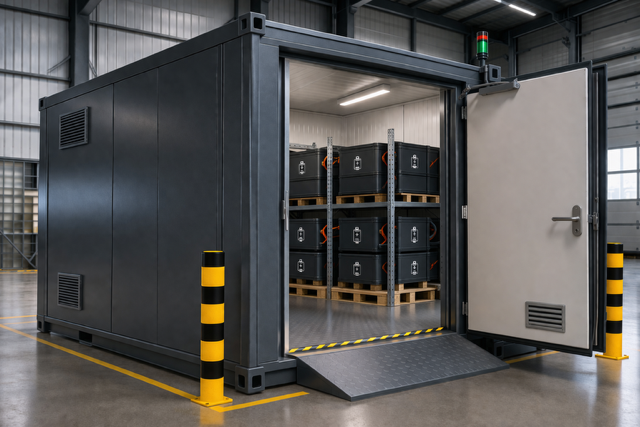
Lithium-ion batteries have become indispensable in modern industrial facilities. At the same time, they present intralogistics with growing safety requirements. The key point here is that the potential for danger is not constant; rather, it depends heavily on the battery’s current condition. The operational state of the cells significantly determines how high the risk of thermal instability in the warehouse should be assessed. A thorough understanding of internal processes is the foundation of any robust fire protection concept. The structure of lithium-ion cells explains why: The high energy density poses significant risks in the event of a failure. In particular, the separation of the anode and cathode by the separator is a critical point—if this barrier is damaged, internal short circuits can occur. State of charge as a key risk factor The state of charge (SOC) is considered one of the most important parameters for the safety of stored batteries. The higher the energy content in the cell, the more intense a potential reaction will be in the event of damage. In practice, therefore, storage at a moderate state of charge of about 30 to 50 percent has become standard. In this range, reactivity is significantly reduced. A fully charged battery, on the other hand, poses the highest risk of thermal runaway: The chemical voltage is at its maximum, so that an internal short circuit can lead to an abrupt release of energy. “In practice, we see time and again that it is not the battery itself that poses the risk, but its condition at the time of storage,” says Paul Fricke of Protecto. “High states of charge or cells that are already damaged significantly increase the likelihood of critical events.” To better control these risks, many companies now rely on automated monitoring systems that continuously monitor the state of charge during storage. Aging, pre-existing damage, and dendrites: How cells become unstable In addition to the current state of charge, the overall state of health (SOH) plays a central role. As aging progresses, the likelihood of internal defects increases. A key mechanism here is the formation of so-called dendrites: fine, needle-like lithium structures grow on the electrodes. Over time, these can penetrate the separator and trigger internal short circuits—a gradual process that can significantly compromise the cell’s safety. Additional factors also affect cell integrity: The storage of batteries that already show signs of abnormalities is particularly critical. A swollen casing or unusual heat generation are clear warning signs. Such units should be immediately separated and isolated in suitable fire-resistant containers to prevent the spread of fire. Environmental influences in warehouse operations Environmental conditions also have a direct impact on the risk profile. High temperatures accelerate aging processes and lower the threshold for thermal reactions. Professional warehouse management therefore ensures that batteries are stored in climate-controlled areas without direct sunlight. The goal is to consistently minimize external stress factors. Monitoring and preventive analytics as the key Continuous monitoring is a central component of modern safety concepts. Monitoring cell voltage and temperature makes it possible to detect critical developments early on. Telemetry data is evaluated in real time to identify trends—such as gradual heating—at an early stage. This allows potential risks to be addressed before a damage event occurs. Emergencies require expertise and clear procedures Technical systems alone, however, are not sufficient. Safe handling by trained personnel is also crucial. Clear processes and defined procedures ensure a quick and appropriate response in an emergency. Given the rising production capacities in Europe, standardized training is becoming increasingly important—not least for industrial safety and competitiveness. Operating condition as the key parameter The storage of lithium-ion batteries requires a nuanced approach. The operational status—determined by state of charge, age, and physical integrity—is the key factor influencing risk. Companies that systematically monitor these factors and integrate them into their safety protocols can significantly reduce the risk of critical incidents in storage.

Focus on Battery Storage: Why Operating Condition Determines Risk Read More »

GRS Study: Battery Recycling Needs a New Financing Model

In a recent market study, the GRS Batterien Foundation warns of an economic strain in battery recycling. Despite a massive surge in demand in the EU—projected to reach up to 1.3 TWh by 2035—the current recycling model is at risk of collapsing. The reason: The trend is shifting away from expensive NMC cells (nickel-manganese-cobalt) toward cheaper alternatives such as LFP and, in the future, sodium-ion batteries. While this makes e-mobility more affordable, the value of recoverable materials is declining at the same time.  “If the market shifts toward cheaper cell chemistries, the old revenue model for recycling will crumble piece by piece,” explains Georgios Chryssos, Managing Director of the GRS Batterien Foundation. “It is no longer enough to rely on metal prices.” The study emphasizes that the circular economy must be supported in the future less by revenue from raw materials and more by efficient collection infrastructure and regulatory frameworks. The foundation advocates for a more coordinated approach across battery policy, industrial policy, and the circular economy in the future. The industry must begin working on viable solutions today—before the volumes hit the market. The study is available for download on the GRS Batterien Foundation’s website.

GRS Study: Battery Recycling Needs a New Financing Model Read More »

Recycling in a Cost Trap: How New Cell Chemistries Are Putting Pressure on the Business Model

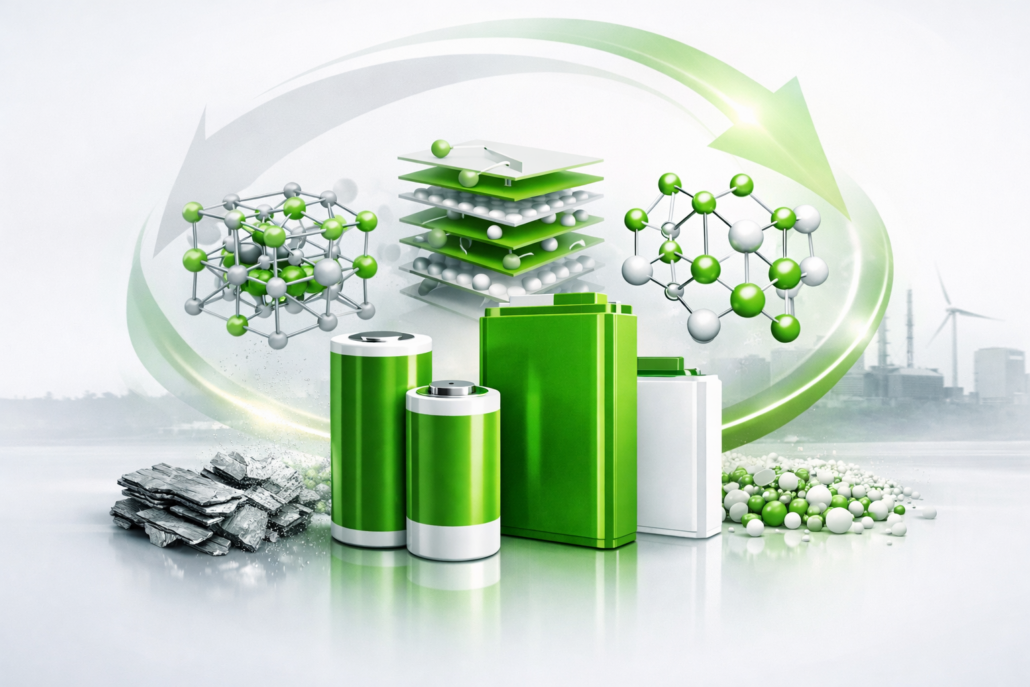
Falling battery costs are a key driver of the continued growth of electric mobility. Yet this very trend could undermine the current recycling model. While batteries are becoming cheaper, they are simultaneously losing material value—with direct consequences for the economic viability of recycling. Technological change in the battery market has accelerated over the past years: Within lithium-ion technologies, more cost-effective variants such as lithium iron phosphate (LFP) are gaining increasing importance, while nickel-manganese-cobalt (NMC) cells remain primarily in the high-performance premium segment. At the same time, new technologies such as sodium-ion batteries are coming into focus. Shift in cell chemistries is changing the market This development is confirmed by various market analyses. The International Energy Agency points out that as the share of low-cobalt cell chemistries increases, the economic conditions for recycling are also changing—and that regulatory mechanisms could play a greater role in the future. According to BloombergNEF, prices for LFP batteries are significantly lower than those of NMC systems and have played a key role in driving down average battery costs in recent years. A recent analysis by the GRS Batterien Foundation comes to a similar conclusion: According to the study, LFP could achieve a market share of around 60% by 2030 in the base scenario—and even up to 80% with faster technological progress. Looking ahead, sodium-ion batteries are also likely to gain increasing market share. Forecast of demand trends for battery storage capacity in the EU by valuable and non-valuable cell chemistries (in tonnes) By 2035, the share of valuable batteries will decline significantly. Why recycling has been economically viable so far The existing recycling model for lithium-ion batteries has so far relied heavily on the recovery of valuable metals. Nickel and cobalt, in particular, play a key role in covering the costs of collection, transport, and processing. Especially for NMC batteries, the material value is a central economic factor. Recycling therefore makes sense not only from an environmental perspective but can also be economically viable under certain conditions. Less valuable materials, same effort However, as cell chemistries evolve, this logic is shifting. LFP batteries largely do without nickel and cobalt, while sodium-ion batteries rely on even more cost-effective and globally available materials. However, this shift does not affect all segments equally: According to forecasts, NMC batteries will primarily remain in the high-performance premium segment. This means that while the raw material-driven recycling model will remain viable in the premium segment for some time, it is coming under pressure particularly where the largest volumes are generated—in the mass market for electric mobility and in stationary storage systems. The key point: The technical and logistical effort involved in recycling remains high—regardless of cell chemistry. At the same time, however, the economic return from the recovered materials is declining. An analysis by the GRS Batterien Foundation also indicates that, with the increasing prevalence of cost-effective cell chemistries, existing revenue models could come under pressure. Recycling risks becoming an unprofitable business As a result, the existing balance between costs and revenues is shifting. While recycling is currently supported in part by material revenues, it could become more dependent on external factors in the future—such as regulatory requirements or new financing mechanisms. The industry has long pointed out that business models in battery recycling must adapt to changing material structures. The industry is thus facing a fundamental shift: away from a primarily raw material-driven approach toward more systemically organized circular models. New business models and regulatory solutions are needed In this context, regulatory frameworks and new business models are gaining importance. The EU Battery Regulation already focuses on extended producer responsibility and mandatory recycling targets. In the future, recycling could evolve more toward a regulated system in which financing is no longer primarily based on material values but on mandatory contributions along the value chain. At the same time, new approaches are emerging: Uncertain forecasts, clear trend However, it is difficult to predict how quickly and to what extent this development will take place. Forecasts regarding market development and the prevalence of individual cell chemistries vary considerably in some cases—as the GRS analysis itself points out. Nevertheless, a clear trend is emerging—and industry experts estimate that the momentum is in some cases even greater than market models suggest, particularly for sodium-ion batteries. The transition to more cost-effective battery technologies is transforming not only production but also the logic of the circular economy. Conclusion: A systemic shift rather than optimization For the recycling industry, this means more than just adapting existing processes. Rather, it marks a fundamental system shift. In the future, recycling will be determined less by the value of individual raw materials and more by regulatory requirements, industrial strategies, and the organization of functioning material cycles. Consequently, the central question is no longer just how batteries can be recycled—but under what economic conditions this will happen in the future. Sources: Stiftung GRS Batterien / Macrom — „Entwicklung der Batteriezellchemien in der EU bis 2035″, March 2026https://www.stiftung-grs.de/fileadmin/Downloads/Sonstige_Downloads/Marktstudie_Zellchemien_im_Wandel_GRS-PM.pdf IEA — Global EV Outlook 2024, Kapitel: Outlook for battery and energy demandhttps://www.iea.org/reports/global-ev-outlook-2024/outlook-for-battery-and-energy-demand IEA — Recycling of Critical Minerals, Executive Summaryhttps://www.iea.org/reports/recycling-of-critical-minerals/executive-summary BloombergNEF — Lithium-Ion Battery Pack Prices Fall to $108/kWh, December 2025https://about.bnef.com/insights/clean-transport/lithium-ion-battery-pack-prices-fall-to-108-per-kilowatt-hour-despite-rising-metal-prices-bloombergnef Fastmarkets — „European LFP recycling vital for future but facing economic barriers”https://www.fastmarkets.com/insights/european-lfp-recycling-vital-for-future-but-facing-economic-barriers-lme-week/ C&EN / American Chemical Society — „Lithium-ion battery recycling goes large”https://cen.acs.org/environment/recycling/Lithium-ion-battery-recycling-goes/101/i38

Recycling in a Cost Trap: How New Cell Chemistries Are Putting Pressure on the Business Model Read More »

Digital Battery Passports: Spherity Solution Now in Use at BVG

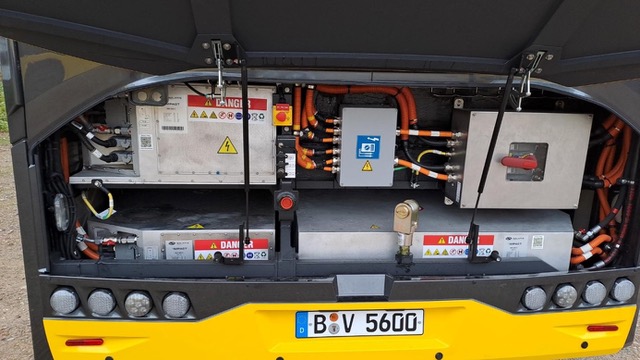
As public transportation becomes increasingly electrified, the management of traction batteries is taking center stage for transit companies. Berlin’s public transit authority BVG is therefore using digital battery passports from Dortmund-based technology provider Spherity for part of its electric bus fleet. The goal is to make operational data available in a structured format across the entire battery lifecycle—from use in service to second-life applications and recycling. BVG already operates more than 300 electric buses with batteries of up to 700 kWh capacity. By the early 2030s, the fleet is expected to grow to around 1,500 vehicles. This will also place significantly higher demands on maintenance, condition monitoring, and documentation of high-voltage batteries in operation. To help manage these requirements, BVG is already testing the digital battery passport in 55 buses. Data access via QR code At its core, the digital battery passport is a structured dataset hosted in a decentralized, cloud-based infrastructure. Spherity relies on open standards and a decentralized identity architecture (SSI – Self-Sovereign Identity), which ensures that data access is traceable and tamper-proof. Authorized parties can access information via a unique identifier—in the case of the BVG, a QR code on the battery housing. This includes, among other things, data For transit companies, such a data framework can help better plan maintenance measures and assess the condition of individual battery systems more transparently. At the same time, relevant information for later phases of use or recycling processes can be documented early on. Relevance for regulatory requirements Digital battery passports are also gaining importance in light of new European regulations. The EU Battery Regulation (BATT 2.0) and the Ecodesign Regulation (ESPR) stipulate that comprehensive information on the lifecycle must be available for certain battery categories in the future. This includes data on sustainability, material composition, and performance. For the BVG, this is not an abstract regulatory framework: its first 228 e-buses saved nearly nine million liters of diesel and approximately 30,000 metric tons of CO₂ between 2019 and 2024—figures that could be automatically documented and reported via the battery passport in the future. Standardized data models can help companies meet these requirements and efficiently provide evidence for audits or sustainability reports. At the same time, new demands arise regarding IT integration, data quality, and access management. Foundation for data-driven fleet management In addition to regulatory aspects, transit companies also see potential in digital battery passports for operational fleet management. Manufacturers can provide additional technical documentation, such as maintenance manuals or schematics, in digital form. This allows service processes to be accelerated and information to be managed centrally. Structured data exchange can also benefit authorities or testing organizations, for example during technical inspections or environmental assessments. However, this requires that interfaces be designed to be interoperable and that data protection and security requirements be met. “The battery passport is not an end in itself—it becomes an operational tool. It provides transparency regarding a battery’s condition, origin, and compliance-related information, supports predictive maintenance planning, reduces manual effort, and facilitates compliance with regulatory requirements throughout the lifecycle,” says Ricky Thiermann, Head of Product Management at Spherity. Focus on second life and recycling In bus operations, traction batteries typically reach a stage after ten to 15 years at which their capacity is no longer sufficient for use in the vehicle. In many cases, however, they can still be used as stationary energy storage systems—a so-called second-life scenario that significantly extends their overall service life. Initial pilot projects are underway, for example, at a well-known discount store. Recycling, during which up to 95 percent of the materials can be recovered, only takes place at the end of the extended lifecycle. A digital battery passport can provide relevant information on material composition or the so-called “state of health” during these later stages of use. For recycling companies, this can simplify process planning and help recover valuable materials more efficiently. A cornerstone for transparent battery supply chains With the increasing adoption of digital battery passports, a more comprehensive database is emerging along the entire value chain. This could enable transit operators, manufacturers, service providers, and recyclers to collaborate more closely. At the same time, the example from Berlin shows that the practical implementation of such solutions involves organizational and technical challenges—such as standardizing data formats or integrating them into existing IT systems. Nevertheless, as electric mobility gains momentum, the need for transparent information about batteries is growing noticeably. The experience gained so far with Spherity’s battery passports at BVG shows how digital battery passports can evolve from a regulatory requirement into a practical operational tool—and thus serve as a blueprint for other public transport operators in Europe. Based on information from Spherity GmbH, the article was updated on April 20, 2026. Sources:https://www.bvg.de/de/unternehmen/nachhaltige-mobilitaet/flotte/e-mobilitaethttps://www.berlin.de/sen/uvk/mobilitaet-und-verkehr/verkehrsplanung/oeffentlicher-personennahverkehr/elektro-busse

Digital Battery Passports: Spherity Solution Now in Use at BVG Read More »

The Step Before the Shredder: How Automated Disassembly Is Transforming Battery Recycling

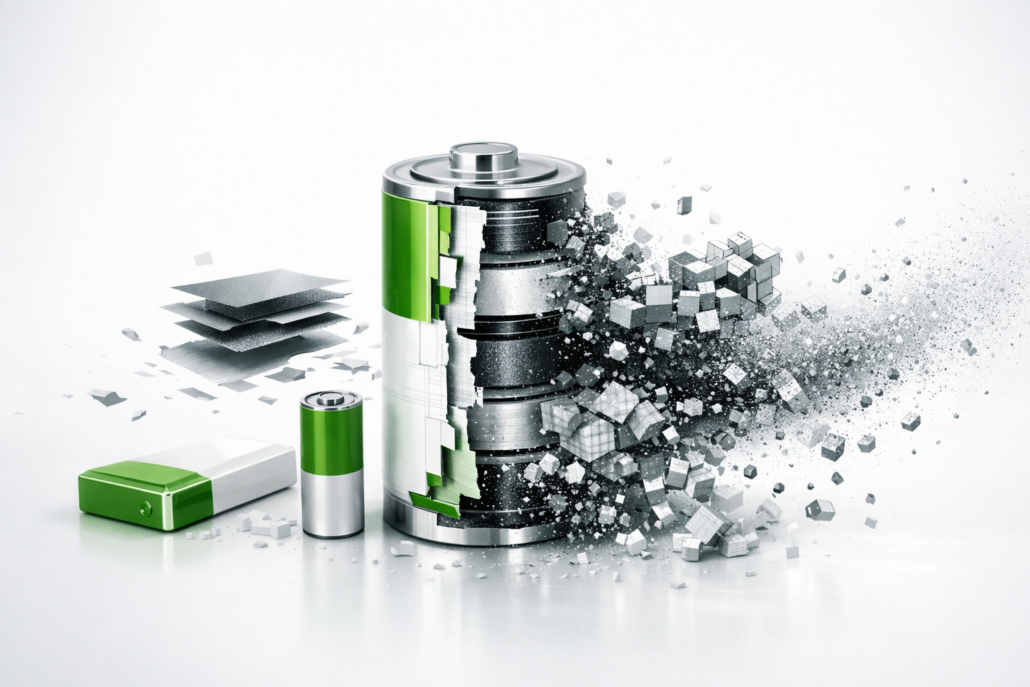
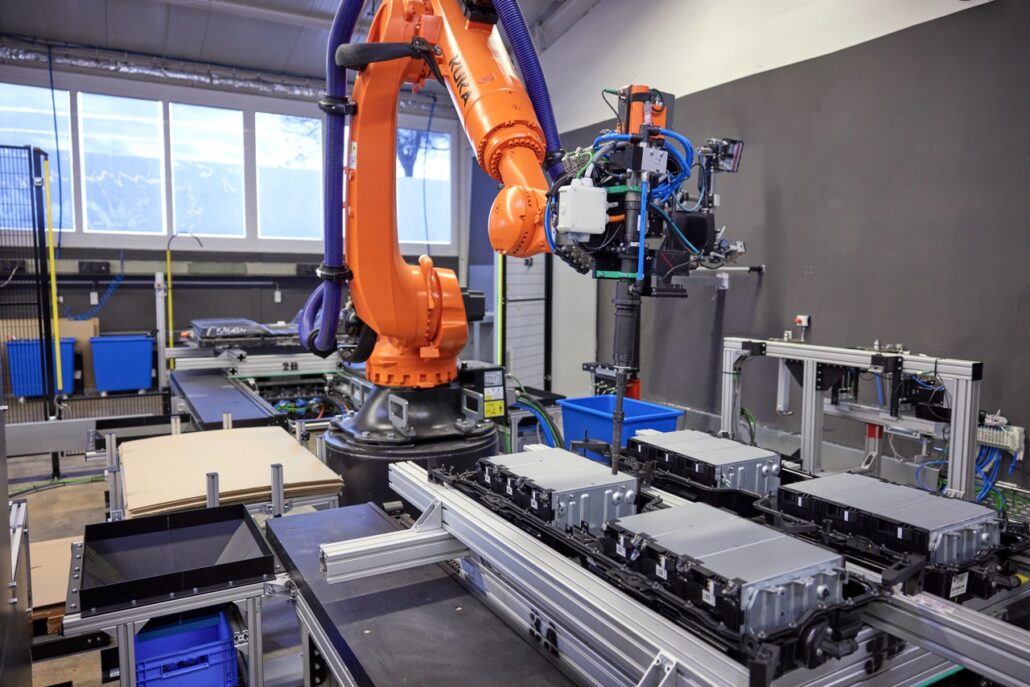
Battery recycling has made enormous strides in recent years. Regulations are in place, and capacity is growing. What is often overlooked is that the crucial step happens before the shredder—during disassembly. This article examines an underestimated bottleneck, pack architectures that hinder the circular economy, and an approach that turns automated robots into the solution. In the public debate, battery recycling has gained significant momentum in recent years: The regulatory framework is in place, capacities are growing, and interest in raw materials is high. What is rarely discussed, however, is: The crucial step does not take place in the smelting furnace or during hydrometallurgical processing—it happens before that, during disassembly. Before a high-voltage battery can be recycled, it must be dismantled: into modules, cells, copper and aluminum components, circuit boards, and plastics. This step plays a decisive role in determining the quality of the resulting material stream. Three challenges are particularly critical: the high physical effort involved, the significant safety requirements when handling high-voltage systems—and a skilled labor market that works against manual scaling. The startup R3 Robotics has turned this into a mission: Automating disassembly not only solves a process issue; it creates the conditions for a functioning circular economy. Software-enabled hardware: The R3 Robotics approach R3 Robotics was founded by Antoine Welter and Xavier Kohl. Kohl earned his Ph.D. in Chemical Soft Robotics at ETH Zurich; Welter comes from a background in strategy consulting and B2B sales, but has focused on battery systems and the circular economy for years. Their core premise: The key lies not in the recycling process itself, but in the clean material stream leading up to it—and that can only be achieved through intelligent disassembly. To this end, the company operates a fully certified recycling facility in Kuppenheim near Karlsruhe. A decision that initially met with resistance from investors—investors tend to favor “asset-light models,” Welter admits. But without their own facility, the founders are convinced, models cannot be trained and processes cannot be tested on an industrial scale. There is also a practical sales argument: in practice, European industrial customers often work exclusively with certified facilities. The site serves as both a demonstration and development center; customers want to see the technology before they invest. In 2023, R3 Robotics won the European Innovation Council Accelerator. The founders describe the technical core as “software-enabled hardware”—a term chosen deliberately. Robots alone are not enough. Customized end-effectors are needed—that is, grippers and tools on the robot arm—tailored to the specific pack architecture. Combined with computer vision, the system autonomously recognizes which package is on the tool carrier and initiates the corresponding disassembly process. „Robotics alone does not solve the problem. It requires customized end-effectors, computer vision, and the process knowledge of how software and hardware work together. “  — Antoine Welter, co-founder of R3 Robotics R3 Robotics internally refers to these combinations of tool hardware and software intelligence as “skills.” Two to three new ones are developed each quarter, as pack architectures are constantly changing. The system is dual-configurable, meaning it is equipped to handle two different pack types simultaneously, and flexibly processes a wide variety of battery types. This reflects real-world conditions at recycling facilities: packs arrive in mixed batches, not sorted. The nominal system capacity (nameplate capacity) is approximately 1,600 tons per year with 1.5-shift operation. In the medium term, R3 Robotics is focusing on a Robotics-as-a-Service model: The systems are to be operated directly at the customer’s site—at recyclers or OEMs—because battery logistics are a significant cost factor and the regulatory requirements for transporting high-voltage batteries quickly undermine the business case. Why manual disassembly is no longer feasible Battery disassembly is physically demanding. Welter has experienced this firsthand: „I once disassembled three batteries in a single day. I’m 6 feet 6 inches tall, weigh 220 pounds, and I’m not the type to shy away from hard work. It’s really, really hard work.”  — Antoine Welter Vehicle batteries are simply not designed for manual disassembly. Bolted and glued packs require considerable force, lifting modules pushes the limits of occupational safety guidelines, and the entire process takes place in close proximity to high-voltage systems. The robot has a structural advantage here: It never gets tired, never loses focus, and if something does go wrong, an end-effector burns out—not a human hand. Another factor is a scaling problem that is already acute in the U.S. and is becoming increasingly noticeable in Europe: a shortage of skilled workers. Welter reports from conversations with American recyclers that qualified personnel are migrating to the booming data center sector—with correspondingly better pay. Without skilled workers, manual scaling becomes impossible, no matter how much the volume increases. Second life first, recycling last R3 Robotics postions itself not as a recycler, but as an upstream process provider: disassembly, sorting, condition assessment. The result is clean material streams for various uses—intact modules for second-life applications, copper, aluminum, plastics, and battery management systems for reuse. Only what is truly no longer usable goes to the shredder. R3 Robotics has implemented this tiered model—reuse, then second life, then recycling—in a project with Amazon: Batteries from Rivian vehicles in Amazon’s delivery fleet are disassembled. Intact modules are first used in stationary energy storage systems for solar installations; after all, Amazon is one of the world’s largest solar operators. Only at the end of this second life are the materials sent for recycling. Clean disassembly is the enabler for all three stages. Growing market, growing pressure The market dynamics are clear: According to Global Market Insights, the European market for lithium-ion battery recycling is estimated at around $2 billion in 2025, with an expected annual growth rate of around 20 percent through 2034. According to Fraunhofer ISI, European pre-treatment capacity has doubled to around 300,000 tons per year by the end of 2024. By 2040, Strategy& (PwC) expects 6 million tons of end-of-life batteries in the European market alone. On the demand side, the EU Battery Regulation (2023/1542) sets the framework: It requires manufacturers to take back end-of-life

The Step Before the Shredder: How Automated Disassembly Is Transforming Battery Recycling Read More »

Scroll to Top