
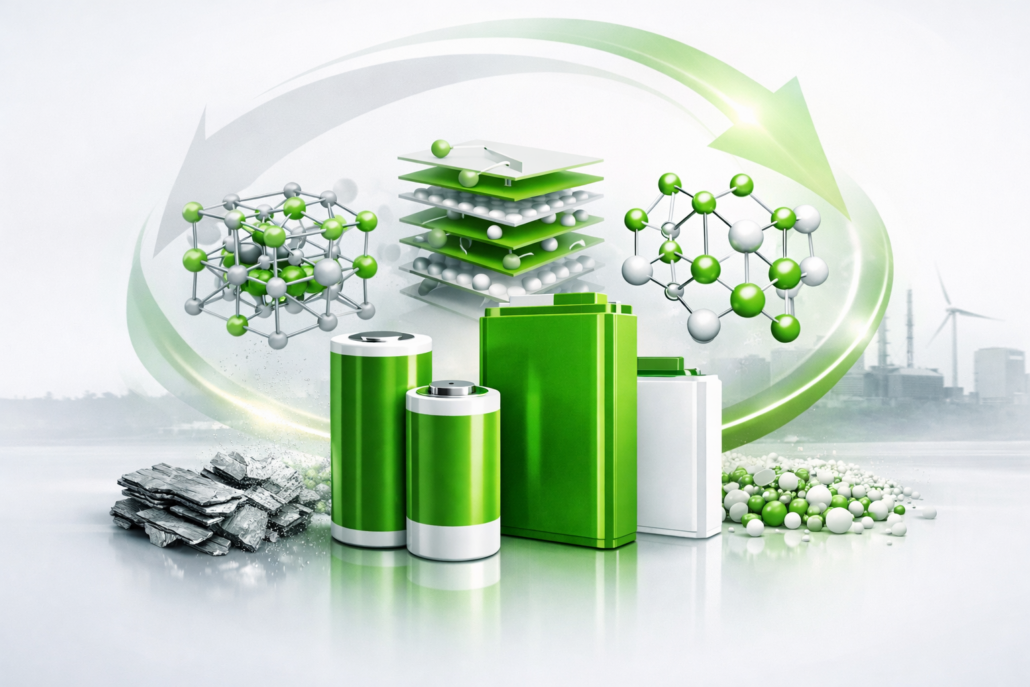
In a recent market study, the GRS Batterien Foundation warns of an economic strain in battery recycling. Despite a massive surge in demand in the EU—projected to reach up to 1.3 TWh by 2035—the current recycling model is at risk of collapsing.
The reason: The trend is shifting away from expensive NMC cells (nickel-manganese-cobalt) toward cheaper alternatives such as LFP and, in the future, sodium-ion batteries. While this makes e-mobility more affordable, the value of recoverable materials is declining at the same time.
“If the market shifts toward cheaper cell chemistries, the old revenue model for recycling will crumble piece by piece,” explains Georgios Chryssos, Managing Director of the GRS Batterien Foundation. “It is no longer enough to rely on metal prices.”
The study emphasizes that the circular economy must be supported in the future less by revenue from raw materials and more by efficient collection infrastructure and regulatory frameworks. The foundation advocates for a more coordinated approach across battery policy, industrial policy, and the circular economy in the future. The industry must begin working on viable solutions today—before the volumes hit the market.
The study is available for download on the GRS Batterien Foundation’s website.