Battery-News

Author name: Gift Orwa

EDENenergy Builds Commercial Storage From Used E-Scooter Batteries

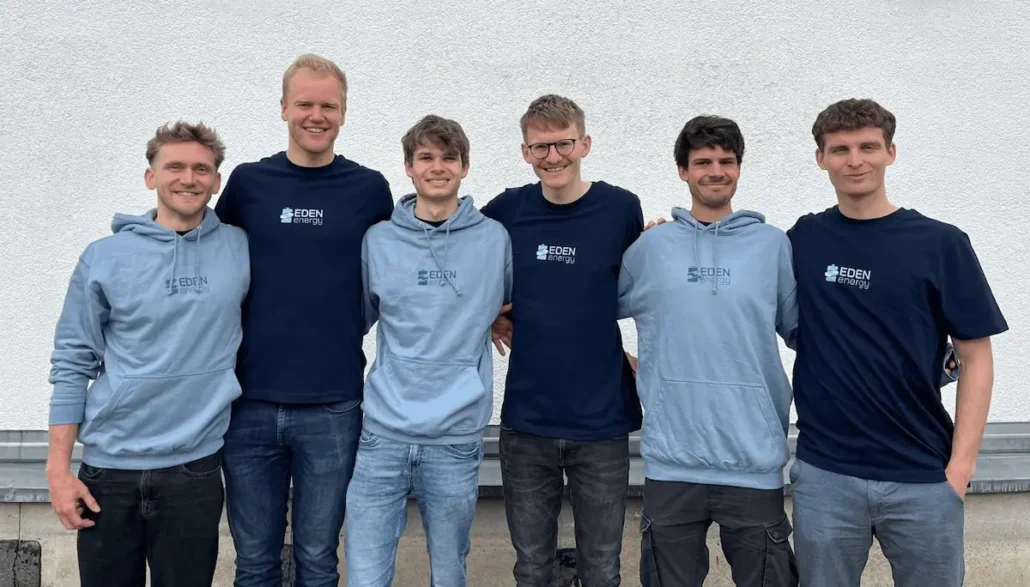
Freiburg-based start-up EDENenergy builds stationary storage systems for businesses from used e-scooter batteries. According to Fraunhofer ISE, from which the company spun off, the first 70 kWh system was delivered to a customer in mid-October. It combines 112 used e-scooter batteries. The customer was not named. Battery Modules Replaced During Operation The batteries are not disassembled. Instead, power electronics developed by the company connect different batteries and communicate with the various modules. Individual modules can be replaced during operation and are monitored remotely. The company says module replacement will keep the system at 70 kWh after ten years. Batteries at the end of their life go to recycling. EDENenergy had assumed a state of health of 80% for the used batteries. According to the company, remaining capacity was in some cases well above 90%. It has not disclosed how capacity was measured. Each Battery Type Requires Adaptation Connectors, battery management and communication must be adapted for every new battery type. To secure enough identical batteries, EDENenergy initially sources them from fleet operators. In the long term, the company calls for standardized communication protocols and rules for using mobile batteries in stationary storage. The founders previously worked in Fraunhofer ISE’s power electronics department. EDENenergy plans systems of up to 300 kWh and initially targets mid-sized businesses with solar systems. A state program can fund half the storage costs for pilot customers. Sources:https://www.ise.fraunhofer.de/de/presse-und-medien/presseinformationen/2026/start-up-edenenergy-gebrauchte-escooter-akkus-werden-industriespeicher.htmlhttps://www.solarserver.de/2026/11/02/startup-edenenergy-alte-e-scooter-akkus-fuer-neue-industriespeicher

EDENenergy Builds Commercial Storage From Used E-Scooter Batteries Read More »
CATL to Develop Custom Battery for Blue Vector’s Skyla V30 eVTOL

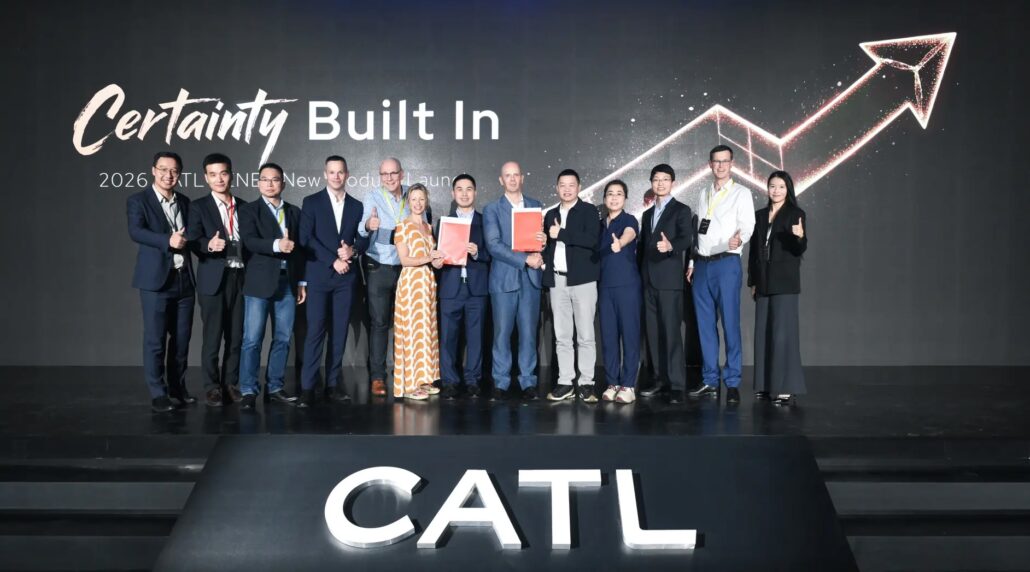
CATL will develop a custom aviation battery for the Skyla V30, an electric vertical takeoff and landing (eVTOL) aircraft from Chinese manufacturer Blue Vector. According to CATL, the companies signed strategic and product cooperation agreements on November 2. Blue Vector has named CATL its exclusive battery partner for the aircraft. Neither company disclosed the deal’s value, battery specifications or a supply timeline. Six-Seat Tiltrotor for Intercity Flights The Skyla V30 is an all-electric, six-seat tiltrotor in the two-ton class. Hangzhou-based Blue Vector is developing it for passenger flights between cities. According to the companies, the battery is intended to meet the aircraft’s range and safety requirements. The cooperation also covers research, standards and operational applications. The aircraft is still in development. Its first full-scale technology demonstrator rolled out in Harbin on August 31, 2026. Systems integration, ground testing and transition flight tests are next. By late September, Blue Vector reported pre-sales orders for more than 100 aircraft. The certification status has not been disclosed. CATL Expands Its Aviation Activities The agreement extends CATL’s presence in the eVTOL sector. In August 2024, CATL agreed to invest in Shanghai-based Autoflight and to develop eVTOL batteries with the company. In November 2025, Autoflight presented a floating vertiport developed jointly with CATL. It combines a takeoff and landing platform with energy storage and charging. Sources:https://cnevpost.com/2026/11/02/catl-evtol-partnership-blue-vector/https://autonews.gasgoo.com/articles/news/2117519965581893633

CATL to Develop Custom Battery for Blue Vector’s Skyla V30 eVTOL Read More »

Sunwoda’s 400 Wh/kg Polymer Solid-State Cell Under Automaker Evaluation

Chinese battery manufacturer Sunwoda says automakers are evaluating its polymer-based solid-state battery cell. According to Sunwoda Electric Vehicle Battery (SEVB), the cell has completed design and process verification. The subsidiary of Sunwoda Electronic disclosed the update on October 30 via the Shenzhen Stock Exchange’s investor platform. It did not name the automakers or disclose sample volumes. Polymer Electrolyte Instead of Sulfide The 20 Ah cell, called Xin Bixiao, reportedly reaches an energy density of 400 Wh/kg. Sunwoda specifies more than 1,200 cycles at an external pressure below 1 megapascal. The design combines a 12-micrometer polymer-composite membrane with a silicon anode. The cell is also said to have passed a 200°C (392°F) hot-box test. Sunwoda has not disclosed the temperature or charging rate used in the cycle tests. Cell-level results also do not show how a complete vehicle battery would perform. Some sulfide-based solid-state designs require sustained external pressure to keep their components in contact. CATL, which is pursuing sulfide chemistry, recently reaffirmed its target of small-batch production in 2027. Mass Production Plans for 2026 Unconfirmed SEVB has set up a solid-state pilot line with an annual design capacity of 0.2 GWh. Sunwoda first presented the Xin Bixiao cell in October 2025. At the time, the company planned mass production with an annual capacity of 1 GWh for 2026. The latest update does not mention such a production start. The roadmap now lists a sulfide-based battery for 2027 and a cell exceeding 500 Wh/kg by 2030. Sources:https://carnewschina.com/2026/11/02/solid-state-battery-race-sunwoda-tests-polymer-cells-with-automakers-as-catl-targets-2027/https://autotechinsight.spglobal.com/news/5284714/sunwoda-unveils-polymer-based-solid-state-battery-cell-with-400-wh-kg-energy-density

Sunwoda’s 400 Wh/kg Polymer Solid-State Cell Under Automaker Evaluation Read More »

GAC Battery Unit Inpow Starts Battery Pack Production in Thailand

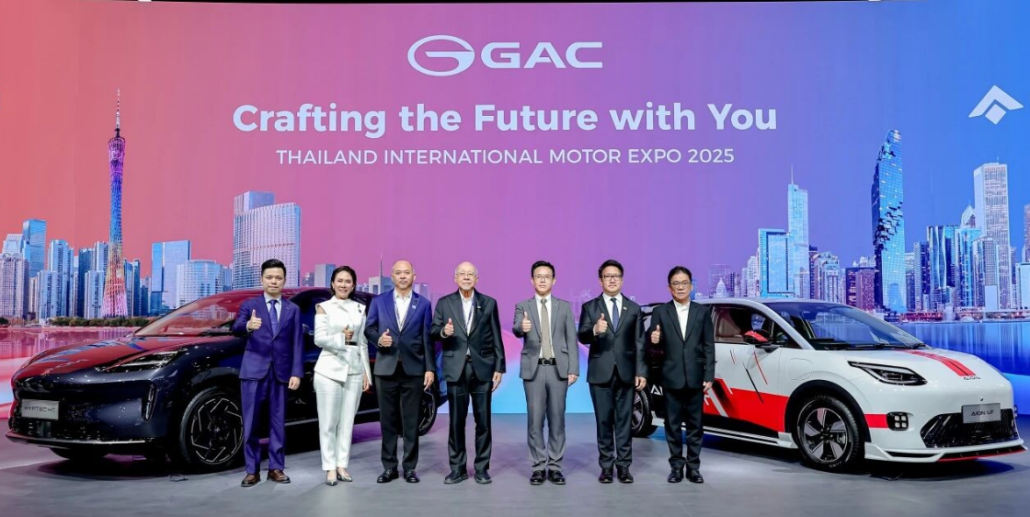
Inpow Battery, the battery subsidiary of Chinese automaker GAC Group, has started production at a plant in Thailand. The first power battery pack rolled off the line at the site in Chonburi province on October 29. It is Inpow’s first factory outside China and GAC’s first in-house battery pack plant abroad. Packs for GAC Vehicles in Southeast Asia According to Inpow, the plant will support deliveries of GAC’s electric vehicles in Thailand and other ASEAN markets. The company says it has delivered more than 300,000 battery packs so far. They are used in models including the Aion i60, Aion N60, and Aion UT. The Thai site produces battery packs. Inpow has not said whether cells will also be made there. Nor has it disclosed the plant’s capacity, the investment, or where the cells come from. Inpow’s total investment amounts to 10.9 billion yuan (approximately $1.62 billion). Inpow also plans to cooperate with the Electricity Generating Authority of Thailand (EGAT) on electric vehicles, energy storage, and energy equipment. According to Inpow, Thailand aims for zero-emission vehicles to account for 30% of its vehicle output by 2030. Battery Plant Follows Vehicle Factory GAC Aion opened its first vehicle plant outside China in Rayong province in July 2024. Its initial capacity is 50,000 electric vehicles per year, and a second phase is set to double output. In 2023, GAC said it had no plans to produce batteries in Thailand in the near future. Sources:https://cnevpost.com/2026/10/30/gac-inpow-starts-production-thailand-plant/https://asianews.network/chinas-ev-behemoth-announces-plan-to-build-factory-in-thailand/

GAC Battery Unit Inpow Starts Battery Pack Production in Thailand Read More »

SVOLT Begins Series Production of Semi-Solid-State 100 kWh Batteries

Chinese battery manufacturer SVOLT Energy Technology has commenced series production of its semi-solid-state batteries. The company announced that the first batch of 100 kWh battery packs has rolled off the production line at its facility in Changzhou, Jiangsu Province, China, marking a step forward in the industrial-scale production of semi-solid-state battery technology. Dragon Armor: 6C Fast Charging and 3,000-Cycle Lifespan The battery, named Dragon Armor, uses cells with a semi-solid electrolyte. SVOLT states that the pack supports charging at a rate of 6C and operates at voltages of up to 900 volts. The company also specifies liquid cooling on both the top and bottom of the pack. The charging system can replenish enough energy for approximately 500 kilometers of driving range in 12 minutes as stated by SVOLT. The manufacturer also states a service life exceeding 3,000 charge cycles. However, SVOLT has not disclosed the test conditions behind these figures or the size of the initial production batch. Semi-solid-state batteries combine solid and liquid components in their electrolytes. The technology differs from conventional lithium-ion batteries, which use liquid electrolytes, and all-solid-state batteries, which use solid electrolytes. The Chairman Yang Hongxin announced the production milestone in a video published on the Chinese social media platform Weibo. He stated that several customers are considering the 100 kWh battery pack, but did not identify them. The company previously outlined plans for semi-solid-state battery production, with series production initially targeted for 2027. The latest announcement indicates that production has begun earlier than that timeline. Source: https://carnewschina.com/2026/10/26/gwms-svolt-began-mass-production-of-100-kwh-semi-solid-batteries/

SVOLT Begins Series Production of Semi-Solid-State 100 kWh Batteries Read More »

Scroll to Top