Battery-News

Author name: Gift Orwa

BMZ Builds Digital Battery Passports Into EU Series Production

Battery system maker BMZ, headquartered in Karlstein am Main, is introducing digital battery passports across its EU production in Germany and Poland. According to a press release issued on November 17, the company has selected Berlin-based software provider Minespider for the project. The passports are set to be generated directly from production data rather than in a separate administrative process. One Passport Approach for All Battery Types As stated in the release, the passports will cover BMZ’s EV batteries, batteries for light means of transport such as e-bikes, and industrial batteries. Product and manufacturer data, compliance documents, circularity information, and operational data are to be linked to a unique battery identifier, accessible via QR code through public and permission-based areas. Minespider is reportedly responsible for data mapping, gap analysis, platform setup, and integration with BMZ’s internal manufacturing systems. Ready by Mid-December BMZ expects the system to be available by mid-December 2026, the companies say. The rollout is initially planned with manual and batch-based passport creation, while API-based data exchange for higher volumes is only due to follow later. Production volumes covered by the system have not been disclosed. Under the EU Battery Regulation, EV batteries, light means of transport batteries, and industrial batteries above 2 kWh placed on the EU market must carry a digital battery passport from February 18, 2027. Source:https://www.minespider.com/press/bmz-selects-minespider-to-integrate-digital-battery-passports-into-eu-battery-production

BMZ Builds Digital Battery Passports Into EU Series Production Read More »
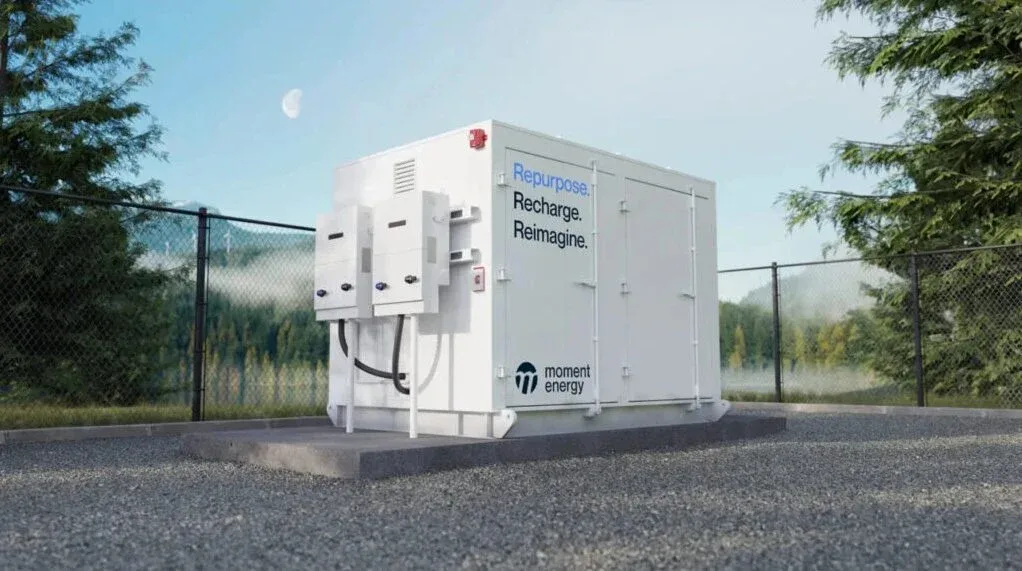
Moment Energy Unveils UL 9540-Certified Storage Made From Used EV Batteries

North American storage company Moment Energy has unveiled Nova, a storage system built from repurposed EV batteries. According to the company, Nova is the first system of its kind to hold both UL 1973 and UL 9540 certification. It was launched on November 17 at RE+ in Las Vegas. 500 kWh Per Block As stated by Moment Energy, each Nova block delivers 200 kW of power and 500 kWh of energy on a footprint of 2.94 by 1.80 meters, and blocks can reportedly scale to tens of megawatt hours. The company says an AI-based battery management system balances packs with different states of health, while swappable packs are meant to extend service life beyond 20 years. It was also tested to UL 9540A for thermal runaway propagation, the manufacturer notes. Pricing has not been disclosed, and the claimed service life has yet to be demonstrated in the field. Deliveries From 2027 Nova is reportedly in production at the company’s Megafactory 1, which is certified to UL 1974 for sorting and grading used EV batteries. First deliveries are planned for the first quarter of 2027. Moment Energy also claims third-party verification of compliance with US Foreign Entity of Concern rules, keeping Nova eligible for the federal Investment Tax Credit. According to Battery Design, UL 9540 is the system-level safety standard for stationary storage in the US and serves as the baseline listing under fire codes such as NFPA 855. Sources:https://www.globenewswire.com/news-release/2026/11/17/3404673/0/en/moment-energy-unveils-nova-the-next-generation-battery-energy-storage-system-made-from-ev-batteries.htmlhttps://www.batterydesign.net/legislation-rules-and-regulations/ul-9540/

Moment Energy Unveils UL 9540-Certified Storage Made From Used EV Batteries Read More »

Samsung SDI to Supply 16 GWh of LFP Batteries to Jupiter Power

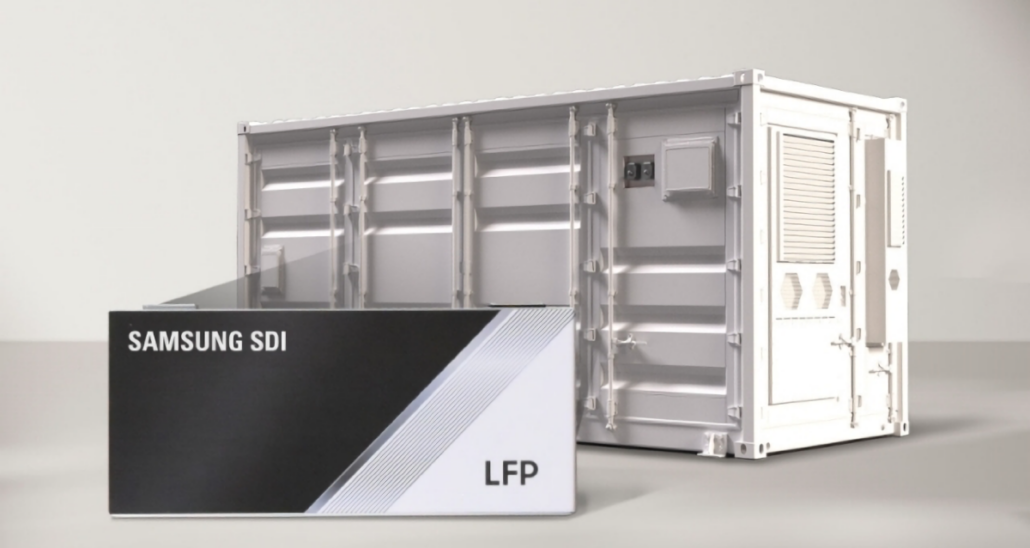
Samsung SDI is set to supply lithium iron phosphate (LFP) batteries with a total capacity of 16 GWh to US energy storage developer Jupiter Power, the South Korean battery maker announced on November 16. According to the company, deliveries are scheduled over three years starting in 2029. The contract was reportedly signed by its US subsidiary Samsung SDI America. Production in Indiana As stated by Samsung SDI, the cells will be produced at the StarPlus Energy (SPE) plant in Indiana, where mass production of prismatic LFP batteries for stationary storage reportedly began in October. The company said it secured the large volume shortly after the production start. Jupiter Power, which is owned by BlackRock, plans to use the batteries in large-scale storage projects in the US. Including earlier agreements, orders between the two companies are said to total around 27 GWh. Value Not Disclosed Samsung SDI did not disclose the contract value. Korean media cite industry estimates of around 3 trillion won (about $2.2 billion), a figure the company has not confirmed. Samsung SDI also describes itself as the only non-Chinese producer of prismatic ESS batteries in North America. In December 2025, Samsung SDI America had already signed an LFP supply deal worth more than 2 trillion won (about $1.36 billion) with an undisclosed US energy infrastructure company, as reported by Reuters at the time. Sources:https://www.koreajoongangdaily.com/business/samsung-sdi-lands-lfp-battery-deal-withnbspjupiter-power/12974407https://en.sedaily.com/business/2026/11/16/samsung-sdi-to-supply-16-gwh-of-lfp-batteries-to-blackrockhttps://finance.yahoo.com/news/samsung-sdis-us-unit-signs-234304485.html

Samsung SDI to Supply 16 GWh of LFP Batteries to Jupiter Power Read More »

UNSW Develops Three-Minute Health Test for Used Battery Cells

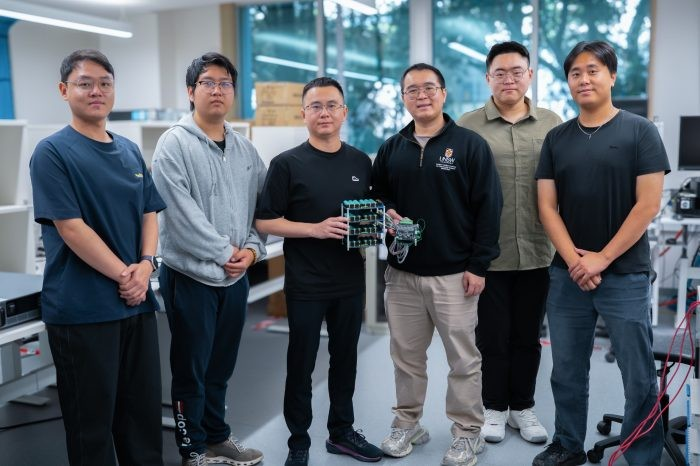
Researchers at the University of New South Wales (UNSW) in Sydney have reportedly developed a prototype test to estimate the state of health of lithium-ion cells in under three minutes. According to the team, the method is 95.5% faster than conventional procedures, which typically require a ten-hour charge-discharge cycle. As reported by ESS News, the development partner is Malaysia-based battery recycler DY New Energy. Pulse Measurement Instead of Full Cycle The researchers state that the test sends short electrical pulses through each cell, measures the response, and derives its condition using statistical models. The method is said to cover LFP, NCA, and NMC chemistries and to work with existing management systems of recyclers and storage operators. In lab tests, the team reports an accuracy above 90%. Testing costs could fall from around AUD 120 (about $85) per EV battery pack to below AUD 25 (about $18), the researchers claim. The results so far stem from laboratory conditions, and no peer-reviewed publication has been named. Field Trial With 500 Batteries According to the report, a field trial with a budget of AUD 1.3 million (about $920,000) is set to examine more than 500 batteries under real-world conditions. The partners reportedly also plan a machine-learning tool recommending reuse or recycling of retired batteries, plus a BMS module called iBMS for real-time monitoring. Under the EU Battery Regulation, state-of-health data for EV and stationary batteries must be accessible, for example to assess repurposing options. Sources:https://www.ess-news.com/2026/11/13/unsw-develops-three-minute-battery-health-test-in-australia/

UNSW Develops Three-Minute Health Test for Used Battery Cells Read More »

DICP Improves Low-Cost Iron-Manganese Cathode for Sodium-Ion Batteries

Researchers at the Dalian Institute of Chemical Physics (DICP) of the Chinese Academy of Sciences have improved an iron-manganese phosphate cathode for sodium-ion batteries. Shanghai Metals Market reported the results on November 11. The team addressed structural degradation caused by oxygen vacancies in the material. According to the report, it combined orbital tuning and charge compensation to do so. Higher Efficiency and 1,000 Cycles The first-cycle Coulombic efficiency is said to have risen from 87.0% to 97.0%. The cathode reaches a reversible specific capacity of 125.7 mAh/g and a specific energy of 421.1 Wh/kg at material level. Pouch cells with hard carbon anodes reportedly retained 93.6% of their capacity after 1,000 cycles at 1C. The report names no journal and does not disclose cell size, test temperature or cost figures. Material-level values also do not translate directly into cell-level energy density. Pilot Line and Industry Partners According to the report, a 100-tonne pilot line for the cathode material has been built and commissioned. The team has entered industrialization partnerships with China Sodium Battery Group and other companies. In December 2025, DICP reported that it had developed a 100 kWh-class sodium-ion storage system with phosphate cathodes and connected it to the grid. Sources:https://news.metal.com/newscontent/QKNZAYBFOQ7GMMXSOJ3IOELMP67RAIKSQAAXJGY-sodium-ion-cas-dicp-achieves-breakthrough-in-low-cost-fe-mn-phosphate-cathodehttps://www.cas.cn/cg/zh/202512/t20251211_5092167.shtml

DICP Improves Low-Cost Iron-Manganese Cathode for Sodium-Ion Batteries Read More »

Factorial Reaches 450 Wh/kg With Solid-State Cells for Aerospace

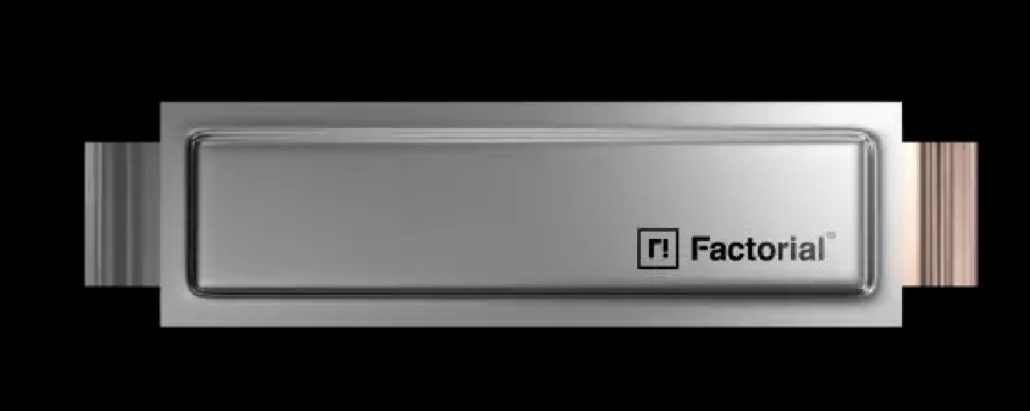
U.S. solid-state battery developer Factorial says cells from its aerospace program have reached an energy density of 450 Wh/kg. The company had set this target for the end of 2026. Factorial reported the milestone with its third-quarter results on November 10. It also recorded its first commercial revenue, earlier than its previous 2027 objective. Few Details on Cells and Revenue Factorial has not disclosed the cells’ capacity, chemistry or test conditions. It is also unclear whether the 450 Wh/kg figure was independently verified. The press release names neither the revenue amount nor the customer. According to Factorial, a Group I drone powered by its technology set a flight-duration record of 521 minutes in 2026, covering about 483 kilometers (300 miles). In the automotive sector, Factorial says a lightly modified Mercedes-Benz test vehicle exceeded 1,200 kilometers (746 miles) of range on a single charge. Stellantis integrated the technology into a Dodge Charger Daytona demonstration vehicle. Mercedes-Benz, Stellantis, Hyundai and Kia are among Factorial’s backers. Production Through Partners Factorial relies on partners to scale up production. In September 2026, it partnered with Japan’s Mitsui Kinzoku to scale manufacturing of its Solstice all-solid-state cells. Mitsui Kinzoku contributes its expertise in producing solid electrolytes. Neither company has disclosed capacities or a timeline. Sources:https://www.globenewswire.com/news-release/2026/11/10/3400213/0/en/factorial-announces-third-quarter-2026-results-begins-generating-commercial-revenue-and-achieves-450-wh-kg-energy-density-target-for-aerospace-cells-ahead-of-plan.htmlhttps://ir.factorialenergy.com/news-releases/news-release-details/mitsui-kinzoku-partners-factorial-scale-all-solid-state-battery

Factorial Reaches 450 Wh/kg With Solid-State Cells for Aerospace Read More »

LG Energy Solution Presents 10-Minute Diagnostics for Used Batteries

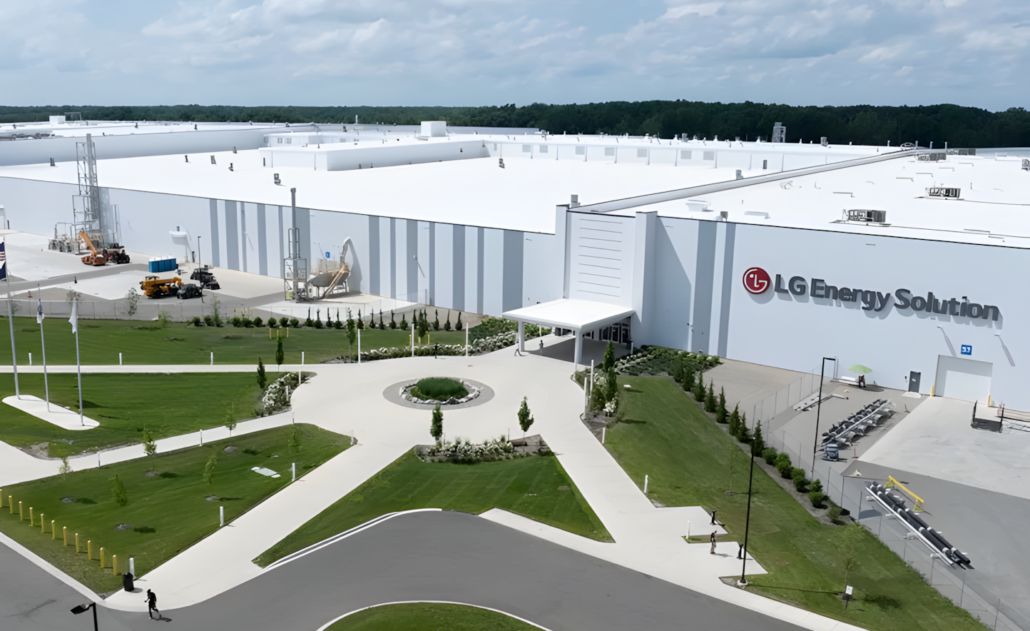
LG Energy Solution has developed software that is said to assess the condition of used batteries in under 10 minutes. The tool, called Re.Pulse, was named an honoree of the CES Innovation Awards 2027 in the Vehicle Tech & Advanced Mobility category. The South Korean battery manufacturer announced the award on November 9. Based on the results, batteries can be routed to reuse, remanufacturing or recycling. Current Pulses Instead of Full Cycles Re.Pulse applies current pulses to a battery and analyzes the voltage response. According to The Elec, an AI model evaluates the data. Conventional state-of-health tests require a full discharge, recharge and second discharge, which LG Energy Solution says takes more than seven hours. The software evaluates each cell individually rather than only the pack as a whole. This is intended to identify degraded cells that can be repaired or replaced. The tool requires no dedicated hardware and works with standard battery testers and EV chargers. It can also be used on batteries still installed in vehicles. LG Energy Solution has not disclosed the diagnostic accuracy, supported cell chemistries or a launch date. CES honorees are selected based on submitted materials, not independent tests. Part of Battery-as-a-Service Plans LG Energy Solution targets EV service centers, fleet operators, used-vehicle platforms and second-life storage projects. The company plans to integrate Re.Pulse into its battery-as-a-service business. It received a CES Innovation Award last year for B.artery, a technology designed to extend battery life. Sources:https://www.prnewswire.com/news-releases/lg-energy-solution-wins-ces-innovation-awards-2027-for-its-fast-and-precise-second-life-battery-diagnostic-system-302934043.htmlhttps://www.thelec.net/news/articleView.html?idxno=15454https://www.bestmag.co.uk/lg-cell-level-health-diagnosis/

LG Energy Solution Presents 10-Minute Diagnostics for Used Batteries Read More »

BMW Adds Samsung SDI and LG Energy Solution as Gen6 Battery Cell Suppliers

BMW has added Samsung SDI and LG Energy Solution to its supplier network for sixth-generation battery cells. According to BMW, the two South Korean manufacturers will supply cylindrical cells from existing plants in Europe and North America. Deliveries are scheduled to start toward the end of the decade. BMW did not disclose volumes, contract values or the specific plants involved. Regional Sourcing for the Neue Klasse The Gen6 cells power BMW’s Neue Klasse electric models. In Europe, BMW will source them from CATL, EVE Energy and Samsung SDI. LG Energy Solution will supply North America. BMW says sourcing cells in the regions where it builds vehicles shortens transport routes and improves supply security. According to the company, this also requires substantial investment and stable political conditions. The cells are assembled into high-voltage batteries at five BMW sites near its vehicle plants. These are Irlbach-Straßkirchen in Germany, Debrecen in Hungary, Shenyang in China, Woodruff in the U.S. and San Luis Potosí in Mexico. LFP Planned for Some Models BMW has not specified which cell chemistry the new suppliers will provide. The Gen6 cells used so far are NMC cylindrical cells with a diameter of 46 millimeters. During its third-quarter earnings call, BMW confirmed that some Neue Klasse models will also use LFP batteries. The China-only iX3 30L already does. BMW develops cell technologies at its own competence centers in Munich and Parsdorf. Sources:https://newsroom.bmwgroup.com/global/bmw-group-localises-supply-chains/https://www.bmwblog.com/2026/11/09/bmw-adds-samsung-sdi-lg-battery-suppliers/https://www.bmwblog.com/2026/11/07/bmw-add-lfp-batteries-neue-klasse-evs/

BMW Adds Samsung SDI and LG Energy Solution as Gen6 Battery Cell Suppliers Read More »

Lyten Supplies Battery Storage System to Remote Fiji Village

U.S. battery company Lyten has supplied a battery energy storage system to the village of Yasawa i Rara on Fiji’s Yasawa Island. According to Lyten, the system was energized on October 28. It was purchased by Fijian company Energy Solutions Pacific in cooperation with Investment Fiji. Lyten announced the project on November 5. Storage Reduces Generator Operation The village has no grid connection and previously relied on diesel generators and some solar power. Solar panels and generators now charge the battery, and the village draws its power from storage. According to Lyten, the generators therefore run mainly to recharge the batteries. The system is said to supply up to 64 households, a cold storage facility for fish, a maternity unit and a mortuary. The installation uses Lyten’s Voltpack Mobile System, which the company says scales from 290 kWh to hundreds of megawatt-hours. Lyten has not disclosed the capacity installed in Fiji, the cell chemistry or the cell supplier. Built at Former Northvolt Site in Poland The system is built in Gdańsk, Poland. Lyten acquired the energy storage plant there from Northvolt in July 2025. According to Lyten at the time, the site can ramp up to 6 GWh of storage manufacturing capacity. The company, which focuses on lithium-sulfur batteries, also plans storage systems based on that chemistry. In August 2026, Lyten was selected as preferred bidder for the business of Norwegian cell maker Morrow Batteries. Sources:https://lyten.com/2026/11/05/lyten-deploys-energy-storage-system-in-fiji-to-deliver-reliable-power-to-remote-islands/https://www.businesswire.com/news/home/20250701098618/en/Lyten-Acquires-Europes-Largest-Battery-Energy-Storage-Systems-Manufacturing-Operation-from-Northvolthttps://lyten.com/2026/08/26/lyten-selected-as-preferred-bidder-for-morrow-batteries-business/

Lyten Supplies Battery Storage System to Remote Fiji Village Read More »

EDENenergy Builds Commercial Storage From Used E-Scooter Batteries

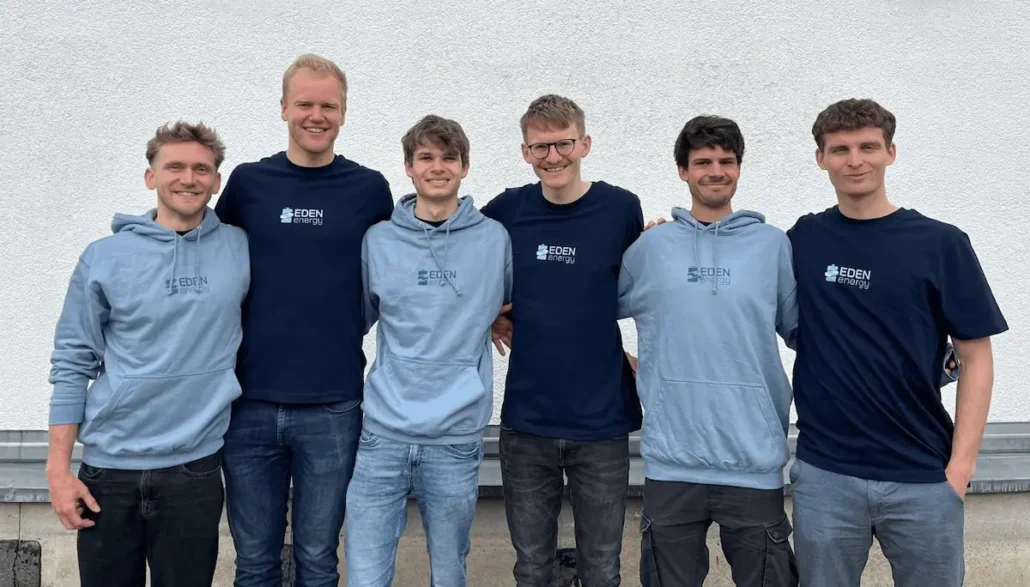
Freiburg-based start-up EDENenergy builds stationary storage systems for businesses from used e-scooter batteries. According to Fraunhofer ISE, from which the company spun off, the first 70 kWh system was delivered to a customer in mid-October. It combines 112 used e-scooter batteries. The customer was not named. Battery Modules Replaced During Operation The batteries are not disassembled. Instead, power electronics developed by the company connect different batteries and communicate with the various modules. Individual modules can be replaced during operation and are monitored remotely. The company says module replacement will keep the system at 70 kWh after ten years. Batteries at the end of their life go to recycling. EDENenergy had assumed a state of health of 80% for the used batteries. According to the company, remaining capacity was in some cases well above 90%. It has not disclosed how capacity was measured. Each Battery Type Requires Adaptation Connectors, battery management and communication must be adapted for every new battery type. To secure enough identical batteries, EDENenergy initially sources them from fleet operators. In the long term, the company calls for standardized communication protocols and rules for using mobile batteries in stationary storage. The founders previously worked in Fraunhofer ISE’s power electronics department. EDENenergy plans systems of up to 300 kWh and initially targets mid-sized businesses with solar systems. A state program can fund half the storage costs for pilot customers. Sources:https://www.ise.fraunhofer.de/de/presse-und-medien/presseinformationen/2026/start-up-edenenergy-gebrauchte-escooter-akkus-werden-industriespeicher.htmlhttps://www.solarserver.de/2026/11/02/startup-edenenergy-alte-e-scooter-akkus-fuer-neue-industriespeicher

EDENenergy Builds Commercial Storage From Used E-Scooter Batteries Read More »

Scroll to Top