Battery-News

Author name: Cornelius Karow

cylib Investigates Recycling of Sodium-Ion Batteries in the SIB:DE Project

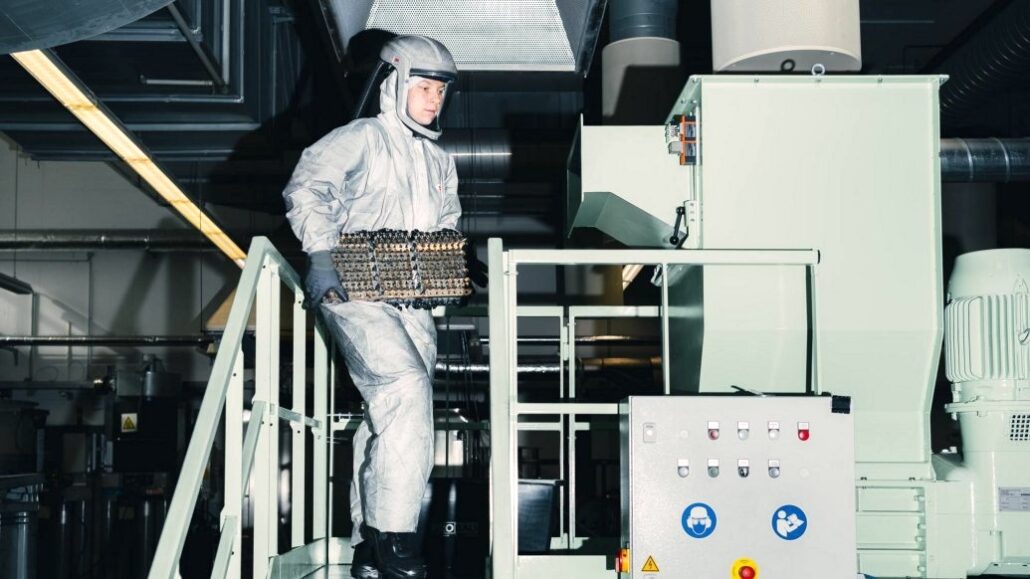
As part of the SIB:DE consortium, the Aachen-based company Cylib is participating in the development of an industrial recycling process for sodium-ion batteries. Twenty-five partners from industry and research are working on the project, including VARTA, EDAG, and several Fraunhofer Institutes. Funded by the Federal Ministry of Research, Technology, and Space, the project is scheduled to run until early 2029. The project aims to develop large-format sodium-ion cells, while simultaneously investigating their recyclability. The aim is to lay the groundwork for industrial production before significant quantities of used batteries become available. EDAG Production Solutions coordinates the project activities. Cylib, in collaboration with the Technical University of Braunschweig, is leading the recycling activities. Focus on two recycling pathways Specifically, two different pathways are being examined. One is based on established mechanical and hydrometallurgical processes. The second approach, known as direct recycling, involves reusing active materials without complete chemical processing. According to the project description, this approach could reduce costs and preserve material properties, particularly for production waste. A pilot demonstration is planned for 2029. cylib states that it is pursuing a strategy of building up recycling capacities at an early stage. The company is planning an industrial facility at CHEMPARK Dormagen with an annual processing capacity of up to 60,000 tons. The company has implemented a similar approach for lithium-ion batteries and raised over 140 million euros for this purpose. Source:https://www.cylib.de/post/cylib-pioneers-sodium-ion-battery-recycling-with-german-industry-and-research

cylib Investigates Recycling of Sodium-Ion Batteries in the SIB:DE Project Read More »

BMW i7: High-Voltage Battery Developed in Collaboration with Rimac Technology

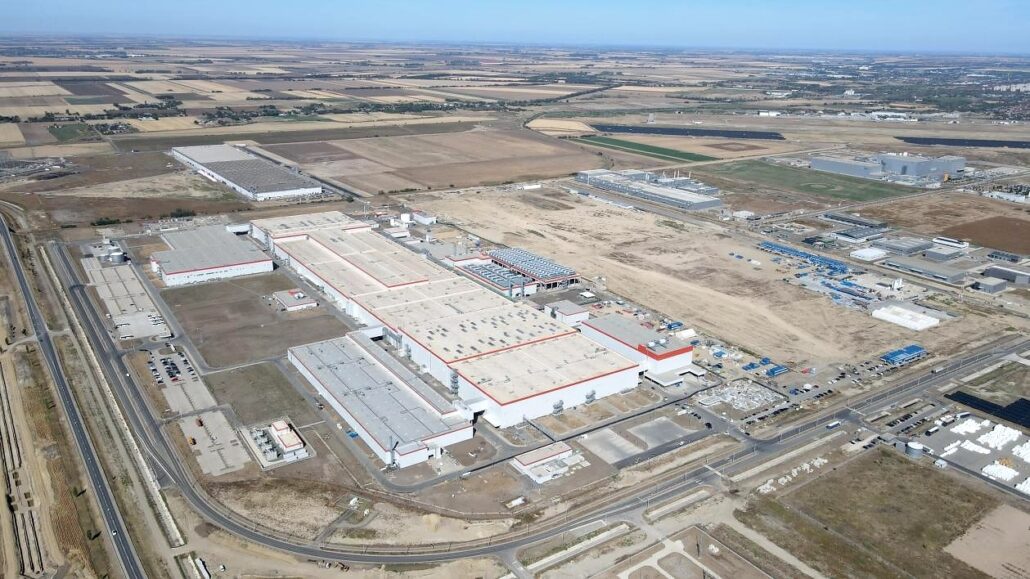
The BMW Group partnered with Rimac Technology to develop the new, all-electric BMW i7. At the heart of the vehicle is a newly developed high-voltage battery based on the sixth generation of BMW eDrive technology. Their goal is to increase range and charging speed. BMW’s Gen6 battery technology uses cylindrical 4695 lithium-ion cells. According to the company, this cell design achieves a volumetric energy density that is approximately 20 percent higher than that of the prismatic cells of the previous generation. The high-voltage battery combines this new cell technology with the familiar module structure of the Gen5 architecture. This combination is intended to increase the range of the BMW i7. At the same time, the goal is to increase charging power to shorten charging times. Production at Rimac In addition to collaborating on the development of the battery pack, Rimac Technology will also handle its production. All battery manufacturing takes place in Croatia. The assembled packs are then transported to the BMW plant in Dingolfing for final assembly. This plant serves as the central production site for the BMW 7 Series. The new BMW i7 is scheduled to be unveiled for the first time on April 22, 2026, at “Auto China 2026.”  Source:https://www.press.bmwgroup.com/deutschland/article/detail/T0456278DE/bmw-group-und-rimac-technology-kooperieren-bei-innovativem-hochvoltspeicher-fuer-den-bmw-i7

BMW i7: High-Voltage Battery Developed in Collaboration with Rimac Technology Read More »

Berlin Battery Lab Consolidates Battery Research

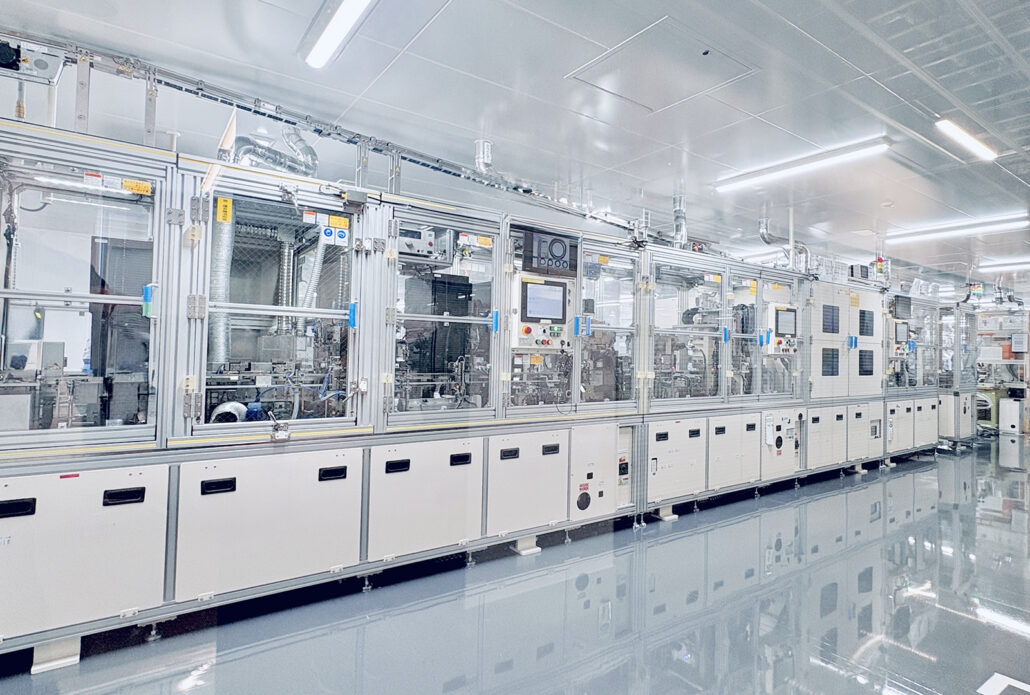
The Federal Institute for Materials Research and Testing (BAM), the Helmholtz-Zentrum Berlin (HZB), and Humboldt University of Berlin (HU) have launched the Berlin Battery Lab (BBL), a joint research platform that consolidates battery research in the capital. Their goal is to develop and test new battery technologies, particularly those based on sodium. According to the participating institutions, the lab will be used to develop materials, investigate cell chemistries, and manufacture prototypes. The lab brings together diverse expertise in a single location. While BAM focuses on safety issues and energy materials, HU conducts sodium-ion battery research, and HZB contributes lithium-sulfur system expertise. Additionally, HZB provides BESSY II, an X-ray source for analyzing battery chemical processes. Focus on Sodium Batteries and Technology Transfer The activities center on sodium-ion batteries as a potential alternative to existing technologies. This technology is considered more resource-efficient than lithium-based chemistries. The work in the laboratory is intended to accelerate the transition from research to application.  The infrastructure is also open to external partners from academia and industry. Technology-oriented companies and startups, in particular, will have access to development and testing facilities. The State of Berlin is providing financial support for the project. An additional 2.4 million euros in funding from the European Regional Development Fund has been earmarked for the period from 2026 to 2028. Source:https://www.bam.de/Content/DE/Pressemitteilungen/2026/Energie/2026-03-19-eroeffnung-berlin-battery-lab.html

Berlin Battery Lab Consolidates Battery Research Read More »

Freudenberg Exits Battery Business

The German Freudenberg Group has fundamentally realigned its activities in the battery and fuel cell segment. As of January 1, 2026, the Freudenberg e-Power Systems business unit was dissolved. The company will no longer operate in the areas of battery cells, modules, and systems, as well as fuel cell systems. The dissolution of the battery business will affect approximately 600 employees, primarily in the U.S.  Freudenberg is responding to a significantly weaker-than-expected market environment, particularly in the U.S., which the Group attributes to low demand in key applications, a lack of infrastructure, and high costs. Added to this are political and regulatory uncertainties, as well as intense global competition. According to the company, these factors have made achieving economic scale in the systems business considerably more difficult. Focus shifts to components and hydrogen. While the battery business is being discontinued, Freudenberg is maintaining select activities in the hydrogen sector. The hydrogen components business has been integrated into the Freudenberg Sealing Technologies division. This shift in focus is from complete energy systems to individual components. At the same time, the company is highlighting its continued investments in research and development, as well as in new technologies, including digital applications and artificial intelligence. These measures are intended to lay the foundation for future business models. Source:https://www.freudenberg.com/en/company/press-media/news-detail/freudenberg-presents-financials-for-2025

Freudenberg Exits Battery Business Read More »

Fraunhofer IFAM Investigates Electrochemical Process for Battery Recycling

The Fraunhofer Institute for Manufacturing Technology and Applied Materials Research (IFAM) is developing an electrochemical process to recover critical raw materials from batteries. The focus is on lithium, cobalt, and nickel, the demand for which has risen significantly due to the increased use of lithium-ion batteries. The project, named “MeGaBat,” aims to recover high-purity materials from recycling processes, thereby closing the material cycle. Process adaptable to various metals The process is based on treating process water from battery recycling. This water is fed into an electrochemical reactor where specially manufactured electrodes selectively bind ions from the wastewater. These electrodes are produced using a screen-printing process and can be adapted to various metals. This allows not only lithium, but also cobalt, nickel, and copper, to be isolated. At the end of the process, the separated substances are in powder form. Compared to hydrometallurgical processes, this method reportedly requires no additional chemicals and consumes less energy. It also promises a 30-40% increase in efficiency. As part of the project, the technology has already been tested on a laboratory scale. Currently, a pilot plant is being built for larger-scale tests. The project is scheduled to run until the end of 2028 and is funded by the Federal Ministry of Research, Technology, and Space. Source:https://www.ifam.fraunhofer.de/en/Press_Releases/electrochemical-process-enables-recovery-of-valuable-raw-materials.html

Fraunhofer IFAM Investigates Electrochemical Process for Battery Recycling Read More »

“Global Battery Materials” Delivers First Graphite Samples

The Canadian company Global Battery Materials Corp. has delivered their first graphite samples from the Kearney Mine in Ontario to customers in the U.S. Simultaneously, the company opened a new graphite laboratory in Quebec.  The samples originate from the Kearney Mine, a historically operational graphite source that has been reactivated. Currently, potential buyers in the U.S. are evaluating the samples. The new laboratory in Quebec is designed to process and analyze natural graphite. Its goal is to achieve purity levels of up to 97 percent carbon. Processing takes place on a laboratory scale and is modeled after industrial processes. Additionally, complete process simulations are being conducted.  Global Battery Materials already operates a pilot and research facility for the production of anode materials in South Korea. According to the company, this allows them to provide an end-to-end supply chain outside of China. Source:https://www.prnewswire.com/news-releases/global-battery-materials-ships-first-graphite-samples-to-us-customer-opens-new-graphite-lab-in-quebec-302725090.html

“Global Battery Materials” Delivers First Graphite Samples Read More »

CALB Introduces Semi-Solid-State Battery for Light Commercial Vehicles

The Chinese battery manufacturer CALB has unveiled a solid-liquid hybrid battery for light commercial vehicles at a trade show in Hefei on March 28. According to the company, the battery is already in mass production. It is intended for use in light commercial vehicles manufactured by Chery Automobile. This marks the first time that semi-solid-state technology has been adopted more broadly in the light commercial vehicle segment. This technological approach combines solid and liquid electrolyte components, representing an intermediate step toward fully solid-state batteries. Higher Energy Density Increases Payload CALB reports an energy density of 400 watt-hours per kilogram for the cells. This enables a reduction in battery weight, which directly improves the payload capacity of light commercial vehicles. According to the manufacturer, the battery has passed 44 safety tests, including evaluations for thermal runaway, fire, and mechanical stress. These tests reportedly exceed current Chinese safety standards. During charging, the system supports 2C fast charging. The state of charge can reportedly increase from 30 to 80 percent in 15 minutes. CALB also highlights the battery’s performance at low temperatures. They claim that the range at minus 25 degrees Celsius is more than 20 percent greater than that of conventional batteries. Additionally, continuous discharge at 1C is specified. Source:https://cnevpost.com/2026/03/30/semi-solid-battery-adoption-light-trucks-calb-launch/

CALB Introduces Semi-Solid-State Battery for Light Commercial Vehicles Read More »

POSCO Future M Launches Lithium-Metal Battery Collaboration

The South Korean companies POSCO Future M, Kumho Petrochemical, and BEI have signed a memorandum of understanding to jointly develop new battery technology. Their focus will be on an anode-free lithium-metal battery design. According to the companies, this technology will enable higher energy densities and faster charging times. Eliminating Anode Material to Increase Energy Density Unlike traditional batteries, the planned battery does not use conventional anode material. The resulting extra space is used to achieve a higher energy density, which is expected to be 30 to 50 percent higher than that of conventional lithium-ion batteries. During charging, lithium ions deposit directly onto a metallic current-collecting foil. This process is also expected to more than double charging speed. Proposed applications include drones, air mobility, electric vehicles, and robotics, which would benefit most from the increased energy density. Additionally, the technology is said to be compatible with existing production equipment. According to the companies, this will reduce investment costs and process complexity. Division of Responsibilities within the Partnership POSCO Future M will contribute its cathode material technology to the collaboration. Kumho Petrochemical will supply conductive carbon nanotubes designed to improve electrical conductivity and battery life. BEI will then handle integrating the technology into finished battery cells and providing production capacity. The collaboration aims to bring the concept all the way to commercialization. No specific timelines were provided. Source:https://www.poscofuturem.com/en/pr/view.do?num=1005

POSCO Future M Launches Lithium-Metal Battery Collaboration Read More »

Quality Assurance for Lithium-Ion Batteries in Europe

Battery-News provides an overview of companies in the field of Quality Assurance for lithium-ion batteries in Europe. The underlying data come from official announcements by the respective players and reliable sources from the battery production environment. The map was first published as part of the “Battery Atlas 2026.” A high-resolution file is available as a free download. If a company is missing or if there are general comments, the Battery-News editorial team will be happy to receive a message.

Quality Assurance for Lithium-Ion Batteries in Europe Read More »

tozero Begins Operations at Battery Recycling Plant in Germany

The Munich-based battery recycler tozero has begun operations at an industrial demonstration plant for recovering critical raw materials from used batteries. Located at Chemical Park Gendorf, the facility was built in six months, according to the company. The plant is expected to process approximately 1,500 tons of battery material annually and recover more than 100 tons of lithium carbonate, as well as graphite and nickel-cobalt mixtures. tozero states that it uses an acid-free hydrometallurgical process that enables recovery in a single step. The resulting materials are expected to be pure enough for direct reuse in production. Additionally, tozero claims that its method is more cost-effective than traditional mining.  According to the company, recycled lithium and graphite have already been qualified by battery component manufacturers. The plant serves as the basis for a larger production facility, which is planned for completion by 2030. This plant is expected to process 45,000 tons of battery material annually and supply significantly higher volumes of lithium and graphite. Significance for Raw Material Supply in Europe Recycled raw materials are becoming increasingly important in the context of broader policy objectives, such as the EU Critical Raw Materials Act. Currently, Europe is heavily dependent on imports, particularly for lithium and graphite. At the same time, the volume of used batteries is growing due to the rise of electric mobility. Therefore, the company views recycling as a key component in reducing this dependence. Source:Information via email

tozero Begins Operations at Battery Recycling Plant in Germany Read More »

Scroll to Top