
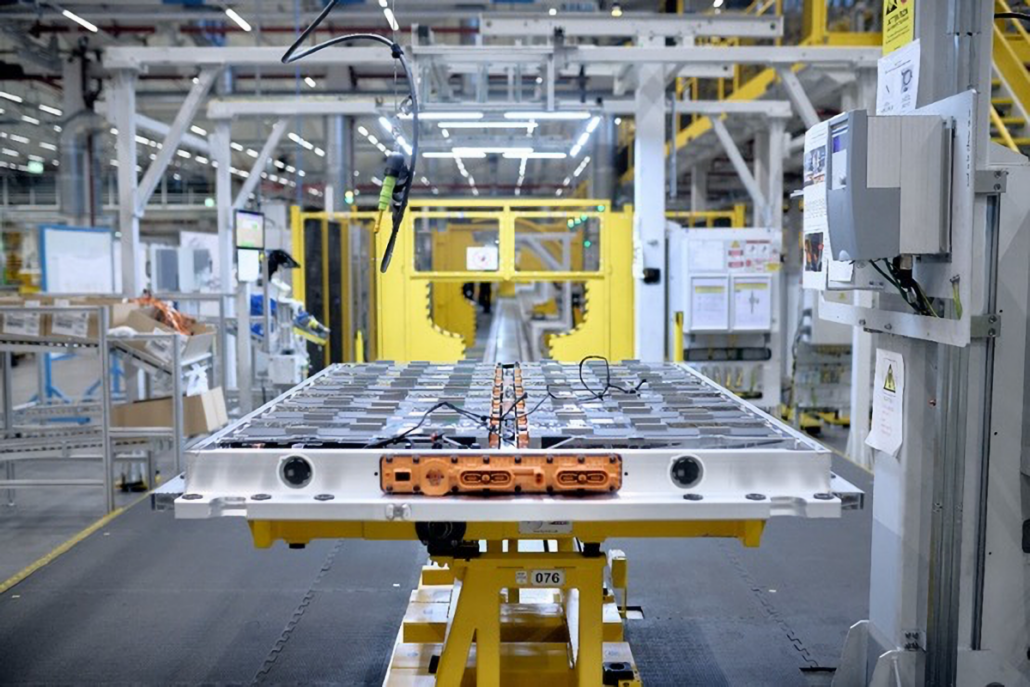
European battery production is growing—and with it, the complexity of manufacturing. Different machines, proprietary interfaces, and isolated data silos still make it difficult in many places to gain a comprehensive view of processes. In this context, industry associations and technology organizations are driving the development of common information models.
The OPC UA communication standard plays a central role in this effort. The German Association of the Automotive Industry (VDA), the VDMA, and the OPC Foundation are working together to establish standardized data models for battery manufacturing.
A common language for machines
The initiative aims to ensure compatibility between machines and systems from different manufacturers through standardized information models. The foundation for this is provided by OPC UA Companion Specifications—industry-specific extensions of the established standard.
They are designed to create a shared semantic foundation: data from various process steps is described uniformly, making it easier to exchange and evaluate.
This is particularly relevant in battery manufacturing. The process chain ranges from material preparation to formation—with high demands on precision, quality assurance, and traceability.
Starting with cell manufacturing
Current work is initially focused on cell manufacturing. Specifications are currently being developed here for key process steps such as coating, calendering, winding, and electrolyte filling.
The project also has political backing: The Federal Ministry of Research, Technology, and Space is funding related work through the ENLARGE project (grant number 03XP0539).
From a technical perspective, the new models build on existing standards, particularly “OPC UA for Machinery.” The goal is not to create another isolated solution, but to integrate into existing industrial architectures.
What the standard is intended to achieve
According to the organizations involved, the benefits are clear:
- Lower integration costs for new systems
- Improved comparability of data
- Faster scaling of production lines
Standardized data structures are also a key prerequisite for digital applications—such as predictive maintenance or seamless quality analysis.
Challenges ahead
Despite this progress, broad adoption remains a long-term goal. In practice, new standards encounter an existing installed base that has often grown over many years.
The introduction of uniform information models therefore entails not only technical adjustments but also investments and organizational changes. Furthermore, the question remains as to how consistently different market participants will actually implement the standards.
Another point: The Companion Specifications deliberately define only a common core; to foster broad acceptance, many elements are optional and allow for flexibility. However, this can also lead to actual interoperability falling short of expectations in practice.
Outlook: What comes next?
The initiative highlights the growing need for common data models in battery production. At the same time, it becomes clear that standardization does not drive itself. The current specifications are nearing release candidate status. This gives industry representatives the opportunity to provide feedback before the models are finalized.
However, this marks only the beginning of the decisive phase: practical implementation. Only in real-world use will it become clear whether a common data model will actually become a common language for battery production.
Based on information from the Joint Working Group of VDA, VDMA, and the OPC Foundation.
Sources & Data:
https://www.vdma.eu/de/viewer/-/v2article/render/140299457
https://www.sciencedirect.com/science/article/pii/S2213846325001865
https://www.mikrodev.com/opc-ua-and-mqtt-in-industrial-communication-integration-in-brownfield-factories/
https://www.industry40.tv/blog-post/opc-ua-base-information-model-and-companion-specifications-explained