
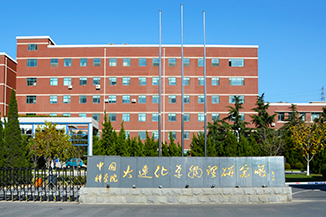
Researchers at the Dalian Institute of Chemical Physics (DICP) of the Chinese Academy of Sciences have improved an iron-manganese phosphate cathode for sodium-ion batteries. Shanghai Metals Market reported the results on November 11. The team addressed structural degradation caused by oxygen vacancies in the material. According to the report, it combined orbital tuning and charge compensation to do so.
Higher Efficiency and 1,000 Cycles
The first-cycle Coulombic efficiency is said to have risen from 87.0% to 97.0%. The cathode reaches a reversible specific capacity of 125.7 mAh/g and a specific energy of 421.1 Wh/kg at material level. Pouch cells with hard carbon anodes reportedly retained 93.6% of their capacity after 1,000 cycles at 1C. The report names no journal and does not disclose cell size, test temperature or cost figures. Material-level values also do not translate directly into cell-level energy density.
Pilot Line and Industry Partners
According to the report, a 100-tonne pilot line for the cathode material has been built and commissioned. The team has entered industrialization partnerships with China Sodium Battery Group and other companies. In December 2025, DICP reported that it had developed a 100 kWh-class sodium-ion storage system with phosphate cathodes and connected it to the grid.
Sources:
https://news.metal.com/newscontent/QKNZAYBFOQ7GMMXSOJ3IOELMP67RAIKSQAAXJGY-sodium-ion-cas-dicp-achieves-breakthrough-in-low-cost-fe-mn-phosphate-cathode
https://www.cas.cn/cg/zh/202512/t20251211_5092167.shtml