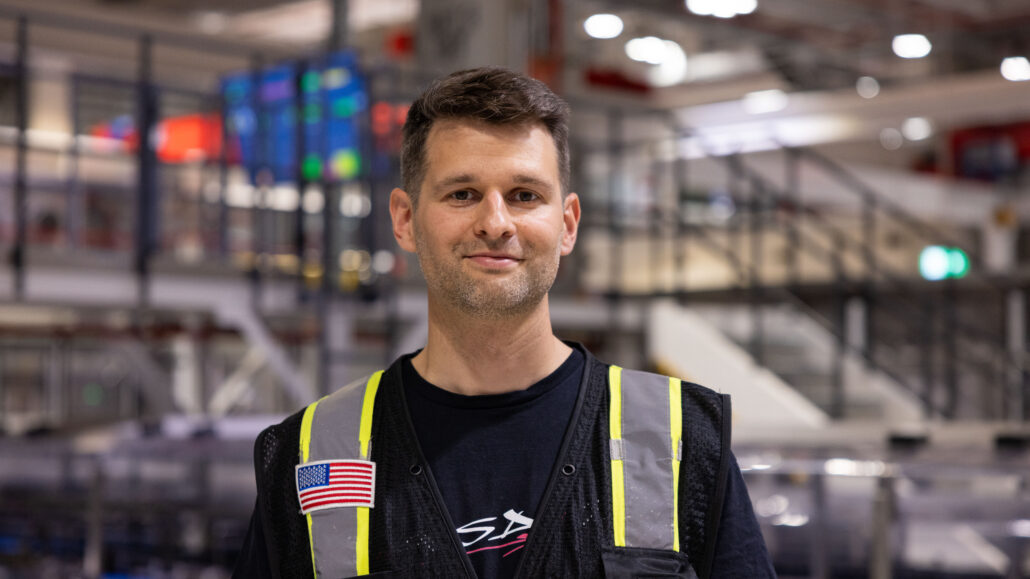
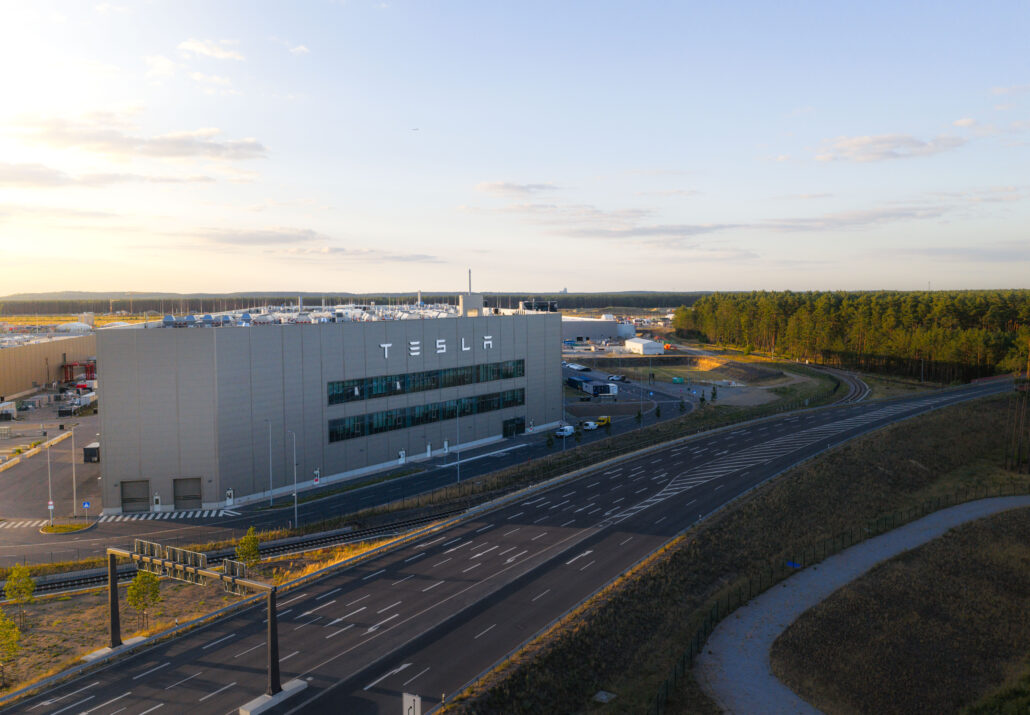
Starting in 2027, Tesla plans to produce its own 4680 battery cells in Grünheide and ramp annual capacity to as much as 18 GWh. While several battery cell projects across Europe have been delayed, scaled back, or halted, Tesla continues to invest in local manufacturing. Robert Meyer, Cell Factory Lead at Tesla Manufacturing Brandenburg, explains why the strategy is not just about cost, but also about resilience, expertise, speed, and greater control over the company’s own value chain.
Why Europe, and Why Now?
For Tesla, cell manufacturing in Grünheide is part of a broader principle: supply chains should be localized wherever possible, while manufacturing processes should be closely integrated both horizontally and vertically. According to the company, this is the model Tesla follows at its sites worldwide.
At Gigafactory Berlin-Brandenburg, the focus from the outset was therefore not only on a high degree of vertical integration, but also on localizing as much of the supply chain as possible within Europe.
“Localizing cell manufacturing puts us in a position to produce everything from the battery cell to the finished vehicle at a single site. That is unique in Europe,” Meyer says.
From a purely economic perspective, however, the decision is far from an obvious one. Tesla acknowledges that battery cell manufacturing in Europe is currently difficult to justify in a direct cost comparison. Even so, the company remains committed to the plan.
“From a purely cost perspective, the move offers limited advantages. For us, however, this is a strategic decision,” Meyer says. Tesla wants to strengthen supply-chain resilience, reduce dependencies, and at the same time expand vertical integration and manufacturing expertise at the site.
From Learning in Texas to Ramp-Up in Grünheide
Building a battery cell factory is not simply a matter of capital investment or installed capacity. The real challenge is whether complex processes can be translated reliably into high-volume production — with sufficient quality, high yield, and the shortest possible ramp-up time.
Tesla sees an advantage here in not having to start from scratch. Lessons learned from 4680 production at its sister factory in Texas are expected to support the ramp-up in Grünheide.
“The combination of high product and process complexity with high production volumes is a challenge,” Meyer explains. “But for the ramp-up of our cell factory in Grünheide, we benefit enormously from the fact that we have already solved this challenge at our sister factory in Texas.”
Dry Electrode as a Key Technology
The dry-electrode process plays a particularly important role. With dry coating, electrodes are manufactured without the conventional solvent-based wet process. For Tesla, the technology is a central element of its planned 4680 production in Grünheide.
Because energy-intensive drying ovens are no longer required, Tesla says the process reduces both factory footprint and capital expenditure. It also eliminates costs associated with recovering toxic solvents.
“The process not only has a noticeable positive impact on production costs, but also on the environmental footprint of manufacturing,” Meyer says. Another benefit is the significantly lower energy demand. Especially for battery cell production in Europe, more efficient processes could therefore become a decisive competitive factor.
Vertical Integration Meets Europe’s Location Challenge
Local cell manufacturing is also intended to make Tesla less dependent on a European supplier environment that, in the company’s view, is not yet comparable with the established battery ecosystems in Asia.
Meyer points to Tesla’s factory in Shanghai, where the company sources cells from Chinese manufacturers and integrates them into its own vehicle production. “There simply isn’t a comparable ecosystem of manufacturers here that could serve as suppliers,” he says of Europe.
At the same time, Tesla believes Europe is at a disadvantage in the global competition with China and the United States, citing in particular the absence of output-based incentives for battery cells in the EU.
“In international competition, it is currently extremely difficult to manufacture cells economically in Europe,” Meyer says. From the company’s perspective, Europe needs clear and targeted framework conditions if battery cell technology is to become firmly established in the region over the long term.
How Tesla Is Building Cell Manufacturing Expertise in Grünheide
Alongside technology and capital, the ramp-up in Grünheide will above all be a workforce challenge. Tesla plans to hire more than 1,500 additional employees for cell manufacturing. At the same time, experienced battery cell manufacturing expertise remains scarce in Europe.
Tesla is responding with a broad recruiting strategy. Prior experience in cell manufacturing is explicitly not a hiring requirement.
“We are well aware that we are doing pioneering work here in Europe,” Meyer says. Tesla’s approach is to bring together people from different industries and with diverse professional backgrounds. Career changers can even be an advantage, he argues, because they may approach complex problems with a fresh and unbiased perspective. The strategy is supported by internal training and education programs.
The Ramp-Up Playbook: Speed, Collaboration, and People
What ultimately determines whether a gigafactory ramps successfully? For Meyer, speed comes first.
“Speed is critical. We have to learn from our mistakes quickly and constantly ask ourselves whether a problem can be solved even faster.”
That requires more than technical solutions. The organization itself also matters: teams need to collaborate closely across sites while retaining enough autonomy to make fast decisions. Striking the right balance between sharing best practices and maintaining local decision-making authority can accelerate the ramp-up process.
Ultimately, however, Meyer traces the technical and operational challenge back to a classic factor: people.
“To make such an ambitious project successful, you need highly motivated and committed employees who are all working toward the same goal.”
Tesla at the Future Battery Forum 2026
Robert Meyer will continue the discussion on how battery cell production can be scaled successfully in Europe on November 24 and 25 at the Future Battery Forum at ECC Berlin. On the panel “The gigafactory scale-up playbook: Execution, yield, and speed,” he will join other international representatives from the battery cell industry.
Tesla will also have its own booth at the Future Battery Forum and will offer test drives as part of the event. On November 23, the day before the conference, selected participants will also have the opportunity to visit Gigafactory Berlin-Brandenburg and get an inside look at vehicle production at the Grünheide site.
At the Future Battery Forum, Tesla is therefore connecting the strategic debate around cell manufacturing and gigafactory ramp-up with practical implementation on the ground.
For those who want to continue the discussion in person: Battery-News readers can use the code FBF26BATTERYNEWS to receive a 20% discount on tickets for the Future Battery Forum 2026. Tickets are available at www.futurebattery.eu/tickets.