Battery-News

Author name: Cornelius Karow

IBPC 2026 Extends Call for Abstracts Until July 10

The 9th International Battery Production Conference (IBPC) has extended the deadline for submitting abstracts. Abstracts can now be submitted via the official submission page until July 10, 2026. The conference will take place on November 4 and 5, 2026, at the Steigenberger Parkhotel in Braunschweig. It will focus on technical and scientific issues related to battery production. Call for Technical Papers on Battery Production The call for abstracts is aimed at experts from research and industry who wish to present their current work on battery production. According to the organizers, topics will include next-generation battery systems, sustainable production processes, process optimization in lithium-ion battery manufacturing, recycling, and modeling and AI-supported production approaches. IBPC Returns to Braunschweig in 2026 The IBPC is organized by Innovationsgesellschaft Technische Universität Braunschweig mbH in collaboration with partners from the BLB+ network, the Technical University of Braunschweig, and Fraunhofer IST. The event is also held in cooperation with VDMA Battery Production. It is designed as an international platform for the exchange of ideas on battery production. The conference brings together stakeholders from academia, industry, and applied research. Further information is available on the International Battery Production Conference’s official website.

IBPC 2026 Extends Call for Abstracts Until July 10 Read More »

Ford-CATL Battery Project in Michigan Begins Production

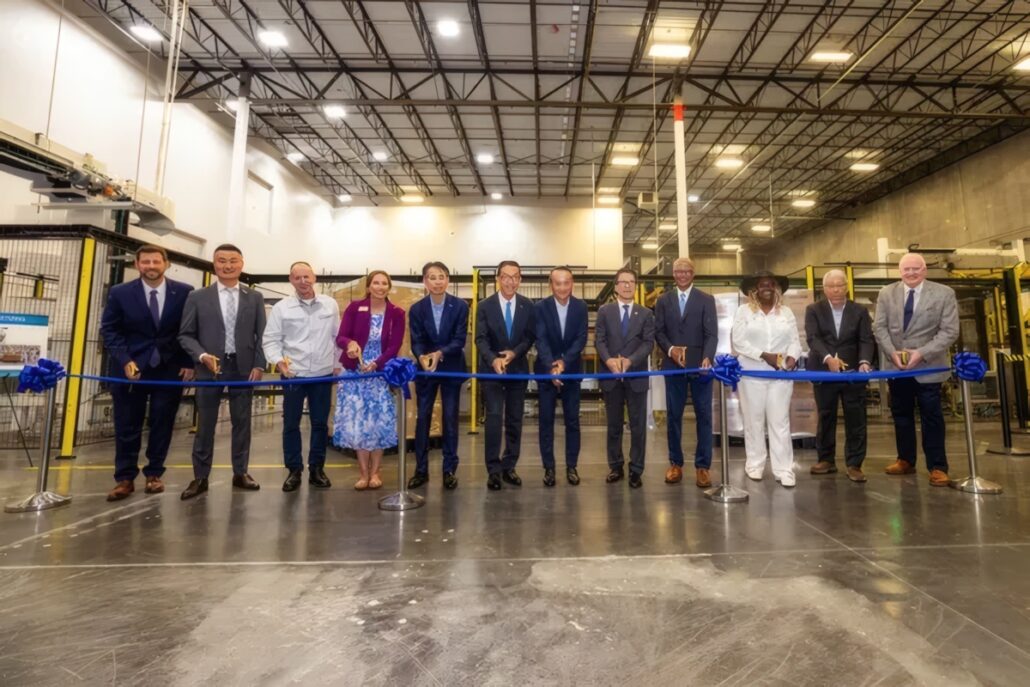
According to Meng Xiangfeng, vice president of CATL, the battery plant established by Ford and CATL in the U.S. was completed in June and has begun production. It is not a joint venture, but rather a licensing and service model. Ford owns the plant and CATL provides the technology for lithium iron phosphate cells, as well as support for construction and operation. Ford had originally announced in February 2023 that it would invest $3.5 billion in the Michigan plant. At that time, the planned annual capacity was 35 gigawatt-hours, intended to produce batteries for approximately 400,000 electric vehicles. However, the project was temporarily halted following political pressure. In November 2023, Ford resumed planning, reducing the investment and capacity to $2 billion and 20 gigawatt-hours, respectively. Part of Capacity intended for Energy Storage According to Caixin, the core of the LFP project with CATL remains intact. However, based on current plans, some of the capacity will be allocated to energy storage products.  In mid-June, Ford announced that the first prismatic LFP cells had undergone full-scale process testing at the plant. The cells are currently being validated according to CATL specifications. The first vehicle batteries are scheduled to be delivered later this year. They are intended for use in Ford’s affordable and midsize electric pickup models. Ford also plans to convert an existing plant to produce stationary storage systems based on CATL technology. Source:https://cnevpost.com/2026/06/30/ford-catl-backed-battery-plant-completed/

Ford-CATL Battery Project in Michigan Begins Production Read More »

Sicona Receives $45 Million for Anode Material Production in Wollongong

The Australian battery materials firm Sicona Battery Technologies received a $45 million grant from the Australian Renewable Energy Agency. Sicona plans to use the funds to build and operate its first commercial-scale production facility for silicon-carbon anode material. The material is marketed under the name SiCx.  Production is expected to reach 230 metric tons per year. This volume is intended primarily for customer qualification and initial commercial sales. Sicona is currently working with BlueScope Steel Limited to determine if the plant can be built on BlueScope’s Port Kembla site. To this end, the two companies have signed an exclusivity agreement. Silicon-Carbon Instead of Pure Graphite Anodes According to Sicona, SiCx is expected to increase the energy density of lithium-ion batteries by more than 20 percent. The company also claims that charging speeds will be more than 40 percent faster than those of conventional graphite anodes. This technology is compatible with existing lithium-ion battery production lines. The company references independent tests and evaluations by global battery manufacturers and automotive companies. Moving from the Lab to the Supply Chain Sicona envisions applications in electric vehicles, AI data centers, power tools, defense, robotics, and drones. The Wollongong facility is intended to validate the process on a commercial scale. This project follows a licensing and strategic partnership with Himadri in India that was finalized in May 2025 and included a follow-on investment of 17.5 million Australian dollars. Concurrently, Sicona is planning a facility with an annual capacity of 6,500 metric tons. The company’s long-term goal is to increase capacity to 26,500 metric tons. Source:https://www.prnewswire.com/news-releases/sicona-lands-45m-arena-grant-to-open-battery-materials-production-facility-in-wollongong-302812932.html

Sicona Receives $45 Million for Anode Material Production in Wollongong Read More »

OCSiAl to Supply Nanotubes for PowerCo’s Cell Platform in Salzgitter

The Luxembourg-based nanotube specialist OCSiAl has signed a supply agreement with Volkswagen Group’s battery division, PowerCo. As part of this partnership, OCSiAl will provide PowerCo with single-walled carbon nanotubes for its Unified Cell battery platform. The materials are intended for PowerCo’s plant in Salzgitter. According to the company, the nanotubes will be used in graphite anodes. OCSiAl describes the nanotubes as conductive additives. They are designed to increase the electrical conductivity of graphite anodes and improve heat dissipation. The company cites benefits such as improved charging and discharging performance, increased safety, and a longer service life for the battery cells.  Supply from European production The shipments are planned to come from the OCSiAl plant in Serbia. This would mean that part of the procurement of critical battery materials would take place within Europe. According to OCSiAl, the site has met all quality and reliability requirements and has been audited by PowerCo. Other battery manufacturers from Europe and Asia are said to have also conducted audits. OCSiAl markets its single-walled carbon nanotubes under the TUBALL brand. The company claims to supply most European manufacturers of batteries for electric vehicles. These materials are used in both the cathode and anode systems of lithium-ion batteries. OCSiAl notes that approximately one million electric vehicles already contain its nanotubes. In November 2025, the company announced plans to build a graphene nanotube plant in Luxembourg. The investment is expected to total 300 million U.S. dollars. Source:https://ocsial.com/de/news/ocsial-to-supply-single-wall-carbon-nanotubes-to-powercos-salzgitter-facility/

OCSiAl to Supply Nanotubes for PowerCo’s Cell Platform in Salzgitter Read More »

Battery Production Days 2026: Applications Open for the Start-up Challenge

The Battery Production Days 2026 will put start-ups from the battery production sector in the spotlight. Young companies can apply for the BPD Start-up Challenge from July 1 through August 31. The second edition of Battery Production Days will take place on October 20 and 21, 2026, in Aachen. Application Period Begins in Early July The challenge is aimed at startups developing technologies and solutions for future battery manufacturing. Applications are submitted via an online form, and a pitch deck must also be provided. Applications will be reviewed by a jury composed of industry and applied research representatives. Finalists to Present in Aachen Selected finalists will present their solutions at Battery Production Days 2026 through live pitches on stage, as well as potentially in the exhibition area. This will give the startups access to an expert audience from the battery industry, manufacturing, and applied research. Battery Production Days will take place at the Manfred-Weck-Haus in Aachen. The event is expected to draw 250 participants and feature six sessions offering more than 15 hours of networking. It is aimed at executives, production managers, engineers, researchers, startups, and companies from the battery value chain, among others. Tickets for the conference are available via the registration page. More information on how to apply is available on the BPD Start-up Challenge website.

Battery Production Days 2026: Applications Open for the Start-up Challenge Read More »

CATL Expects Sodium-Ion Battery Adoption Before Solid-State Technology Maturity

Chinese battery manufacturer CATL expects to begin producing sodium-ion batteries for electric vehicles in significant quantities this year. According to production chief Ni Jun, this battery technology is expected to power approximately 10,000 to 20,000 vehicles by 2026. However, CATL CEO Robin Zeng is tempering expectations for solid-state batteries. He states that widespread mass production is not yet on the horizon. Sodium-ion batteries set to debut in vehicles soon CATL has been working on sodium-ion batteries since 2016. To date, the company has invested nearly 10 billion yuan (just under 1.5 billion U.S. dollars) in their development, a figure expected to reach 15 billion yuan by the end of 2025. In April 2025, CATL launched the Naxtra brand for this purpose. The cells are expected to achieve an energy density of up to 175 Wh/kg. According to the company, this is roughly equivalent to standard LFP batteries. A production vehicle developed in partnership with Changan Automobile is set to be released in mid-2026. CATL states that the range will be up to 400 kilometers. Once the supply chain matures, CATL believes a range of 500 to 600 kilometers will be possible. CATL cites cost savings and improved performance in cold weather as the main advantages. Even at minus 40 degrees Celsius, capacity retention is expected to remain above 90 percent. CATL is also expanding its presence in the stationary storage sector. The Tener Sodium system is scheduled to begin shipping in China in September. Global deliveries are planned for June 2027. Solid-state technology remains development territory for now CATL is taking a much more cautious stance on solid-state batteries. Zeng rated the current state of the technology as level four out of nine. Level nine represents mass production. Zeng noted that technical progress, reliability, safety, supply capability, and commercial acceptance are all crucial factors. Previous statements indicated that CATL aims to reach levels seven or eight by 2027. This would enable small-scale production runs. However, high costs and unresolved production issues remain hurdles. Zeng had previously stated that producing in the millions is unlikely before 2030. Sources:https://cnevpost.com/2026/06/24/catl-expects-10000-evs-sodium-batteries-2026/https://cnevpost.com/2026/06/24/catl-chairman-long-road-solid-state-battery-mass-production/

CATL Expects Sodium-Ion Battery Adoption Before Solid-State Technology Maturity Read More »

Lyten Reportedly Offers 60 Million Euros for Northvolt Site Near Heide

U.S. company Lyten reportedly plans to pay 60 million euros for the site of insolvent battery manufacturer Northvolt near Heide in the Dithmarschen district. This was reported by Der Spiegel and the dpa news agency. There has not yet been any official confirmation. According to the reports, an agreement is said to have been reached with the KfW development bank, the German federal government and the Schleswig-Holstein state government. The Economics Ministry in Kiel is currently cautious in its response. A spokesperson said the state government remains in talks with Lyten. Next week, the state cabinet and two state parliamentary committees are expected to address the matter. Until then, the state government does not intend to provide further information. The possible purchase price is politically relevant because the federal government and the state had to assume liability for a convertible bond after the insolvency of Northvolt’s parent company. The bond had a volume of 600 million euros and was backed equally by the federal government and Schleswig-Holstein. Site plans remain smaller than Northvolt’s Northvolt had originally announced plans to build a battery factory near Heide. At the time, about 3,000 jobs were discussed. After the parent company became insolvent, Schleswig-Holstein faced estimated losses of around 200 million euros. Lyten expressed interest in the site in the summer of 2025. According to previous information, the company plans to build a battery cell factory, a battery storage facility and a data center there. The expected number of jobs is 1,000, well below Northvolt’s earlier plans. As part of the planned takeover, the federal government and the state have already been able to secure 153 million euros. A sale of the property could bring in an additional mid-double-digit million-euro amount for the federal government and the state. Source:https://www.ndr.de/nachrichten/schleswig-holstein/batteriefabrik-lyten-will-offenbar-60-millionen-euro-zahlen,lyten-140.html

Lyten Reportedly Offers 60 Million Euros for Northvolt Site Near Heide Read More »

CATL Launches “Tener Sodium” Sodium Storage System

At its 2026 Energy Storage Event, CATL unveiled their new “Tener Sodium” system. The battery manufacturer describes it as the world’s first sodium battery solution for stationary energy storage that has been validated under real-world conditions. According to CATL, preparations for mass production are complete. The first deliveries in China are scheduled to begin in September. The company expects to deliver 1 GWh by the end of 2026. Global commercial deliveries are planned to begin in June of the following year. “Tener Sodium” is designed for storage applications ranging from one to eight hours. CATL cites a rated capacity of more than 30 MWh. The system is fully modular. Each module weighs 42 metric tons. According to the company, the system can be adapted to different project requirements. It is also said to be dimensionally compatible with lithium-ion battery systems, enabling a seamless transition between the two technologies. Sodium Battery Focused on Efficiency, Lifespan, and Availability CATL specifies a lifespan of 15,000 cycles at 25 °C with a state of health of up to 70 percent. This would correspond to a service life of 25 to 30 years. At 45 °C, the system is said to be capable of more than 10,000 cycles. At -20 °C, the system reportedly retains over 92 percent of its capacity. To ensure operational safety, CATL cites a self-healing function that operates at the millisecond level. Faults are reportedly detected and isolated within 200 milliseconds. Unaffected areas resume operation within 150 milliseconds. CATL also claims that the system can suppress fires and explosions under extreme conditions. Source:https://cnevpost.com/2026/06/22/catl-unveils-tener-sodium/

CATL Launches “Tener Sodium” Sodium Storage System Read More »

QuantumScape and Honda Agree to Collaborate on Solid-State Battery Research

The U.S.-based battery developer QuantumScape announced a joint research agreement with Honda R&D, a subsidiary of the Honda Motor Company. Their goal is to further develop QuantumScape’s battery technology and related manufacturing processes. This multi-year agreement focuses on the QS battery platform. Specifically, the agreement focuses on QuantumScape’s solid-state lithium-metal battery technology. The company views this technology as a potential foundation for energy storage systems with higher energy density, faster charging, and improved safety. Honda previously evaluated the tech A technology evaluation conducted by Honda preceded the new agreement. As part of this process, Honda reportedly conducted a technical review of QuantumScape’s platform and compared it with competing approaches using standardized tests. According to QuantumScape, Honda sees potential for the technology in various applications, including the automotive sector. Source:https://ir.quantumscape.com/news-releases/news-release-details/quantumscape-announces-agreement-honda-solid-state-battery

QuantumScape and Honda Agree to Collaborate on Solid-State Battery Research Read More »

Automated Battery Logistics for the Battery Factories of Tomorrow

As Europe’s battery manufacturing capacity expands, the demands on logistics are becoming increasingly complex. Battery modules and finished high-voltage battery packs need to be transported safely, stored temporarily, and loaded on schedule. Bottlenecks are particularly likely at the interfaces between production, warehousing, and transport. Rail as Part of the Battery Logistics Chain Rail transport is becoming increasingly important for many battery manufacturers. While it allows large material volumes to be moved efficiently, the requirements for loading and unloading railcars are rising at the same time. ALZTEC addresses these challenges with automated systems. Its solution handles both the unloading of incoming battery modules and the loading of finished battery systems. According to the company, the entire process runs automatically and without manual intervention directly at the rail siding. An Integrated View of Material Flow Fast handling times depend on more than the loading step alone. Upstream storage and conveyor systems also have to be tightly coordinated. To achieve this, ALZTEC combines conveyor systems, heavy-duty high-bay warehouses, and automated railcar loading into a single integrated system. The goal is to coordinate material movements across the entire process chain and reduce wait times at the interfaces. According to the company, the expected benefits include higher throughput, shorter wait times, and reduced in-plant forklift traffic. The automated material flow is also intended to reduce risks associated with the manual handling of heavy battery systems. Video: Automated Rail Loading in Action ALZTEC has released a video from an operating installation showing how the solution performs in practice. The footage shows battery stacks weighing several tons being moved automatically between the railcar and the warehouse. The video is available here: https://alztec.com/videos/batterielogistik/

Automated Battery Logistics for the Battery Factories of Tomorrow Read More »

Scroll to Top