
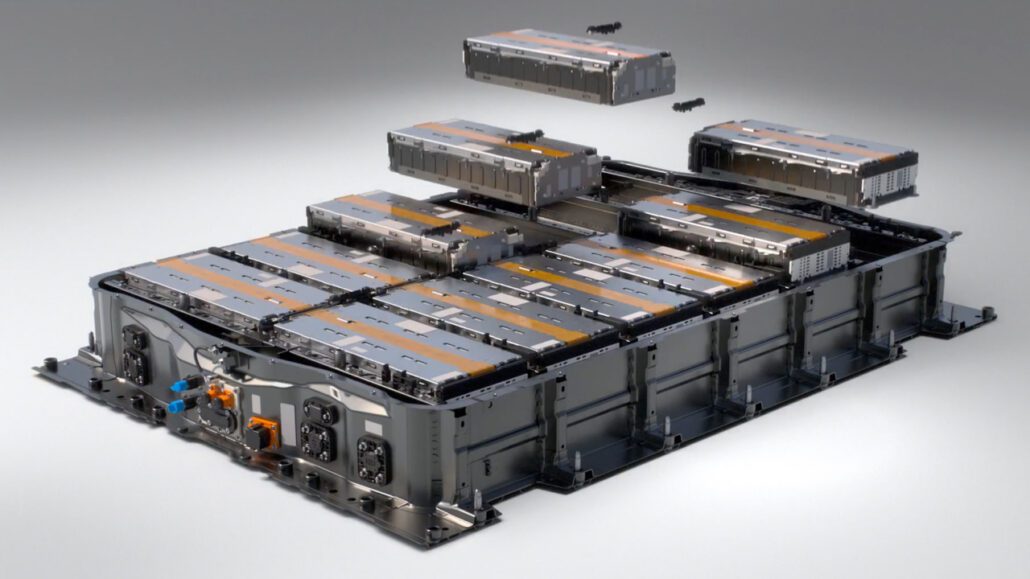
According to a Reuters report, General Motors may change its plans for the batteries in its future electric vehicles. The company’s head of batteries, Kurt Kelty, revealed that the U.S. automaker is considering excluding LFP cells from its EV portfolio. Previously, GM had announced plans to develop lithium iron phosphate (LFP) batteries for future electric vehicle models. Production was scheduled to begin in late 2027 at a jointly operated plant in Tennessee.
However, GM is now shifting its focus toward lithium-manganese-rich (LMR) batteries. The company apparently views this cell chemistry as the more important technology for higher production volumes. According to GM, LMR cells in the U.S. are expected to cost roughly the same as LFP cells but have a higher energy density.
The Tennessee plant is set to begin producing LFP cells this month. However, these are intended for stationary energy storage, not electric vehicles.
Strategy deviates from market trend
Avoiding the use of LFP cells in electric vehicles would set GM apart from many competitors, who use LFP cells to reduce costs and offer more affordable electric vehicles. Several manufacturers use LFP cells to reduce costs and offer more affordable electric vehicles. These include Tesla, Rivian, and Ford. Chinese manufacturers adopted the technology on a large scale early on.
LFP batteries are considered cheaper, more robust, and safer than many nickel-rich cell chemistries. However, their lower energy density can lead to shorter ranges. GM has used more powerful nickel-rich batteries in more than a dozen U.S. electric models so far. The new Chevrolet Bolt, on the other hand, is expected to use LFP cells from the Chinese company CATL.