
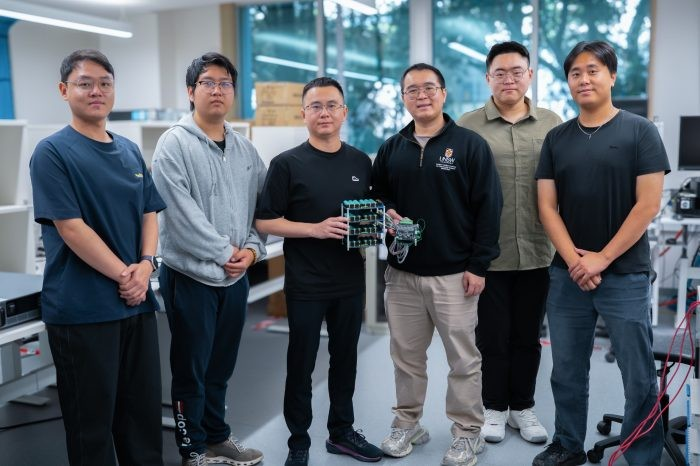
Researchers at the University of New South Wales (UNSW) in Sydney have reportedly developed a prototype test to estimate the state of health of lithium-ion cells in under three minutes. According to the team, the method is 95.5% faster than conventional procedures, which typically require a ten-hour charge-discharge cycle. As reported by ESS News, the development partner is Malaysia-based battery recycler DY New Energy.
Pulse Measurement Instead of Full Cycle
The researchers state that the test sends short electrical pulses through each cell, measures the response, and derives its condition using statistical models. The method is said to cover LFP, NCA, and NMC chemistries and to work with existing management systems of recyclers and storage operators. In lab tests, the team reports an accuracy above 90%. Testing costs could fall from around AUD 120 (about $85) per EV battery pack to below AUD 25 (about $18), the researchers claim. The results so far stem from laboratory conditions, and no peer-reviewed publication has been named.
Field Trial With 500 Batteries
According to the report, a field trial with a budget of AUD 1.3 million (about $920,000) is set to examine more than 500 batteries under real-world conditions. The partners reportedly also plan a machine-learning tool recommending reuse or recycling of retired batteries, plus a BMS module called iBMS for real-time monitoring.
Under the EU Battery Regulation, state-of-health data for EV and stationary batteries must be accessible, for example to assess repurposing options.
Sources:
https://www.ess-news.com/2026/11/13/unsw-develops-three-minute-battery-health-test-in-australia/