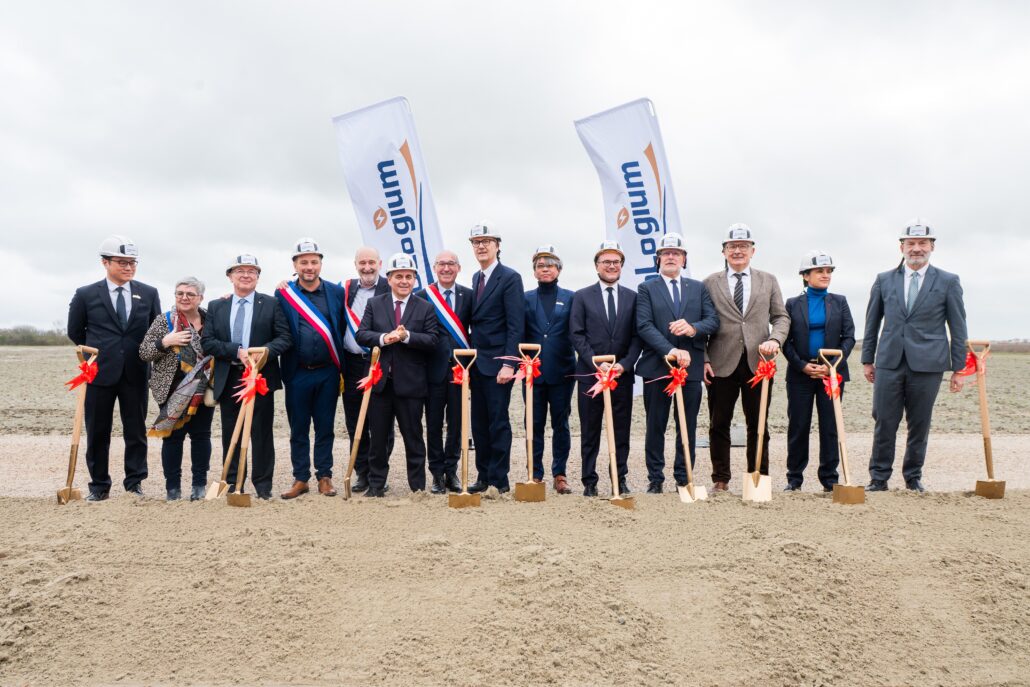
Solid-state batteries have long been touted as the next big leap for electric vehicles — higher energy density, improved safety, faster charging. But while many manufacturers are still stuck in the lab, one Taiwanese company is already pouring concrete in northern France. In February 2026, ProLogium held the official groundbreaking ceremony for its first European gigafactory at the Port of Dunkirk — marking one of the first large-scale solid-state cell production lines anywhere on the continent.
Founded in 2006, ProLogium is one of the world’s most advanced makers of lithium ceramic batteries. Unlike many of its competitors, the company isn’t just running pilot lines: its gigafactory in Taoyuan, Taiwan, has been in mass production since 2024 and has shipped more than 800,000 cells to date, according to the company.
With an investment of roughly €5.2 billion and a planned capacity of up to 48 GWh, the Dunkirk site is set to become the anchor of solid-state battery manufacturing in Europe, backed by partnerships with Mercedes-Benz, Mahle, and Rimac.
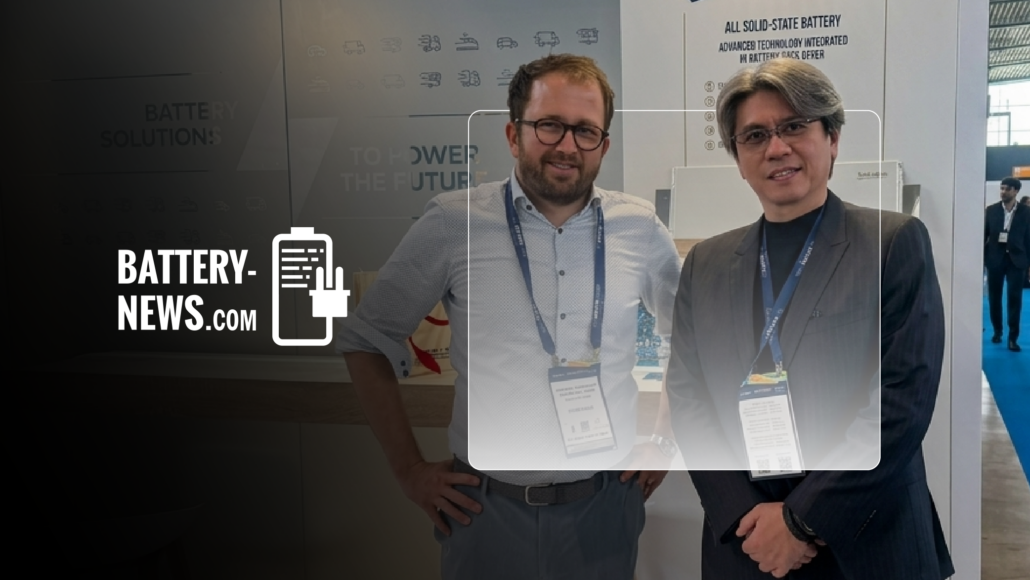
On the sidelines of The Battery Show, we sat down with Vincent Yang, founder and CEO of ProLogium, and Christina Chen, Head of Business Management, to talk about the company’s European strategy — the path from technology leadership to industrial-scale manufacturing, why France won out as a location, and what the rest of Europe’s battery industry can learn from one of the first companies to take solid-state cells into series production.
Why Europe, Why Now
For ProLogium, Europe’s appeal comes down to one word: stability. Compared with the United States and China, where policy and market conditions can shift abruptly, Yang describes Europe as a reliable anchor — a consideration that carries extra weight given ongoing geopolitical tensions surrounding Taiwan and China.
The groundbreaking in early February 2026 marked the company’s shift from planning to construction on its first plant outside Taiwan.
A Port, Nuclear Power, and an Ecosystem That Fits
In choosing a location within Europe, Yang points to several factors:
- Low-cost, carbon-free power: A large share of France’s electricity comes from nuclear plants and is therefore considered carbon-free — a key selling point for a company aiming for a low-emission manufacturing footprint.
- Logistics: The planned plant sits directly at the Port of Dunkirk, shortening supply routes for raw materials and finished product alike.
- Industrial ecosystem: The region — which ProLogium itself refers to as “Battery Valley” — sits close to automotive clusters around Lille and already hosts other battery plants.
- Government backing: The French government has closely supported the project, including repeated site visits and assistance with subsidies and bilateral coordination.
By 2030, the site is expected to create roughly 3,000 direct and 12,000 indirect jobs. ProLogium has maintained a Paris office since 2024.
The Technology: A Ceramic Separator Instead of a Conventional Electrolyte
At the core of ProLogium’s technology is a solid-state battery built around a ceramic separator that, according to the company, remains stable even at high temperatures and varying current loads. A key safety claim: even if a cell’s temperature spikes sharply, it doesn’t go into thermal runaway. The cell itself stops working, but the vehicle and its occupants remain safe.
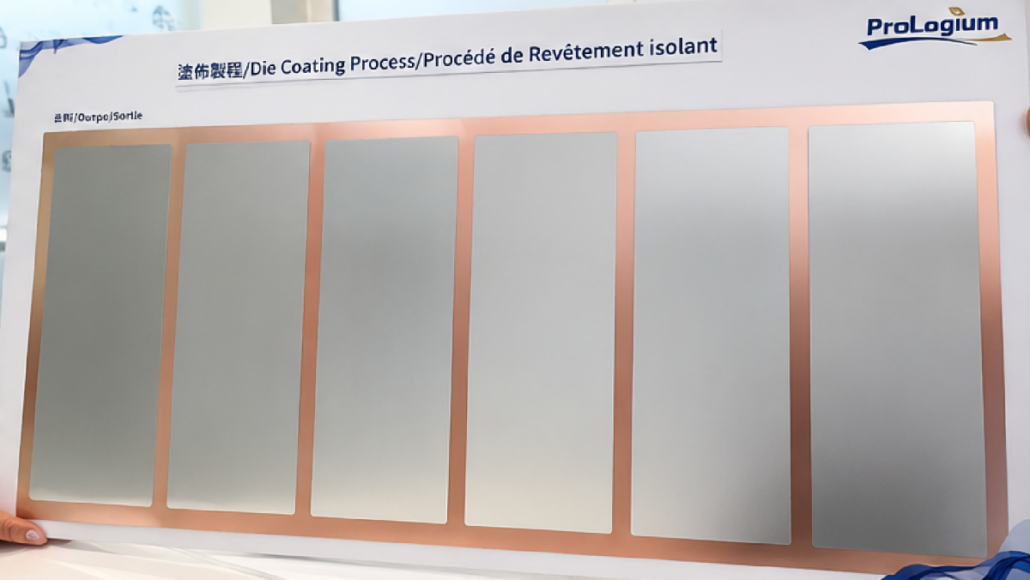
ProLogium is especially proud of its proprietary coating process, which applies the separator directly onto the electrode instead of relying on the conventional approach of placing a separate separator film. The process has no specific brand name; what matters is that it eliminates the separator-film placement step entirely, enabling an efficient roll-to-roll process with automatic roll changeover. Electrode and separator are then stacked and laminated together as a pre-assembled unit.
A key differentiator for ProLogium: the company isn’t just showing lab results — it already runs mass production, with a manufacturing line operating in Taiwan since 2024 and correspondingly mature processes. That, the company argues, sets it apart from more heavily hyped competitors that haven’t yet reached series production.
European Partners, Not Chinese Dependency
To build out its European supply chain, ProLogium is actively courting local partners, particularly in machinery and equipment manufacturing. A priority for the company is sourcing equipment and handling assembly locally in Europe, reducing reliance on Chinese suppliers. ProLogium aims to have its own equipment installed at the French site by 2028, leaving room for European machine builders to still get involved.
Beyond the traditional automotive sector, ProLogium sees particular potential in applications such as marine use, drones, and robotics.
What’s Next
ProLogium positions itself as one of the few solid-state battery makers to move beyond announcements and into physical mass production. With the Dunkirk groundbreaking, a €5.2 billion investment, and partnerships with Mercedes-Benz, Mahle, and Rimac, the company is staking a claim to becoming a cornerstone of European battery sovereignty. Whether — and how quickly — that ambition translates into production output and market share will become clear in the coming years. Initial capacity in Dunkirk is expected by 2028.